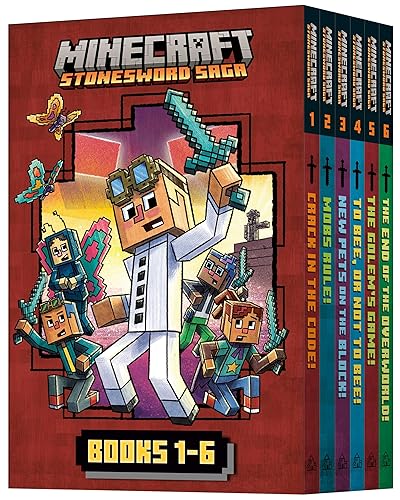
The "trapped in the game" trope done right
The "kids get sucked into a video game" plot is the oldest trick in the book, but Nick Eliopulos pulls it off here because he actually understands how 8-year-olds play. This isn't a generic fantasy story with a Minecraft skin slapped on top. It’s a series that respects the mechanics. When Theo tries to mod the game code in Crack in the Code!, it feels like a real conversation a kid would have while trying to install a custom shader or a new mob pack.
If your kid is currently obsessed with Minecraft secret tips and tricks, they’ll appreciate that the book doesn't talk down to them. It uses the terminology correctly and treats "modding" like a legitimate skill rather than just "computer magic."
Real-world stakes vs. Overworld drama
The smartest move this series makes is splitting the drama between the Stonesword Library and the actual school hallways. In Mobs Rule!, Po is dealing with a class presidency race while simultaneously fighting off underground monsters. It’s a classic "Spider-Man" setup: the hero’s biggest problem isn't always the giant spider; sometimes it's the math test or the social hierarchy at lunch.
This balance makes the books feel like more than just a marketing tie-in. It gives kids a way to process social friction through a lens they already enjoy. If they’re used to the low-stress environment of Minecraft offline mode, seeing the characters navigate the high-stress "real world" provides a nice contrast.
The reluctant reader's entry point
Let’s be honest about the prose: it’s functional. You aren't going to find lyrical descriptions or complex metaphors here. These are short, punchy chapters designed to keep a 7-year-old from checking how many pages are left until the end of the chapter.
But for a kid who usually views reading as a chore they have to finish before they can get back to their console, that's exactly what you want. It’s a high-interest, low-barrier series. Once they finish the six-book arc of the Stonesword Saga, they’ll have the "reading stamina" to tackle more complex books for tweens that don't have the Minecraft branding to lean on.
Why the boxed set matters
Buying these individually is a headache, but the boxed set works because the overarching plot with the Evoker King actually rewards binge-reading. Each book focuses on a different member of the team—Jodi’s focus on animal mobs in New Pets on the Block! or the team-wide survival test in The Golem's Game!—but the "splinters" of the villain provide a satisfying breadcrumb trail.
- The Action: It’s consistent. Every few pages, there’s a mob encounter or a building challenge.
- The Art: The illustrations help break up the text blocks, which is crucial for the age 6-9 demographic.
- The Conclusion: The End of the Overworld! ties the real-world storm and the in-game storm together in a way that feels genuinely climactic for a second-grader.
It’s the literary equivalent of a solid B+ Saturday morning cartoon. It’s not trying to change the world, but it’s very good at being exactly what it is.