The "I Can Do It Myself" Milestone
The jump from picture books to chapter books is the first real ego trip in a young reader's life. It’s the moment they stop looking at you to perform the story and start hunting for the meaning themselves. The Katie Woo series is engineered specifically for this transition. While the prose isn't going to win a Pulitzer, the mechanical layout is the draw. You get large font, generous line spacing, and illustrations on nearly every page that provide the "context clues" kids need when they hit a word like disappointed or adventure.
If your child is currently obsessed with the Elephant & Piggie style of dialogue-heavy readers but gets intimidated by a wall of text, this boxed set is the logical bridge. It’s long enough to feel like a "real" book, but short enough to finish in one sitting, which is the ultimate hit of dopamine for a six-year-old.
Junie B. Jones Without the Attitude
Parents often have a love-hate relationship with the heavy hitters of this genre. Junie B. Jones is iconic, but some parents find her grammar-slaughtering and "stupid" name-calling a bit much to model. Katie Woo occupies the same space of "everyday school drama" but swaps the chaos for kindness.
Katie gets into trouble—she loses things, she gets jealous, she feels the sting of not being the star—but the resolution is always grounded in emotional intelligence. It’s "sassy" in the way a 1950s sitcom character is sassy; she has a personality and a sense of style, but she’s fundamentally wholesome. If you want a protagonist who models how to apologize to a friend like Pedro or JoJo without a lecture from an adult, Manushkin nails that balance.
Representation as the Default
One of the best things about this series is how it handles Katie’s Chinese-American identity. It isn't a "teaching moment" or a heavy-handed cultural lesson. Katie is just a girl who happens to be Chinese-American, navigating the same first-grade hurdles as anyone else. According to Common Sense Media, the series is "teeming with positivity" and inclusivity.
This "normalized" representation is often more effective than books that center entirely on cultural struggle. It allows kids from all backgrounds to see themselves in her school-day anxieties while acknowledging her heritage as a natural, integrated part of her life.
How to Use This Set
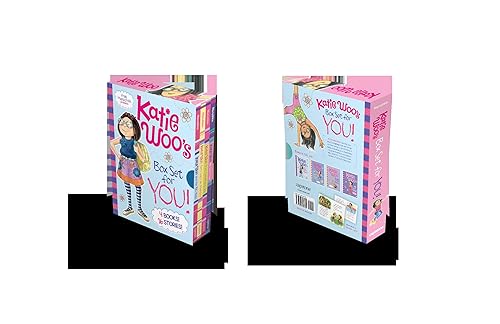
Don't buy these one by one. The boxed set is the move because these books are fast. A confident second grader will inhale one of these in ten minutes. The value here is in the "marathon" factor—having the next three books ready to go maintains the reading momentum.
If your kid finishes these and wants more, look for the Katie Woo and Pedro Mysteries. They use the same vocabulary level but add a "whodunit" layer that keeps the pages turning for kids who need a little more plot to stay engaged. For now, this 2022 collection is the quintessential starter pack for a kid ready to graduate from your lap to their own reading nook.