Fly a tiny robot through a patient's bloodstream and teach their immune cells how to find and kill bacteria. Free, made by scientists, and showing its 2008 age.
Immune Attack
game
2008, Shooter, Educational
82%
WISE Score
Fly a tiny robot through a patient's bloodstream and teach their immune cells how to find and kill bacteria. Free, made by scientists, and showing its 2008 age.
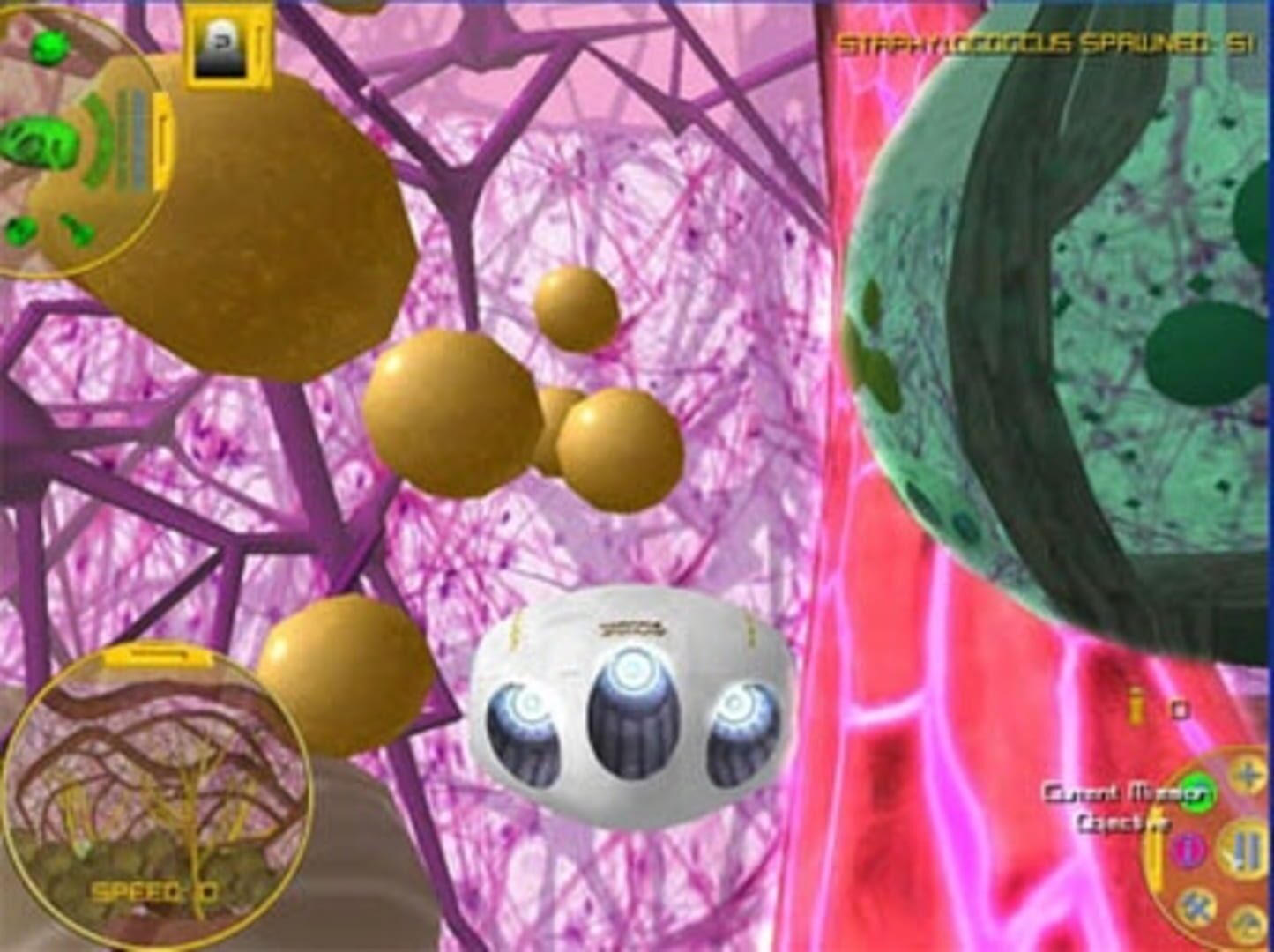
Immune Attack is a free science game from the Federation of American Scientists, built in 2008 with National Science Foundation and National Institutes of Health money. The patient has an immune system that is present but not working, and the player's job is to fix that: pilot a nanobot through blood vessels and tissue, then train macrophages and neutrophils to recognize and destroy bacteria by switching on the proteins they use to sense trouble.
The science is the real thing, and it worked in a classroom study: high schoolers who played two 40-minute sessions scored higher on a cellular immunology test than classmates who played other games.
The graphics and controls feel their age, and it runs only on Windows PCs. For a middle or high schooler who likes biology, or one about to start a unit on the immune system, it is a free and unusual way in.
Age Fit
Best for about 12 to 18. It was designed for high school biology, and its developer lists grades 6 to 12. A strong 11-year-old science fan can manage it with help, but the terms assume some biology class behind them.
WISE Breakdown
Wholesome
85
A rescue mission inside a sick patient, with no gore. The 'shooting' is aiming signal proteins and immune cells at bacteria.
Imaginative
62
A strange, memorable setting: flying a robot through blood vessels and across a white blood cell. The missions themselves are fixed.
Safe
94
Free, offline, single player, no ads, no chat and no purchases. It needs a Windows PC download.
Enriching
88
Teaches how immune cells detect and attack infection, and a classroom study found students who played it scored higher on an immunology test.
Parent Info
✓
Why It Might Be Great
The immune system becomes a set of tools the player uses, not a diagram to memorize.
Made and tested by scientists; a randomized classroom study found learning gains.
Free, with no ads, no purchases and no online play.
Seven levels, each adding a new infection and a new immune cell to understand.
⚠
What to Watch For
Windows only, a 545 MB download, and it needs a two-button mouse. It will not run on a Mac, a Chromebook or a tablet.
The 2008 graphics and clunky controls can lose a kid used to modern games in the first few minutes; sitting with them through the first level helps.
The vocabulary (selectins, ICAM, neutrophils) is heavy. It works best alongside a biology class, not as a first introduction.
Conversation Starters
"What did you have to switch on before the immune cells could find the bacteria?"
"What is the difference between a macrophage and a neutrophil?"
"Why would the patient get sick if those signals did not work?"
Deep Dive
A patient whose immune system will not switch on
The setup gives the game its purpose. A patient's immune cells are all there but do not respond to infection, and the player has to show them how. That means piloting a small robot through blood vessels and connective tissue, then out across the surface of a white blood cell, and activating the proteins (selectins, ICAM and others) that let macrophages and neutrophils sense bacteria and go after them. Each of seven levels adds a new infection and a new cell type.
Built by scientists, and tested in classrooms
The Federation of American Scientists designed it with Escape Hatch Entertainment, with grants from the National Science Foundation and the National Institutes of Health, and released it in 2008. A study published in 2014 split about 180 students in grades 10 to 12 by classroom: those who played Immune Attack for two 40-minute sessions scored significantly higher on a cellular immunology test than classmates who played other games, regardless of how much they usually gamed.
Old, and Windows only
It looks like a 2008 school project, and the mouse controls take patience. It is a free 545 MB download from itch.io and runs only on Windows. For more biology games, CellCraft has kids build and defend a single cell, and Foldit gives older teens real protein puzzles that feed scientific research.