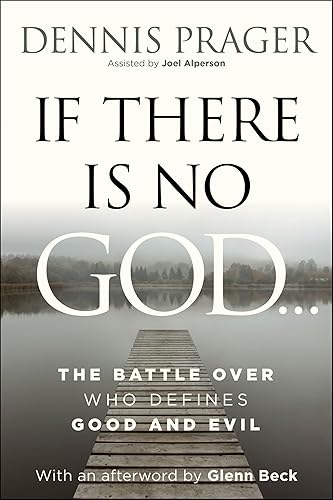
The "dog vs. stranger" litmus test
Dennis Prager has built a career on being the guy who asks the question that makes everyone in the room uncomfortable. The core of this book—and the reason it’s currently sitting with a 4.5 on Amazon—is a simple, brutal hypothetical: if your dog and a stranger are both drowning, and you can only save one, who do you pick?
Prager isn’t actually interested in your love for Golden Retrievers. He’s using the scenario to expose what he sees as the rot of modern secularism. If you choose the dog, you’re choosing feeling over objective value. To Prager, that’s the first step toward a society where "good" and "evil" are just vibes that change with the weather. It’s a classic Prager move: take a visceral emotion and use it to build a skyscraper of logic about why Judeo-Christian values are the only thing keeping us from total chaos.
Not a textbook, but not a beach read
While the book is marketed as accessible, don't mistake that for "light." Prager writes like he speaks on the radio—clear, punchy, and deeply combative. He’s not interested in a "both sides" exploration of ethics. He is making a case, and he uses heavy-hitting examples like murder and theft to prove that without a higher authority, these aren't actually "wrong," they're just "unpopular."
If your teen is the type to get fired up about a debate, this is their fuel. It’s structured around provocative exchanges and "the greatest challenges" Prager has faced from skeptics over the years. It reads less like a dry philosophy tome and more like a transcript of a very high-stakes argument. For a kid who is already skeptical of religion, this book will either be a frustrating wall of text or the first time they’ve seen a logical (rather than purely emotional) defense of faith.
How to use this at the dinner table
This isn't the kind of book you hand to a kid and say, "Tell me what you thought when you're done." It’s a tool for engagement. If you have a 16-year-old who thinks they’ve figured out the world, Prager’s arguments are designed to poke holes in that confidence.
The real value here isn't necessarily in agreeing with every point Prager makes—it’s in the "why." If your teen disagrees with his stance on secularism, make them explain why their alternative foundation for morality is sturdier. Because the book deals with some pretty grim realities to make its points, we’ve put together a Values vs. Feelings: A Parent’s Guide to Dennis Prager’s If There Is No God to help you navigate those specific "life or death" chapters without the conversation devolving into a shouting match.
The "if they liked X" factor
If your kid grew up on the "logic and reason" side of YouTube or enjoys the kind of high-level debate found in competitive forensics, they’ll find the rhythm of this book familiar. It’s for the reader who prefers clarity over nuance.
Prager is a "public intellectual" in the most literal sense—he wants these ideas to be used in the street, not just the classroom. If your household leans conservative, this is a foundational text. If it doesn't, it’s a masterclass in the arguments your kid is going to encounter the second they step into a philosophy 101 course or a heated Reddit thread. It’s provocative by design, and in an age of "you do you" morality, it’s a rare, blunt-force argument for the opposite.