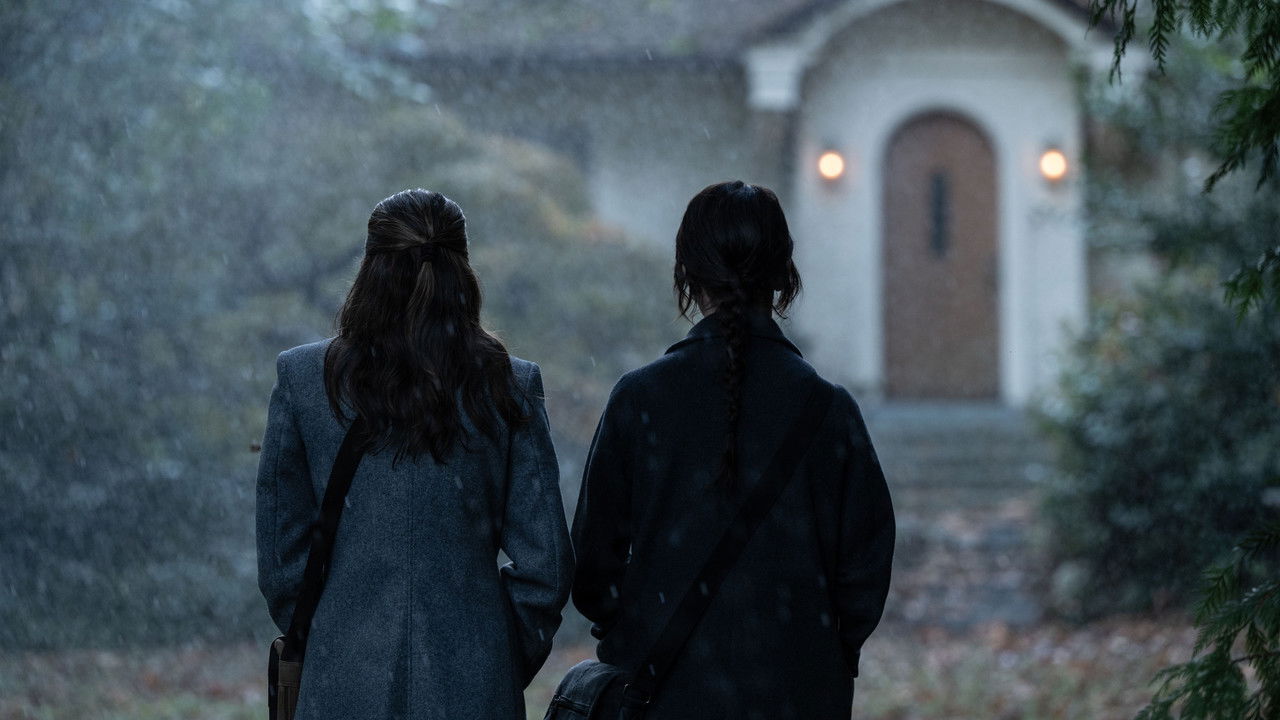
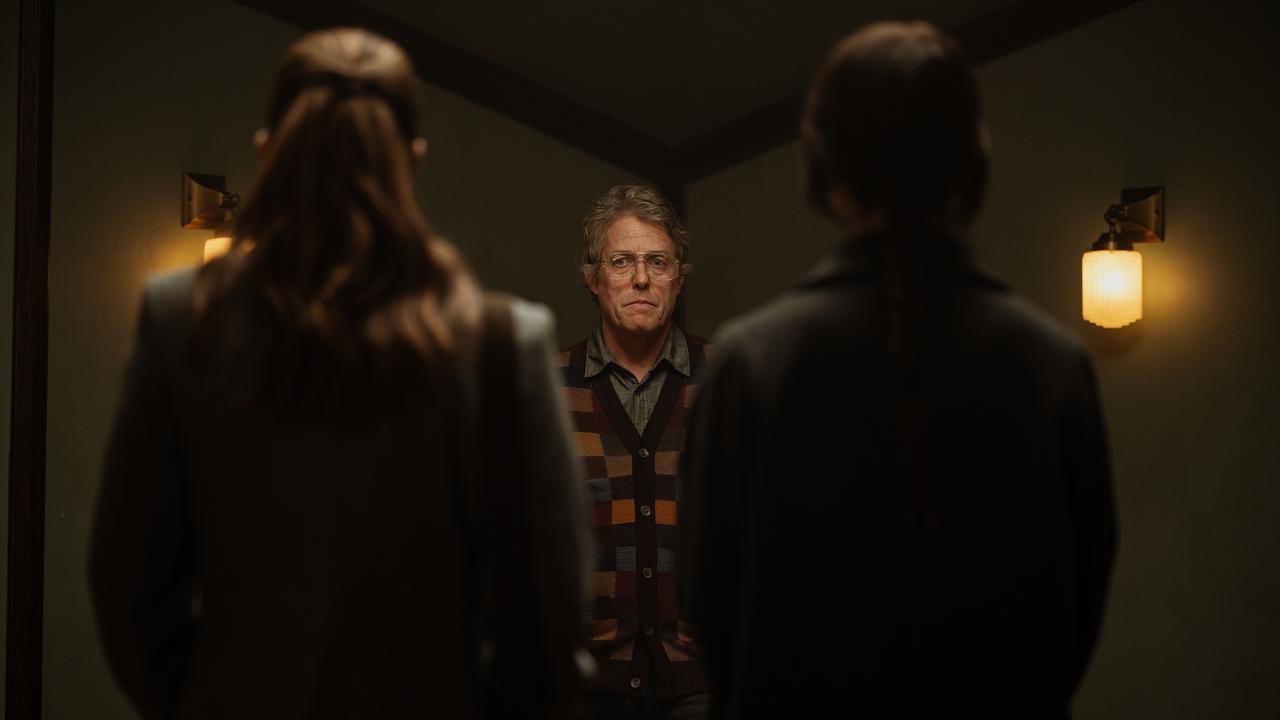
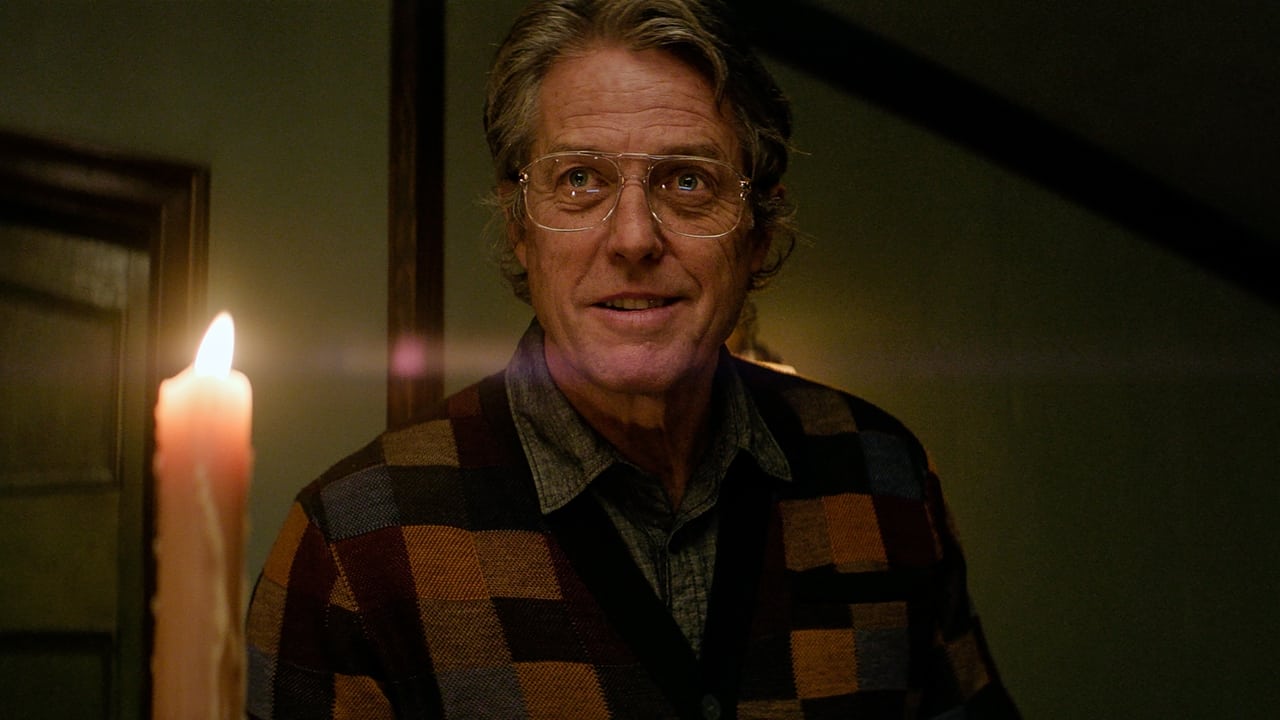
If you grew up watching Hugh Grant as the bumbling, charming romantic lead, prepare to be deeply unsettled. In Heretic, he uses that same stuttering charisma to lure two young missionaries into a theological death trap. It is a brilliant bit of casting because we are culturally programmed to trust him. When he offers the girls tea and starts discussing the history of board games or the origins of religious stories, you want to listen. By the time the door locks, the realization that his politeness is a weapon makes the tension feel suffocating.
A different kind of scary
Most horror movies rely on a masked killer jumping out of a closet. Heretic relies on a man in a cardigan explaining why your worldview is a copy of a copy. It is a chamber piece thriller, which means almost everything happens inside one house. The dread comes from the conversation rather than a high body count.
The writers behind A Quiet Place are at the helm here, but do not expect the same silent, creature-based tension. This film is loud with ideas. It is a talky, dense movie that treats its audience like they have been paying attention in history class. Critics gave it high marks—landing a 90% on Rotten Tomatoes—because it is rare to see a horror movie that cares this much about the internal logic of its villain. Mr. Reed isn't just a monster; he is a man who has done his homework, and that makes him much more dangerous.
The transition to mature horror
This is a quintessential bridge movie for older teens. If your kid liked the survival mechanics of A Quiet Place but is ready for something more intellectual, this is the move. It is essentially a 100-minute debate where the stakes eventually become physical. Unlike a lot of recent horror that leans into ghosts or demons, this stays grounded in what humans are capable of doing to one another when they are convinced they are the smartest person in the room.
We see a lot of families wondering how to handle the shift to R-rated movies, and Heretic is a perfect test case. It isn't "fun" in the way a popcorn slasher is. It is uncomfortable. It asks big, nasty questions about faith that might stick in a younger child's head for the wrong reasons. But for a 16-year-old who thinks they have seen every trope in the book, it is a masterclass in how to build dread through dialogue.
Why the set matters
Keep an eye on the house itself. The production design is a character in its own right, full of shifting floors and metaphorical puzzles that reflect the "deadly game" Mr. Reed is playing. It turns the act of walking through a door into a high-stakes decision. If you are watching this with a teen, the best way to engage is to talk about the "logic" of the trap. Mr. Reed wants his guests to choose their own path, but he has rigged the map. It is a cynical, clever look at how people use information to control others, which is a conversation worth having long after the credits roll.