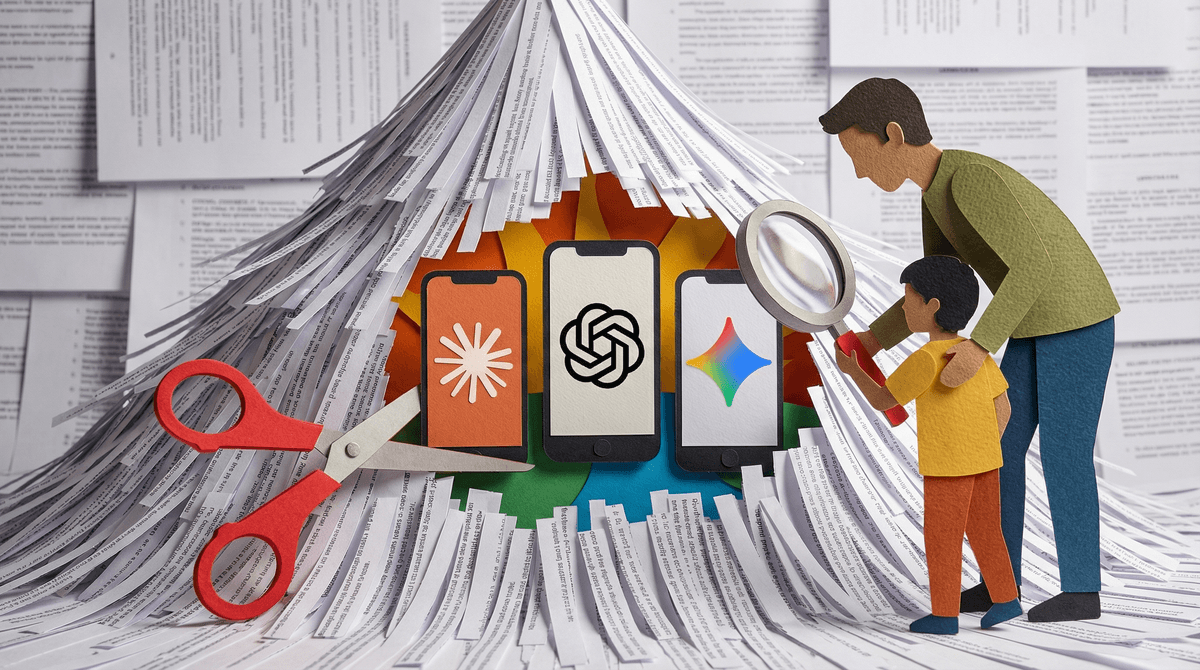


Google made a bold move rolling out AI to young kids, but the safety organizations are unanimous: it's not ready for prime time with children. Even the sanitized U13 version serves up sexual content, drug references, and concerning mental health advice often enough that Common Sense Media says you need to sit right there with your kid while they use it.
The creative tools are legitimately impressive—turning prompts into apps, generating images, creating podcasts from text files. For a 17-year-old working on a school project or an adult brainstorming business ideas, Gemini is genuinely useful. But for younger kids? The risk-benefit calculation doesn't add up.
The deeper issue is that Gemini can do their thinking for them. It's not a learning scaffold; it's a shortcut. Kids can outsource their homework, their creativity, their problem-solving—and the app is designed to make that easy. You're not teaching research skills; you're teaching prompt engineering.
If you have a mature high schooler who needs research help and you trust them to critically evaluate AI outputs, okay. But for middle schoolers and younger? The 'close supervision' requirement basically means you're doing a second full-time job as AI content moderator. Most parents don't have time for that, and honestly, most kids don't need an AI assistant—they need to struggle through math problems and write bad first drafts and learn to think.
Google built something powerful here, but powerful doesn't mean appropriate for children.