Each Kindness

Each Kindness

book

2012, Children's Books, Growing Up & Facts of Life

WISE
81%

WISE Score

4.8

Amazon

A beautiful gut-punch about exclusion and regret that doesn't let anyone off the hook with a tidy ending.

Amazon4.8
Common Sense Media

Where to Read

Our reviews and ratings are 100% unbiased, but as an Amazon Associate, Screenwise earns an affiliate fee if you buy a book or game by clicking one of our links. We don't get any credit if you just Google it instead :)

Screenwise Verdict

This is not a feel-good book, and that's exactly why it's so good. Each Kindness doesn't give Chloe (or the reader) an easy out—Maya leaves, the chance is gone, and you're left sitting with that discomfort. It's a rare picture book that trusts kids to handle complexity and regret.

The watercolor illustrations are gorgeous, the anti-bullying message is powerful without being heavy-handed, and the ripple effect metaphor actually sticks. Multiple reviewers call it 'heavy' and 'hard,' and they're right—but in the best way. This is the kind of book that stays with you.

Just know what you're getting into: if your kid needs resolution and happy endings, this will frustrate them. But if you're ready for a real conversation about kindness, exclusion, and the permanence of some choices, this is gold. Save it for a moment when you can talk it through together, not a quick bedtime read.
Age Fit

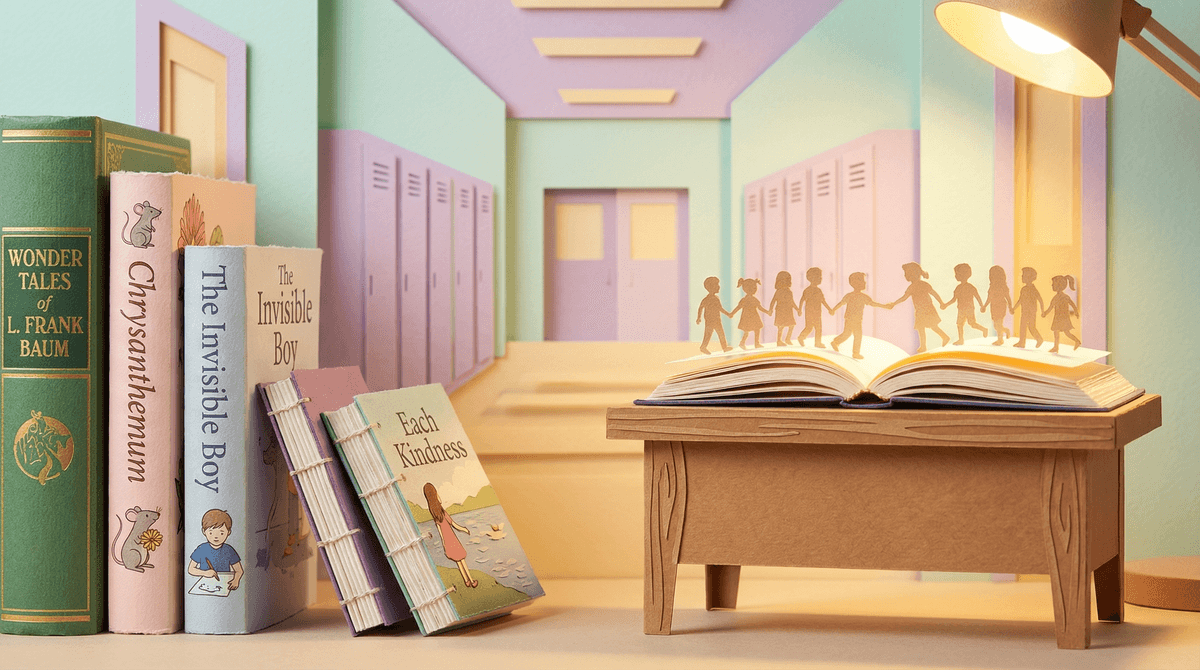
Best for ages 6-10, when kids are navigating social dynamics and can grasp the weight of regret. Younger kids (5-6) can handle it with support, but the unresolved ending might be confusing. By 11+, the lesson may feel a bit simple, though the emotional honesty still resonates.

WISE Breakdown
Wholesome
82

Models important lessons about empathy, regret, and the consequences of exclusion. The emotional weight is age-appropriate but heavy—Chloe's rejection of Maya and the subsequent regret when Maya leaves school creates a somber, reflective tone. No happy ending or redemption arc, which is actually more emotionally honest. The ripple effect lesson about kindness is meaningful without being preachy.

Imaginative
68

Jacqueline Woodson's storytelling and E.B. Lewis's watercolor illustrations create a contemplative, artistic experience. The ripple metaphor is thoughtful and visual. However, this is a straightforward narrative about a realistic social situation—it doesn't invite world-building, creative play, or exploration beyond reflection. It's imaginative in its emotional depth and artistic execution, not in sparking inventive thinking.

Safe
88

Emotionally challenging but completely safe for the target age group. The bullying depicted is realistic exclusion (not physical or graphic), and while the unresolved ending might disappoint some kids, it's not traumatic. No violence, scary content, or inappropriate material. The emotional discomfort is intentional and developmentally appropriate—kids can handle feeling sad or regretful about a character's choices.

Enriching
91

This is where the book shines. The lack of a tidy ending forces kids to sit with uncomfortable feelings about missed opportunities and the permanence of some choices. It builds empathy, teaches about the impact of exclusion, and encourages self-reflection about one's own behavior. The lesson about small acts of kindness creating ripples is concrete and actionable. Award recognition (Coretta Scott King Honor, Jane Addams Peace Award) confirms its impact. Genuinely thought-provoking for kids and adults.

Parent Info
✓

Why It Might Be Great

  • Teaches empathy and the real consequences of exclusion without being preachy—kids see Chloe's regret and feel it
  • The 'no happy ending' approach is brave and honest; Maya doesn't come back, and Chloe has to live with her choices
  • Award-winning team (Coretta Scott King Honor, Jane Addams Peace Award) delivers stunning watercolor art and powerful storytelling
  • The ripple effect metaphor gives kids a concrete, visual way to understand how small acts of kindness (or unkindness) spread
  • Opens up real conversations about times kids have excluded others or been excluded themselves
⚠

What to Watch For

  • This book will make kids (and adults) feel uncomfortable—that's the point, but be ready for some heavy feelings
  • Some kids may be frustrated or sad that Maya never comes back and Chloe doesn't get to apologize; talk through why that's realistic
  • The tone is somber and reflective, not whimsical or fun—save this for a moment when you're ready for a serious conversation, not bedtime

Conversation Starters

  • "Have you ever felt like Chloe, where you wished you could go back and be kinder to someone?"
  • "Why do you think Maya stopped coming to school? How do you think she felt?"
  • "What are some small acts of kindness you could do that might create ripples, like the teacher talked about?"
  • "If you were Chloe's friend, what would you have said when Maya tried to play with you?"

Ask Anything

Get a personalized guide on any topic