Our reviews and ratings are 100% unbiased. Screenwise is a Bookshop.org affiliate and an Amazon Associate, so if you buy a book through one of our links, we may earn a commission. Bookshop.org purchases also support independent bookstores.
Screenwise Verdict
This is modern Curious George in problem-solving mode: impulsive mistake first, hands-on construction second. When George and Steve polish off Betsy's display honeycomb, they don't cover it up or wait for an adult to fix it. They research, grab tools, and attempt to build a functional beehive.
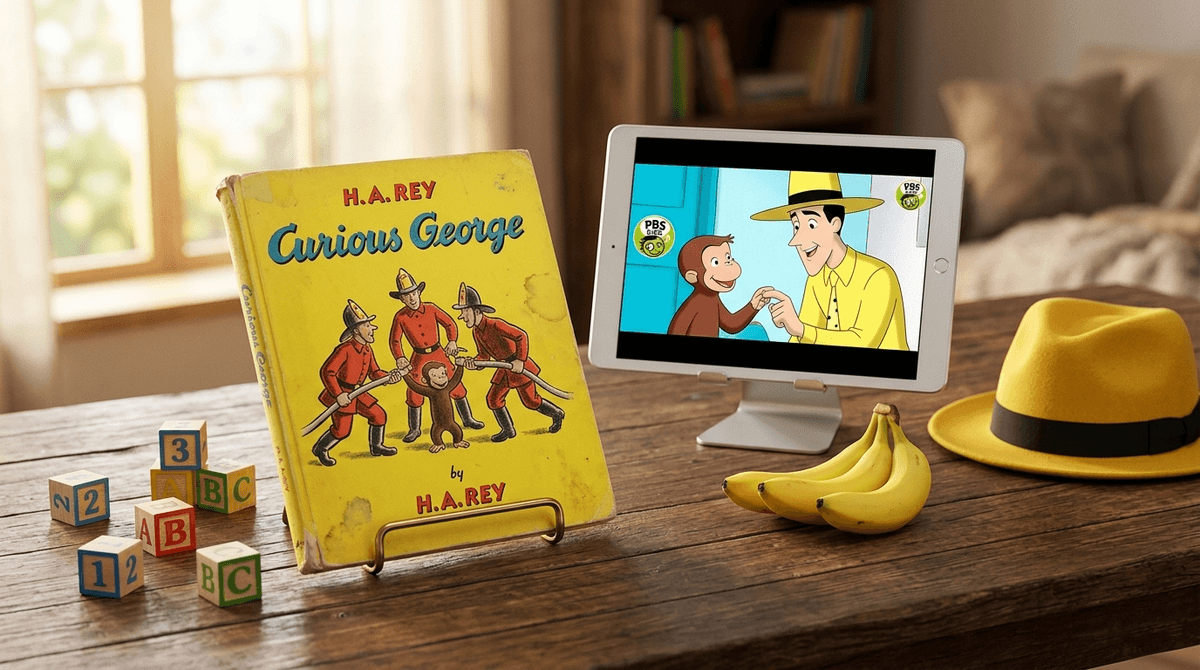
It lacks the vintage charm and slightly wilder edge of H.A. Rey's 1941 original, but what you get instead is clean, accessible preschool STEM. If you want a quick bedtime read that sparks an interest in backyard bugs, it does the job with zero friction.
Age Fit
A natural fit for ages 3 to 7. Preschoolers like the slapstick mischief, while kindergarteners can follow the simple science of beehives.
WISE Breakdown
Wholesome
92
George makes a classic impulse mistake by scarfing down Betsy's honeycomb, then immediately tries to fix the problem by building a backyard hive.
Imaginative
84
Channels backyard curiosity into DIY construction and insect observation rather than leaving kids on the couch.
Safe
98
Completely free of mature content, scary moments, or high peril. The biggest conflict is a ruined school report prop.
Enriching
86
Introduces basic pollination and beekeeping concepts alongside a clear lesson in fixing what you mess up.
Parent Info
✓
Why It Might Be Great
Grounded STEM curiosity that shows where honey actually comes from instead of treating food like magic supermarket inventory.
Models accountability by having George and Steve actively build a replacement rather than hiding their mistake.
Clear, bright pacing drawn from the modern animated series style, making it easy for toddlers and preschoolers to track.
⚠
What to Watch For
Bee realism: Real bees sting, which gets glossed over when cartoon characters build a hive in a suburban yard. Remind younger listeners not to touch actual hives.
Conversation Starters
"What would you do if you accidentally ate something your friend needed for school?"
"How do bees turn flowers into honey?"
"Why is building a real home for bees harder than George made it look?"
Deep Dive
The shift from vintage trouble to modern tinkering
The original 1941 Curious George was fundamentally about capture, escape, and chaotic trial-and-error in a wide world. Modern installments tied to the PBS television run—like this story featuring neighborhood regulars Steve and Betsy—operate on a different premise: George encounters a practical dilemma, observes how something works, and tries to engineer a fix.
Here, the hook is simple greed followed by engineering. George and Steve eat the centerpiece of Betsy's science report on honeybees. Instead of spiraling into panic, the duo attempts to construct a beehive from scratch to produce replacement honey.
Why it works for early readers
Books in this tier serve two distinct literacy functions:
Vocabulary and concepts: Words like honeycomb, hive, and worker bee get tied directly to visual action on the page, building language comprehension before early readers tackle phonics solo.
Low-stakes narrative tension: George makes a genuine mistake that impacts a peer, but the tone stays light enough that anxious listeners won't worry about severe punishment.
It won't win literary prizes for prose, but it delivers clear cause-and-effect storytelling that younger kids can easily follow.