Here's the thing: this book started important conversations, and the thriller-like pacing makes it genuinely gripping. But mental health professionals are right to be concerned.
The core premise—that 13 people caused Hannah's suicide through their actions—fundamentally misrepresents how suicide works. It's almost always rooted in mental illness, not social stress. The revenge-from-the-grave narrative is emotionally manipulative and potentially dangerous for vulnerable readers who might see suicide as a way to make people feel bad or understand their pain.
That said, with proper framing and adult guidance, it can spark crucial conversations about bullying, bystander behavior, and mental health. The key phrase there is "with proper framing." This isn't a book to casually recommend to a struggling 14-year-old. It's a book that requires context, follow-up discussion, and mental health literacy.
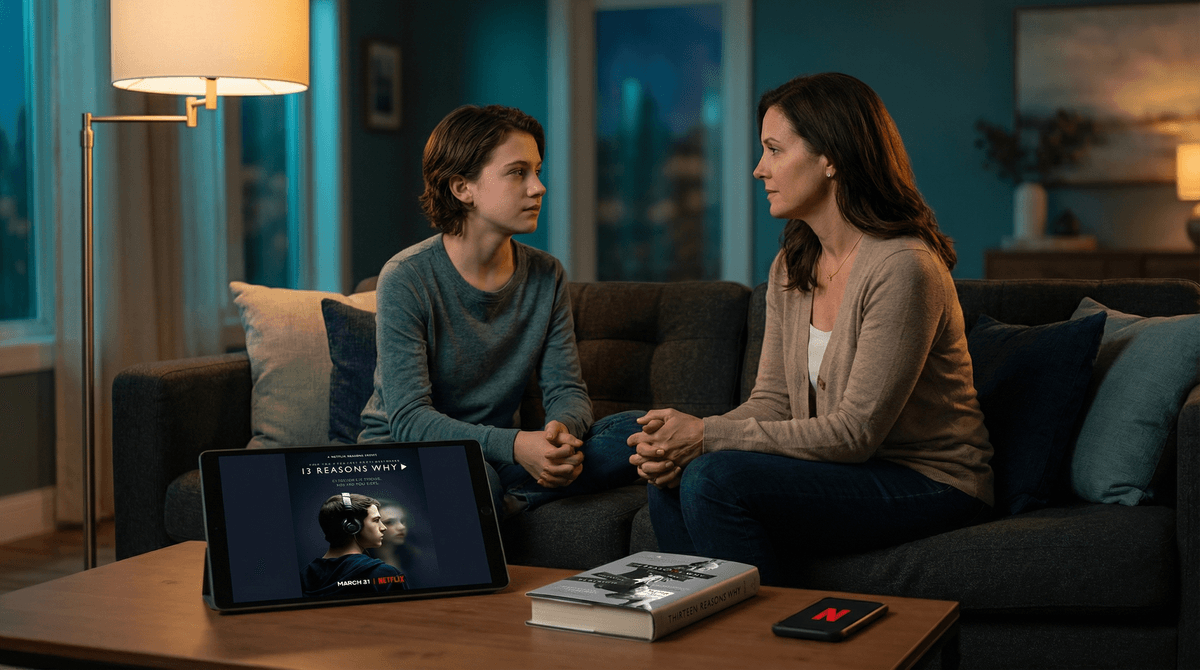
If your teen is reading it (or has read it—it was everywhere a few years ago), talk about it. Ask what they think about Hannah's reasoning. Discuss how depression and mental illness actually work. Make sure they know that suicide is never a rational solution and that help is always available.
Bottom line: controversial for legitimate reasons, but can be valuable with the right support structure.