

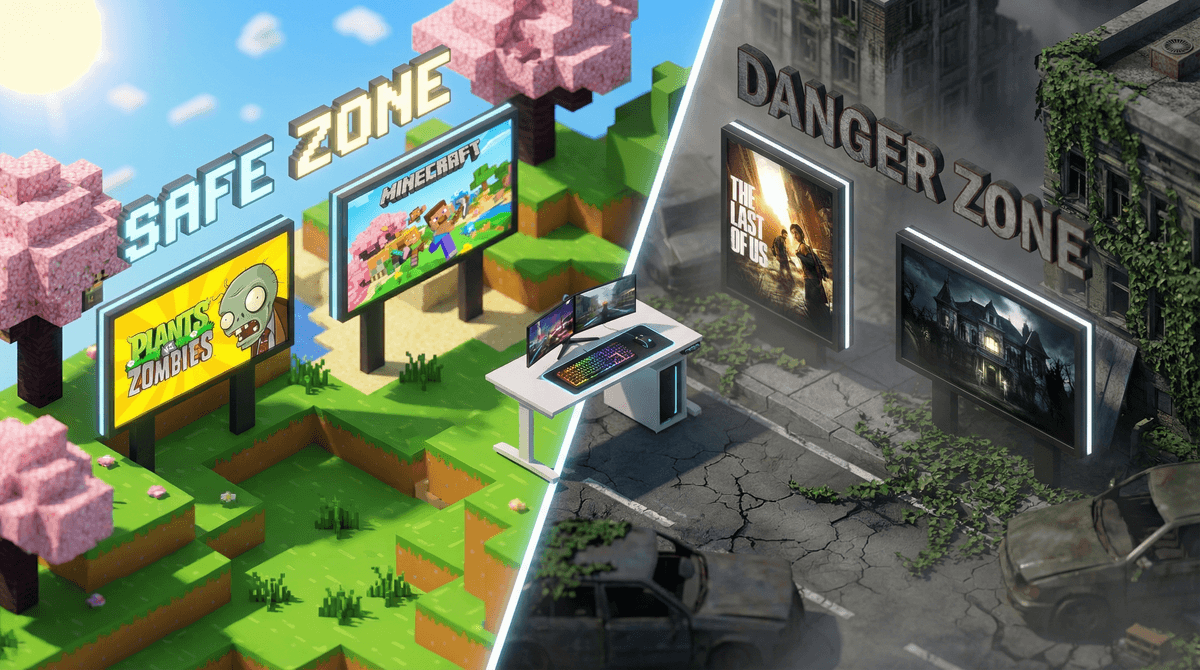
Zombie games are exactly what they sound like: video games where the undead are either the main antagonists you're fighting off, or (in some cases) what you become. They range from cartoonish tower defense games where you're planting sunflowers to fend off goofy zombies, to photorealistic survival horror where you're hiding in a closet hoping that shambling corpse doesn't hear you breathe.
The genre is massive. You've got everything from Plants vs. Zombies (adorable, strategic, basically garden warfare) to The Last of Us (absolutely not for kids, full stop). Some zombie games are about strategy and resource management. Others are about reflexes and shooting. And some are legitimately trying to give you nightmares.
The zombie game phenomenon isn't new—it's been around since the 1980s—but it exploded in the 2010s and shows no signs of slowing down. Walk into any gaming conversation with kids aged 10 and up, and zombies will come up. Whether it's the zombie mode in Call of Duty, the infected in Minecraft, or dedicated zombie survival games, this is a genre kids are encountering.
The thrill without real-world consequences. Zombies occupy this perfect sweet spot in gaming: they're threatening enough to create tension, but they're not real. Unlike games centered on realistic violence against humans, zombies are clearly fantasy enemies. There's no moral complexity—they're already dead, they want to eat you, and you're allowed to defend yourself. For kids navigating what's "okay" to enjoy, zombies feel safer than other violent content.
They're social. Many zombie games are designed for co-op play. You and your friends against the horde. There's something bonding about surviving together, strategizing about where to build your base, divvying up resources. Games like Roblox have dozens of zombie survival experiences where kids team up with friends.
They teach resource management and strategy. The good zombie games aren't just mindless shooting. They're about managing limited ammo, deciding when to fight versus run, planning escape routes, building defenses. These are actually valuable cognitive skills dressed up in rotting flesh.
They're everywhere. Zombie content has saturated pop culture. Kids see zombies in movies, TV shows, memes, Halloween decorations. Gaming is just where they get to interact with that cultural phenomenon.
This is the critical part: the range of intensity in zombie games is enormous, and age ratings matter here more than almost any other genre.
The Cute End:
- Plants vs. Zombies (E10+): Cartoonish, strategic, zero gore. Zombies wear traffic cones and newspaper hats. This is fine for elementary schoolers.
- Zombie modes in games like Fortnite (T): Stylized, not realistic, more action than horror.
The Middle Ground:
The Intense End:
- Resident Evil series (M): Photorealistic gore, body horror, genuine scares. Not for kids, period.
- The Last of Us (M): Incredible storytelling, but extremely violent, emotionally heavy, and features realistic human-on-human violence alongside infected enemies. This is adult content.
- Call of Duty Zombies mode (M): Graphic violence, gore, mature themes. The M rating exists for a reason.
The key question isn't "are zombie games okay?"—it's "which zombie games, at what age, for which kid?"
Elementary (Ages 6-10): Stick to clearly cartoonish options. Plants vs. Zombies is the gold standard here. The zombies are silly, there's no blood, and it's genuinely strategic. Minecraft zombies in creative or peaceful mode work too—kids can see them without the threat.
Middle School (Ages 11-13): This is where it gets tricky because kids' maturity levels vary wildly. Some 11-year-olds can handle Fortnite's zombie-adjacent content fine. Others will have nightmares from anything remotely scary. T-rated zombie games are designed for teens, but "teen" is a wide range.
Watch gameplay videos together before deciding. Seriously—YouTube exists for this exact reason. Twenty minutes of gameplay footage will tell you more than any rating.
High School (Ages 14+): Many teens can handle M-rated content, but that doesn't mean all of it is worth their time. The Last of Us has mature themes about loss, survival, and morality that can spark meaningful conversations. But hours of grinding through zombie hordes in some games? That's just desensitization without substance.
Learn more about how ESRB ratings actually work and what they mean
The nightmare factor is real. Even if your kid insists they're fine, zombie games—especially the scarier ones—can absolutely cause sleep issues. Jump scares, creepy audio, the tension of being chased... it sticks with kids. If you notice sleep problems or increased anxiety, pull back on the zombie content.
Context matters more than you think. A kid playing a zombie game with friends, laughing and strategizing, is having a completely different experience than a kid playing alone in the dark with headphones on. The social versus solo dynamic changes everything.
Not all violence is equal. There's a difference between cartoonish violence against clearly-not-human enemies and realistic gore. Research suggests that context, realism, and whether violence is rewarded all matter more than just "is there violence?" Shooting blocky Minecraft zombies is not the same as photorealistic horror games.
Some games use zombies as a lazy excuse for violence. Not every zombie game is teaching strategy or teamwork. Some are just endless killing with a thin zombie veneer. If the only gameplay loop is "shoot more zombies," ask yourself what your kid is actually getting out of it.
The social pressure is real. By middle school, a lot of kids are playing M-rated zombie games because "everyone else is." You're allowed to say no. You're also allowed to say "let's watch some gameplay together and then decide." Here's how to navigate the "but everyone else is playing it" conversation.
Instead of "zombie games are too violent," try:
"What do you like about this game?" Listen to whether they talk about strategy, friends, the challenge, or just the violence. That tells you a lot.
"This one seems pretty intense. How do you feel after playing?" Give them language to recognize their own reactions. Some kids don't connect their mood or sleep issues to what they're consuming.
"Let's find the right zombie game for right now." Frame it as finding the right fit, not denying them the whole genre. Plants vs. Zombies might not be what their friends are playing, but it's still legitimately fun.
"I'm not comfortable with that level of gore yet, but let's revisit in a year." "Yet" is powerful. It acknowledges they're growing and that boundaries can change.
Zombie games aren't inherently bad, and they're not going away. They can teach strategy, cooperation, and resource management. They can also be gratuitously violent, nightmare-inducing, and a waste of time.
Your job isn't to ban zombie games wholesale—it's to figure out which ones, at what age, with what boundaries. A 7-year-old playing Plants vs. Zombies is not the same as a 13-year-old playing Resident Evil, which is not the same as a 16-year-old playing The Last of Us and then discussing the moral themes with you.
Pay attention to age ratings. Watch gameplay footage before deciding. Notice how your kid acts after playing—are they wired, anxious, having nightmares? And remember that "not yet" is a complete answer.
The best zombie game for your family is the one that matches your kid's maturity level, doesn't disrupt their sleep or mood, and ideally teaches them something beyond "shoot the thing." Everything else is just noise.
- Check what they're already playing: If your kid is into Roblox, look at which specific zombie games they're choosing. The platform has both kid-friendly and intense options.
- Find age-appropriate alternatives: Explore strategy games that aren't zombie-themed if you want the cognitive benefits without the undead.
- Set up a "try it together" rule: New zombie game? Watch gameplay or play together first before they dive in solo.
- Talk about the ratings: Help your kids understand what ESRB ratings mean so they can start making informed choices themselves.