

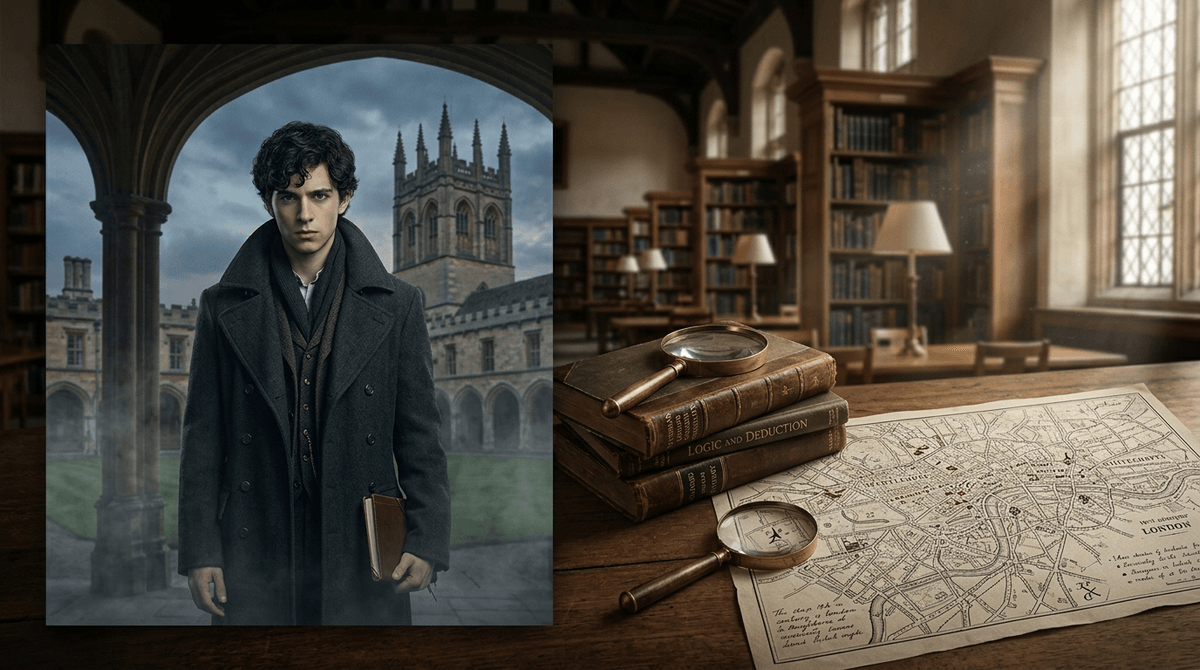
TL;DR: Young Sherlock on Prime Video is a high-octane, "gritty" reimagining of the world's most famous detective. Directed by Guy Ritchie, it features a 19-year-old Sherlock who is more "impulsive action hero" than "stuffy academic." The big twist? James Moriarty is his best friend. It’s stylish, fast-paced, and definitely aimed at the Gen Z/Gen Alpha crowd who loved Enola Holmes but are ready for something with more edge. Best for ages 12+.
If you’ve spent any time on TikTok or Reels lately, you’ve probably seen the "dark academia" aesthetic making a massive comeback. It’s all wool coats, moody libraries, and intellectual brooding.
Enter Young Sherlock.
This isn't your grandfather’s Sherlock Holmes. There’s no deerstalker hat, no "Elementary, my dear Watson," and honestly, not a lot of pipe-smoking. Instead, we have a 19-year-old Sherlock (played by Hero Fiennes Tiffin) who is disgraced, raw, and caught up in a murder mystery at Oxford University that threatens his entire future.
Guy Ritchie—the director behind the Sherlock Holmes movies starring Robert Downey Jr.—is at the helm here, which tells you exactly what kind of vibe to expect: slow-motion fight scenes, quick-cut editing, and a Sherlock who is just as likely to throw a punch as he is to solve a riddle.
Based loosely on the book series by Andy Lane, this show is an origin story. It finds Sherlock at his lowest point. He’s brilliant, yes, but he’s also arrogant, undisciplined, and completely lacks the "filter" that makes social interaction possible.
The plot kicks off when Sherlock finds himself framed for a crime (or at least deeply adjacent to one) and has to use his nascent powers of deduction to clear his name. But the real headline—the thing your kids are probably already texting about—is the relationship between Sherlock and James Moriarty.
In this universe, they aren't arch-enemies. Not yet, anyway. They are best friends. It’s a "frenemies-to-enemies" arc in the making, and it adds a layer of tragic tension to the show that keeps it from being just another procedural mystery.
If your middle or high schooler is into "Sherlock-core," it’s likely for a few specific reasons:
- The "Main Character" Energy: Sherlock is the ultimate "gifted but misunderstood" teen. For kids navigating the social hierarchies of school, there is something deeply satisfying about a character who is smarter than every adult in the room but still struggles to fit in.
- The Moriarty Dynamic: The "best friends who we know will eventually try to kill each other" trope is huge in modern fandom. It creates a lot of emotional stakes that go beyond just "who committed the murder?"
- The Visual Style: Guy Ritchie's style is basically made for the short-attention-span era. It’s kinetic. It’s loud. It feels like a music video at times. It’s the opposite of "brain rot" content—it actually requires you to pay attention to keep up with the clues—but it has that same high-energy pull.
- The "Ohio" Factor: Okay, maybe not literally "Ohio," but Sherlock’s social awkwardness often leads to moments that kids today would call "cringe" or "unfiltered." Watching him navigate a party is basically a masterclass in how not to be "rizz-heavy," and kids find that relatability hilarious.
If you’ve seen The Gentlemen or Snatch, you know Ritchie doesn't do "boring." But for parents, "Ritchie-style" is often code for "stylized violence."
In Young Sherlock, the violence isn't necessarily gore-heavy, but it is impactful. There are fistfights, chases, and intense moments of peril. It’s "gritty" in the sense that the world feels lived-in and dangerous.
If your kid is used to the polished, almost-sanitized world of Marvel movies, this might feel like a step up in intensity. It’s more in line with something like Stranger Things in terms of its "dark" factor.
Absolutely not. In fact, we’d argue it’s the opposite.
One of the biggest concerns with modern screen time is the passive consumption of "low-effort" content (think endless loops of Skibidi Toilet or mindless unboxing videos). Young Sherlock actually challenges the viewer.
It encourages:
- Critical Thinking: Trying to solve the mystery alongside Sherlock.
- Vocabulary Building: The dialogue is sharp, fast, and often sophisticated.
- Historical Curiosity: Even though it’s a stylized version of the 19th century, it often sparks questions about the era, the British Empire, and the history of science.
Learn more about the benefits of mystery media for cognitive development
If your kid finishes the season and is craving more, there are plenty of ways to lean into this interest without just defaulting to another Prime Video binge.
Go back to the source! The original stories are surprisingly readable for modern teens. "A Study in Scarlet" is a great place to start. It’s a fun exercise to see how much Ritchie changed (and how much he kept).
If Young Sherlock is a bit too intense, the Enola Holmes movies are a fantastic, slightly more "all-ages" entry point into the Holmes universe. Millie Bobby Brown brings a similar "rebellious teen" energy but with a bit more whimsy.
Wait, why am I recommending a farming sim? Because after the high-stress, high-adrenaline pacing of a Guy Ritchie show, kids often need a "palate cleanser." Stardew Valley offers a low-stress environment where they can still use logic and planning without the "gritty" life-or-death stakes.
If the show sparks a family interest in deduction and wordplay, Codenames is the gold standard. It’s all about making connections and outthinking your opponents—very Sherlockian.
Before you hit play, here are the "intentional parent" talking points:
- The Moriarty BFF Twist: This is a major departure from the Sherlock Holmes books. It’s a great chance to talk about "adaptations" and why creators change things. Does making them friends make the story better? Or does it ruin the "classic" feel?
- Impulsivity vs. Intelligence: Young Sherlock is brilliant but makes terrible decisions. This is a perfect mirror for the teenage brain (where the prefrontal cortex is still under construction). You can talk about how being "smart" doesn't always mean being "wise."
- The "Gritty" Aesthetic: There is some thematic darkness here—references to drugs (though handled more carefully than in the original stories), death, and corruption. If your kid is sensitive to "moody" content, you might want to watch the first episode together.
Instead of asking "Did you like it?", try these:
- "If you knew your best friend was going to turn into a 'villain' later in life, would you stay friends with them now?" (The Moriarty Question).
- "What was the one clue you missed that Sherlock caught?"
- "Guy Ritchie uses a lot of fast cuts and loud music. Does that make the mystery easier or harder to follow?"
Young Sherlock is a win for intentional parents who want to move their teens away from "brain rot" and toward high-quality, engaging storytelling. It’s stylish enough to be "cool," but smart enough to be valuable.
Just be prepared for your teen to start wearing long coats and acting like they can solve the "mystery" of why the dishwasher wasn't emptied by looking at the scuff marks on your shoes.
Next Steps: