

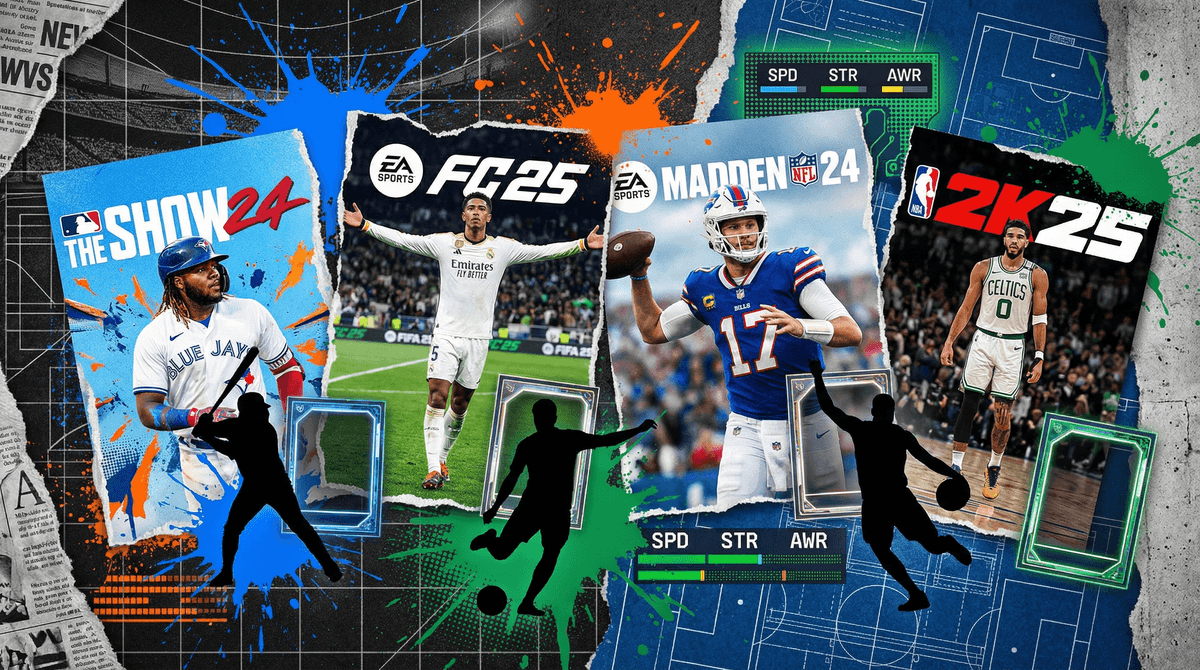
Xbox sports games are exactly what they sound like—digital versions of real-world sports like soccer, basketball, football, baseball, and more. The big franchises are FIFA/EA Sports FC (soccer), NBA 2K (basketball), Madden NFL (football), MLB The Show (baseball), and NHL (hockey).
Here's what catches parents off guard: these aren't just casual "pick up and play" games anymore. Modern sports games are incredibly complex, with career modes, team management systems, online multiplayer leagues, and—here's the kicker—in-game economies that can get expensive fast.
Sports games hit different than other video games because they connect to something kids already care about in real life. Your kid who watches NBA games wants to control their favorite players. The soccer fan wants to build their dream team. It's the digital version of playing with action figures, except the figures cost real money and the "playground" is online with millions of other players.
The appeal breaks down into a few key areas:
Ultimate Team modes - This is where things get interesting (and potentially expensive). In FIFA Ultimate Team, NBA 2K MyTeam, or Madden Ultimate Team, kids build their fantasy rosters by opening card packs. Sound familiar? It's basically loot boxes with a sports coat on. Some packs are earned through gameplay, but the best cards often come from packs you buy with real money.
Career and franchise modes - These single-player experiences let kids manage teams, draft players, and live out their GM fantasies. Generally wholesome, generally safe, and honestly pretty educational about sports strategy.
Online competitive play - Playing against real people online is the main draw for most kids. It's more challenging than playing the computer, more social, and comes with bragging rights.
Let's not dance around this: sports games can become money pits if you're not careful. The Ultimate Team modes are specifically designed to encourage spending. Your kid opens a pack, gets mostly mediocre players, but occasionally gets someone good—and boom, they're chasing that high again.
EA Sports FC (formerly FIFA) has been particularly controversial here. The game costs $60-70 upfront, but kids can easily spend hundreds more on card packs trying to get Messi or Ronaldo. Is this basically gambling? That's a real debate happening in multiple countries right now, with some places actually regulating loot boxes as gambling.
What you need to know:
- Set up parental purchase controls on Xbox immediately if you haven't already
- Have a clear conversation about what (if any) in-game purchases are allowed
- Some families do a "season pass" approach—one purchase per game release, that's it
- Others allow kids to use birthday money or allowance for FIFA points, treating it like any other purchase
- The "I just need $20 to get Ronaldo" will happen. Be ready with your answer.
Ages 6-9: The games themselves are usually rated E for Everyone, but the complexity might be frustrating. FIFA and NBA 2K have simpler arcade modes that work better for younger kids. Skip the online play and Ultimate Team modes entirely—they're not developmentally appropriate and the online interactions can get toxic fast.
Ages 10-12: This is when kids start really getting into sports games. They can handle the complexity, understand team building, and want to play with friends online. The challenge here is teaching restraint around in-game purchases and managing the competitive intensity. Some kids handle losing well, others... do not.
Ages 13+: Most teens playing sports games are deeply invested. They follow the meta (which players are best), watch YouTube tutorials, and play in online leagues. The games themselves are fine, but online voice chat needs monitoring. Sports gaming communities can be incredibly toxic, with slurs and harassment being unfortunately common.
The online environment is rough. Sports games attract competitive players, and competitive players can be absolute jerks. Racist abuse, homophobic slurs, and general toxicity are well-documented problems in FIFA and NBA 2K communities. This isn't "kids being kids"—it's a real issue that game companies have struggled to address effectively.
Your options:
- Turn off voice chat entirely (recommended for under-13)
- Only allow party chat with known friends
- Have regular check-ins about what they're experiencing online
- Report toxic behavior (though honestly, enforcement is inconsistent)
The games reset every year. EA Sports FC 25, NBA 2K25, Madden 25—every fall, new versions drop. And here's the thing: the previous year's game essentially dies. The online player base moves to the new version, Ultimate Team progress doesn't carry over, and your kid will absolutely want the new one. It's a $70 annual subscription disguised as a game purchase.
Some families buy every-other-year. Some wait for sales (games usually drop to $30-40 by February). Some skip the latest version entirely and just play Rocket League instead (which is free and honestly might be the best "sports" game for kids anyway—it's soccer with cars, zero microtransaction pressure, and way less toxic).
Time management is real. A quick match can turn into "just one more game" for hours. These games are designed to keep you playing—daily objectives, weekly challenges, seasonal content. It's the same retention mechanics as Fortnite, just wearing a jersey.
Here's where I'll push back on the "it's just screen time" narrative a bit. Good sports games can teach:
- Sports strategy and rules - Kids learn plays, positions, and game flow
- Resource management - Career modes involve budgets, contracts, and long-term planning
- Handling failure - You'll lose games. A lot. Learning to take an L without throwing the controller is a life skill
- Statistics and math - Player ratings, percentages, probability—it's all there
But let's be honest: they're also teaching kids that spending money gives you competitive advantages, that annual upgrades are normal, and that online toxicity is just part of gaming culture. Whether the tradeoffs are worth it depends on your family.
Xbox sports games aren't inherently good or bad—they're tools that can be used well or poorly. A kid playing NBA 2K career mode offline, learning plays and managing a team, is having a pretty different experience than a kid dropping $200 on card packs while getting screamed at by strangers online.
Green flags:
- Playing with real-life friends
- Interest in the actual sport carries over to real life
- Can handle losing without rage
- Respects spending limits
Red flags:
- Constant pressure to spend money
- Rage-quitting or controller-throwing
- Playing exclusively online with strangers
- Screen time interfering with actual sports or activities
If you're considering letting your kid play Xbox sports games:
- Start with offline modes - Career/franchise modes are genuinely fun without the pressure
- Set up purchase controls now - Don't wait until they've spent $100
- Watch them play - You don't need to understand every mechanic, but sit with them for a few matches
- Talk about the business model - Help them understand why the game wants them to spend money
- Consider alternatives - Rocket League is free and less predatory, Mario Strikers exists if you have a Switch
And if you're already in deep and dealing with spending issues or toxic behavior, it's not too late to reset boundaries. Here's how to have that conversation.
The goal isn't to ban sports games or pretend they're evil. It's to go in with eyes open, boundaries set, and a plan for when (not if) your kid asks for "just one more pack."