

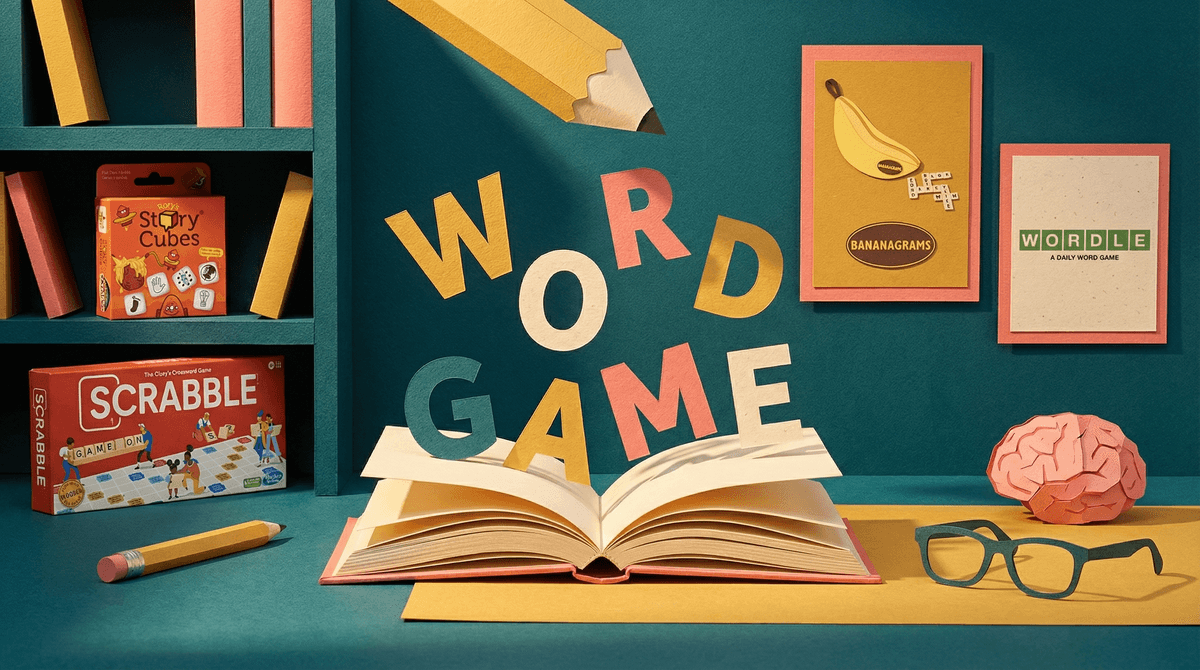
Word games are exactly what they sound like—games that play with language, whether that's building words from letters, guessing words from clues, solving puzzles with vocabulary, or creating stories from prompts. They range from classic car-trip favorites like "I Spy" and "20 Questions" to physical games like Scrabble and Boggle, to digital apps like Spelling Stage and Wordle.
The beauty of word games is that they're sneaky learning—kids think they're just playing, but they're actually building vocabulary, practicing spelling, developing critical thinking, and learning to recognize patterns in language. And unlike a lot of "educational" content that feels like homework dressed up with cartoon characters, word games are genuinely fun.
They level the playing field. Unlike video games where a 10-year-old will absolutely destroy you because their reflexes are faster, word games let different ages compete more fairly. A second grader might know a three-letter word you missed, while you bring a bigger vocabulary. It's one of the few game categories where "family game night" doesn't mean the adults are secretly bored.
They work anywhere. Stuck in a waiting room? Play "Category" (pick a category like animals, everyone takes turns naming one until someone gets stumped). Long car ride? "License Plate Phrases" where you make up what the letters on license plates stand for. No batteries, no Wi-Fi, no $60 game purchase required.
They're actually building real skills. Research consistently shows that kids who play word games develop stronger reading comprehension, better spelling, and more robust vocabularies. They're also practicing executive function skills—planning ahead, considering multiple options, adapting strategies. These aren't just "nice to have" skills; they're foundational for academic success.
Here's the thing: both digital and analog word games have value, and the "best" choice depends on your situation.
Physical word games like Bananagrams, Scrabble Junior, or even just pen-and-paper games offer face-to-face interaction, no notifications, and that satisfying tactile experience of moving tiles or writing words. They're also easier to customize on the fly—if your 6-year-old is getting frustrated, you can adjust the rules without navigating settings menus.
Digital word games like Wordle, Spelling Stage, or Prodigy English offer immediate feedback, adaptive difficulty, and sometimes more engaging visuals. They're also great for independent play when you need 15 minutes to make dinner. The key is choosing apps that are actually about the word play, not dressed-up slot machines with vocabulary tacked on.
The honest answer? Use both. A long board game session on Sunday afternoon hits different than a quick Wordle solve while waiting for the dentist.
Ages 4-7: Pattern Recognition & Letter Play
- Zingo: Bingo meets matching, great for pre-readers
- Rhyme Time: Take turns saying words that rhyme—no points, no pressure, just play
- Endless Alphabet: If you're going digital, this one's actually charming and ad-free
- Alphabet Hunt: Find things around the house that start with each letter
Ages 8-11: Strategy & Vocabulary Building
- Boggle: Classic for a reason, builds speed and pattern recognition
- Bananagrams: Like Scrabble but faster and more forgiving
- Story Cubes: Roll dice with images, create stories—builds narrative skills
- Wordle: The daily puzzle is genuinely fun for this age group
- 20 Questions: Oldie but goodie, teaches deductive reasoning
Ages 12+: Complex Strategy & Creative Play
- Codenames: Team-based word association, absolutely brilliant
- Scrabble: Now they're ready for the real deal
- The New York Times Spelling Bee: Daily word puzzle that's legitimately addictive
- Mad Libs: Still funny, still teaching parts of speech
- Contact: A guessing game that rewards obscure knowledge and creative thinking
Don't stress about "educational value" too much. If your kid is engaged and thinking about language, that's the win. You don't need to turn every game into a teaching moment or quiz them on definitions afterward. The learning happens through play.
Competitive kids need different approaches. If you've got a kid who melts down when they lose, word games can be tricky. Try cooperative games where you work together, or focus on "beat your own score" rather than head-to-head competition. Codenames is great for this—it's team-based, so winning and losing feels less personal.
Reading level ≠ word game ability. Some kids who struggle with reading actually excel at word games because they're pattern-based rather than comprehension-based. Don't assume your reluctant reader won't enjoy these—they might surprise you.
Digital word games aren't all created equal. Check if an app has ads, in-app purchases, or data collection before handing it over. A "free" word game that interrupts every two minutes with ads isn't worth the frustration.
Word games are one of those rare categories where fun and learning genuinely overlap. They build real skills, work for mixed-age groups, and don't require a screen (though some great digital options exist too).
Start simple—you probably don't need to buy anything new. Play "I Spy" in the car, do Wordle together over breakfast, or grab a pad of paper and play Hangman. If your kids get hooked, invest in a physical game or two for family game nights.
The goal isn't to replace all screen time with word games or turn your kid into a spelling bee champion. It's to give them another tool for engaging with language, thinking creatively, and maybe—just maybe—enjoying a family activity that doesn't involve negotiating Fortnite time.
Want to explore more screen-free activities? Check out our guide to board games for different ages and interests.
Curious about educational apps that are actually worth it? Here's our breakdown of the best learning apps that aren't just digital worksheets.
Looking for more ways to build literacy? Our guide to audiobooks and podcasts for kids has recommendations that make long car rides actually enjoyable.