

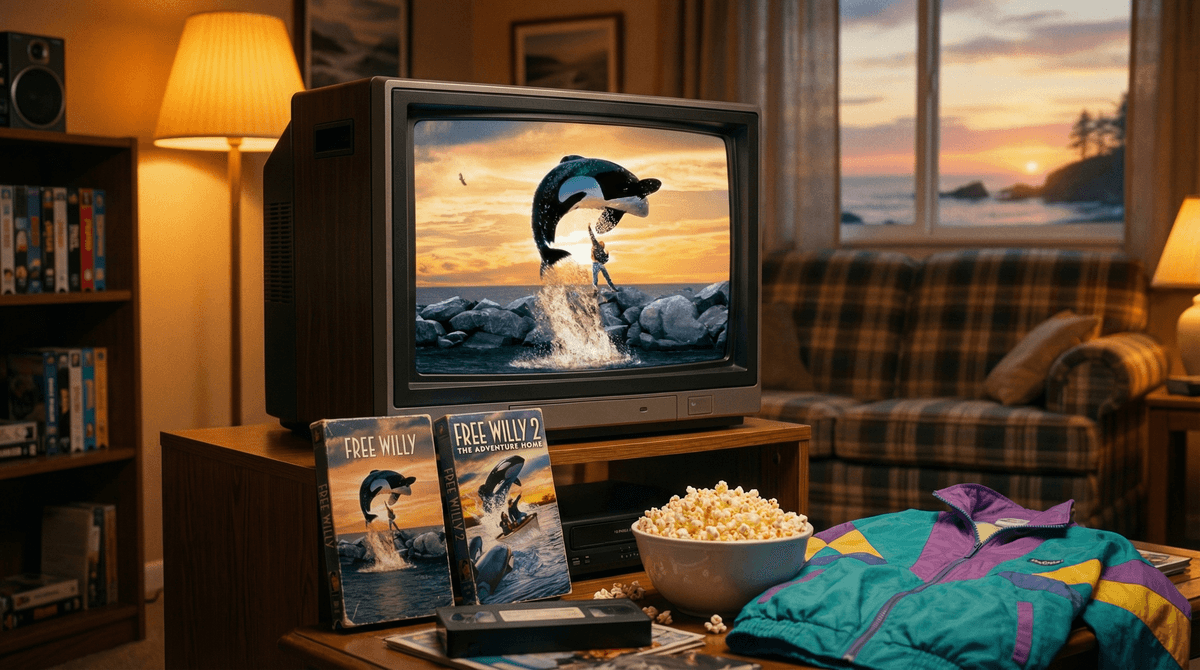
Why Free Willy 2 Is the Perfect Family Movie for Teaching Compassion and Environmental Responsibility
TL;DR: Free Willy 2: The Adventure Home is one of those rare sequels that actually expands on what made the original great—blended family dynamics, environmental activism, and a kid protagonist who makes real mistakes. It's got enough 90s edge to keep modern kids interested (oil spills! family conflict! actual stakes!) without the sanitized Disney treatment. Ages 7+, and honestly? Adults might get more out of it now than they did in 1995.
Let me be upfront: most 90s family movie sequels are absolute garbage. They're cash grabs that water down everything good about the original, slap on some new CGI, and call it a day.
Free Willy 2: The Adventure Home is not that movie.
This sequel actually does something interesting—it takes Jesse, now settled into his adoptive family, and throws him into the deep end of blended family chaos when his half-brother Elvis shows up. Add in an environmental disaster storyline that feels painfully relevant in 2026, and you've got a family film that tackles real stuff without being preachy about it.
The original Free Willy was about a troubled kid connecting with a captive orca. Sweet, emotional, effective. But Free Willy 2 does something smarter—it shows what happens after the happy ending. Jesse's adopted now, but that doesn't magically fix everything. His biological mom's death has left him with a younger half-brother who's angry, confused, and acting out.
This is the kind of complexity that makes kids actually pay attention. Not every problem gets solved with a heartfelt conversation and a hug. Elvis is genuinely difficult. Jesse makes selfish choices. The adults don't have all the answers. It's messy in ways that feel true to how families actually work.
The environmental storyline—an oil tanker runs aground near where Willy and his orca family are living—gives the movie real stakes without feeling like a Very Special Episode. The spill happens about halfway through, and suddenly the kids' adventure becomes an actual crisis. No one's lecturing about conservation; they're just showing you what happens when corporate negligence meets wildlife, and it's devastating.
Modern kids have been raised on Bluey and Encanto—they expect emotional intelligence and real family dynamics in their media. Free Willy 2 delivers that, but with a 90s sensibility that doesn't over-explain everything.
The pacing works. Unlike a lot of family films that drag in the middle, this one keeps moving. You've got the brothers' conflict, the orca family storyline, the environmental disaster, and a climactic rescue that actually feels earned. The runtime is 98 minutes, which is perfect for the 7-10 age range before attention spans start to wander.
The kids are capable. Jesse and Elvis don't just watch adults solve problems—they're actively involved in the rescue efforts. They make plans, take risks, and face real consequences. There's something refreshing about a family movie where the kids aren't just cute accessories to the plot.
The orcas are characters, not props. Willy has a family now—a mate and two calves—and the movie treats them as individuals with their own behaviors and relationships. Kids who are into nature documentaries or animal science content will appreciate how much attention is paid to realistic orca behavior.
This is where the movie earns its place on your family movie night rotation. Elvis isn't just "the annoying younger brother"—he's a kid processing grief and abandonment in real time. He acts out. He resents Jesse. He doesn't trust adults. And the movie lets that be complicated.
Jesse, meanwhile, has to figure out how to be a brother when he's barely figured out how to be a son. He wants his new life with his adoptive parents, but he also feels guilty about moving on from his past. That's heavy stuff for a PG-rated movie, and it's handled with surprising nuance.
The adoptive parents (Glen and Annie) are also refreshingly realistic. They don't have all the answers. They make mistakes. Glen gets frustrated. Annie tries too hard. But they keep showing up, which is ultimately what matters. If your family is dealing with adoption, foster care, or blended family dynamics, this movie provides some genuinely useful conversation starters.
The oil spill storyline could have been preachy. Instead, it's just... real. The movie shows the immediate impact—orcas struggling to breathe in contaminated water, rescue workers overwhelmed, cleanup efforts that feel inadequate. It's not subtle, but it's not heavy-handed either.
For kids growing up in an era of climate anxiety, this kind of storytelling matters. It shows environmental problems as solvable through human action and cooperation, not just abstract doom. The kids in the movie don't fix everything—the adults and scientists do most of the heavy lifting—but the kids' advocacy and quick thinking make a difference.
If you're looking for movies that teach environmental responsibility, this is a solid choice that doesn't feel like homework. Pair it with documentaries like Our Planet or My Octopus Teacher for older kids who want to dig deeper.
Ages 7-9: Perfect entry point. The themes are accessible, the action isn't too intense, and the sibling dynamics will resonate with kids navigating their own family relationships. Some scenes of the oil spill and orcas in distress might be upsetting for sensitive kids—preview those moments if your kid is particularly tender-hearted about animals.
Ages 10-12: Still engaging, but now they'll pick up on the more complex family dynamics and environmental themes. Great for discussions about corporate responsibility, conservation, and how individual actions connect to larger systems.
Teens: Honestly? They might roll their eyes at the 90s-ness of it all, but if they're into marine biology or environmental science, the orca behavior and conservation elements hold up. The family stuff is less relevant for teens unless they're dealing with similar blended family situations.
Content notes: Mild peril, some emotional intensity around the death of a parent (discussed, not shown), animals in distress during the oil spill sequence. Rated PG, and it earns it—nothing shocking, but not totally sanitized either.
The 90s aesthetic is REAL. We're talking baggy jeans, questionable haircuts, and a soundtrack that screams 1995. Some kids will find this hilarious. Others might find it distractingly dated. Lean into it—it's a time capsule.
The science mostly holds up. The orca behavior and oil spill impacts are reasonably accurate for a family film. If you've got a kid who's going to fact-check everything (looking at you, future marine biologists), they won't find too much to complain about.
It's slower than modern kids' movies. There's actual breathing room between scenes. Conversations happen at normal speed. If your kid is used to the rapid-fire pacing of modern animated films, they might need a minute to adjust. But that slower pace also means more room for emotional processing, which is valuable.
The adoption/foster care representation matters. Jesse's story—from troubled foster kid to adopted son still processing his past—is handled with care. If your family has experience with the foster or adoption system, this movie acknowledges that happy endings don't erase complicated histories.
-
"What would you do if you suddenly had to share your family with a new sibling?" Gets at the heart of Elvis and Jesse's conflict without making it about "right" answers.
-
"Why do you think Elvis was so angry at the beginning?" Helps kids practice empathy and think about how grief and loss show up as behavior.
-
"What did you notice about how the oil spill affected different animals?" Opens up environmental discussions in a concrete way.
-
"Do you think Jesse was a good brother? What about when he [specific moment]?" Lets kids grapple with the fact that good people make selfish choices sometimes.
Free Willy 2: The Adventure Home is that rare sequel that respects its audience enough to tackle complicated themes without dumbing them down. It's not perfect—the 90s dialogue occasionally clunks, and yes, some of the orca CGI looks dated—but it's got heart and substance that most modern family films lack.
If you're tired of movies that treat kids like they can't handle complexity, or you want something that balances entertainment with genuine teaching moments about family, compassion, and environmental responsibility, this is worth the watch.
Plus, your kids will finally understand why millennials get weirdly emotional about Michael Jackson's "Will You Be There" playing over the credits.
Watch it: Available on most streaming platforms (check your library's digital collection too—it's often free there).
Pair it with: The original Free Willy for context, Dolphin Tale for similar themes with different animals, or My Octopus Teacher for older kids ready for real-world marine conservation stories.
Explore more: If the environmental themes resonate, check out nature documentaries for kids or books about ocean conservation. If it's the family dynamics that hit home, movies about adoption and foster care might be your next rabbit hole.