

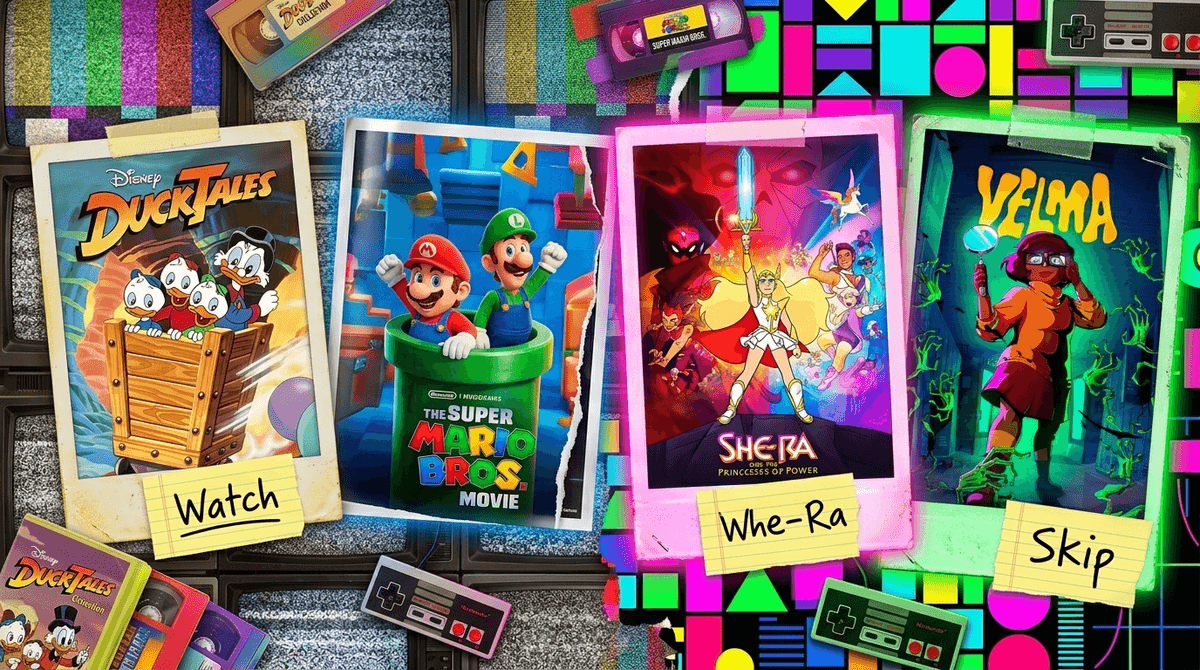
TL;DR: Nostalgia is a hell of a drug, and Hollywood knows it. But just because you loved it in 1998 doesn’t mean the 2025 "reimagining" is good for your kid’s brain—or your sanity. We’re seeing a massive wave of "Cocomelon-ification" (bright colors, zero substance, high-speed editing) and "Edgy-fication" (unnecessary grit) that ruins the source material.
The Quick List:
- Watch these: DuckTales (2017), The Super Mario Bros. Movie, She-Ra and the Princesses of Power.
- Skip these: Velma, Thundercats Roar, and the new CGI Caillou.
- Dig Deeper: Check out our guide on brain rot and high-stimulation media
We’ve all been there. You’re scrolling through Netflix, and you see a thumbnail for a show you grew up with. Your brain does a little happy dance. You think, "Oh, I loved this! I can't wait to show my kid!"
That’s the trap. Studios are banking on your "core memories" to sell subscriptions. "Nostalgia Bait" refers to media that uses a known brand (like Scooby-Doo, Masters of the Universe, or The Smurfs) to get parents to click, but the actual content is often a hollowed-out version of the original—or worse, a cynical "update" that misses why the original worked in the first place.
When a reboot misses the mark, it usually fails in one of two ways:
- Cocomelon-ification: This is when a show with actual plot and character development is rebooted into a high-stimulation, low-substance "zombie show." Think faster cuts, louder noises, and simplified dialogue. It’s designed to keep a kid’s eyes glued to the screen through sheer sensory input rather than storytelling. It’s the digital equivalent of feeding them straight corn syrup.
- The "Edgy" Update: This happens when creators take a wholesome property and try to make it "relevant" by adding snark, adult themes, or mean-spirited humor. It’s not "Ohio" weird; it’s just bad writing that alienates the original audience without giving the new generation anything of value.
According to recent media consumption data, about 65% of parents report feeling disappointed by reboots of shows they liked as kids. Even more concerning, high-stimulation reboots (like the newer versions of many toddler shows) are linked to shorter attention spans and increased irritability when the screen is turned off.
Find classic shows that haven't been ruined yet
Not every reboot is a dumpster fire. Some creators actually understand that you can update a look without gutting the soul of the show.
This is the gold standard. It took the 80s classic and added actual character arcs, better humor, and a sense of adventure that rivals Indiana Jones. It’s fast-paced, but the "fast" comes from the wit, not just flashing lights. It’s perfect for ages 6-12.
While not a "reboot" of a show, it’s a reboot of the 90s attempt at a movie. It works because it doesn't try to be "edgy." It’s a love letter to the Mario franchise. It’s vibrant without being "brain rot," and it’s something you can actually enjoy alongside your kids.
Netflix absolutely nailed this one. They took a toy-commercial cartoon from the 80s and turned it into a complex story about friendship, trauma, and redemption. It’s a great example of how to make a show "modern" (with diverse characters and deep emotional stakes) without losing the magic.
Now for the "no-BS" part. Some of these are just bad. There’s no other way to put it.
Guys, this is simply unwatchable for families. It’s a "reimagining" of Scooby-Doo that is mean-spirited, overly sexualized, and hates its own source material. It’s not for kids, and frankly, it’s not really for adults who liked the original either. It’s the definition of using a brand name to sell something completely unrelated.
This is the poster child for "Cocomelon-ification" of older kids' media. The original was an epic action show. This version is a hyperactive, noodle-armed comedy that feels like it was written by someone who had too much Red Bull. It’s exhausting to watch.
As if the original Caillou wasn’t already a point of contention for parents everywhere, the CGI reboot doubles down on the "whiny kid" trope but adds a layer of uncanny-valley animation. It’s low-effort content designed for the YouTube Kids algorithm.
When you’re deciding if a reboot is worth the screen time, don’t just look at the title. Do a quick "Stimulation Check":
- The 10-Second Test: Watch 10 seconds of the show. How many camera cuts are there? If there are more than 5 or 6 cuts in 10 seconds, it’s likely a high-stimulation show designed to "hook" the brain’s dopamine system. This is a hallmark of "brain rot" content.
- The Volume Test: Is the show constantly loud? Does every character scream their lines? Classic shows like Mr. Rogers' Neighborhood or even the original Blue's Clues had moments of silence. Modern reboots often fear silence because they think they’ll lose the kid’s attention.
- The Snark Factor: Does the show rely on characters being mean to each other for "humor"? A lot of reboots try to be "cool" by making the characters cynical. If your 6-year-old starts acting like a sarcastic teenager after watching a show, you know why.
Learn more about the effects of high-speed editing on toddler brains
Ages 2-5: The Danger Zone
This is where "Cocomelon-ification" is most rampant. Stick to the originals if you can, or go for modern classics like Bluey or Puffin Rock. If a reboot looks like a neon fever dream, it probably is.
Ages 6-9: The "Cool" Trap
Kids this age want to watch what the "big kids" watch. They might be drawn to reboots of things like Teen Titans Go!. While that show has its moments, it's very high-energy. Balance it out with something more narrative-driven like Avatar: The Last Airbender.
Ages 10-14: The Edgy Reboots
This is where they’ll find the "dark" versions of things you loved. Talk to them about why a show is being made. Is it because there’s a good story to tell, or are they just using a name people know? This is a great age to start building media literacy.
If your kid is obsessed with a reboot that you absolutely hate, don't just ban it (that usually backfires). Instead, try these conversation starters:
- "I noticed this version of [show name] is really different from the one I watched. What do you like about this one?"
- "Does this show make you feel calm or really hyper after you watch it?"
- "In the original, the characters were really kind to each other. Do you think they're being kind in this version?"
- "Why do you think they made [character] so much louder in this show?"
Check out our guide on building media literacy for tweens
Nostalgia is a great way to bond with your kids, but don't let a familiar logo blind you to poor-quality content. We are living in an era where "content" is often valued over "storytelling."
If a reboot feels like it's just trying to sell toys or keep your kid in a trance, it probably is. Trust your gut. If you find yourself thinking, "This is just terrible, full stop," you’re probably right. There is too much incredible, original media out there (and some genuinely great reboots) to waste time on nostalgia bait that misses the mark.
- Audit the Watchlist: Take a look at the "reimagined" shows your kids are watching. Do the 10-second stimulation test.
- Introduce the Originals: Many streaming services have the original versions of the shows being rebooted. See if your kids enjoy the slower pace of the "classic" versions.
- Use Screenwise: If you're not sure if a new remake is worth it, run it through our survey to see how it fits into your family's digital wellness goals.