

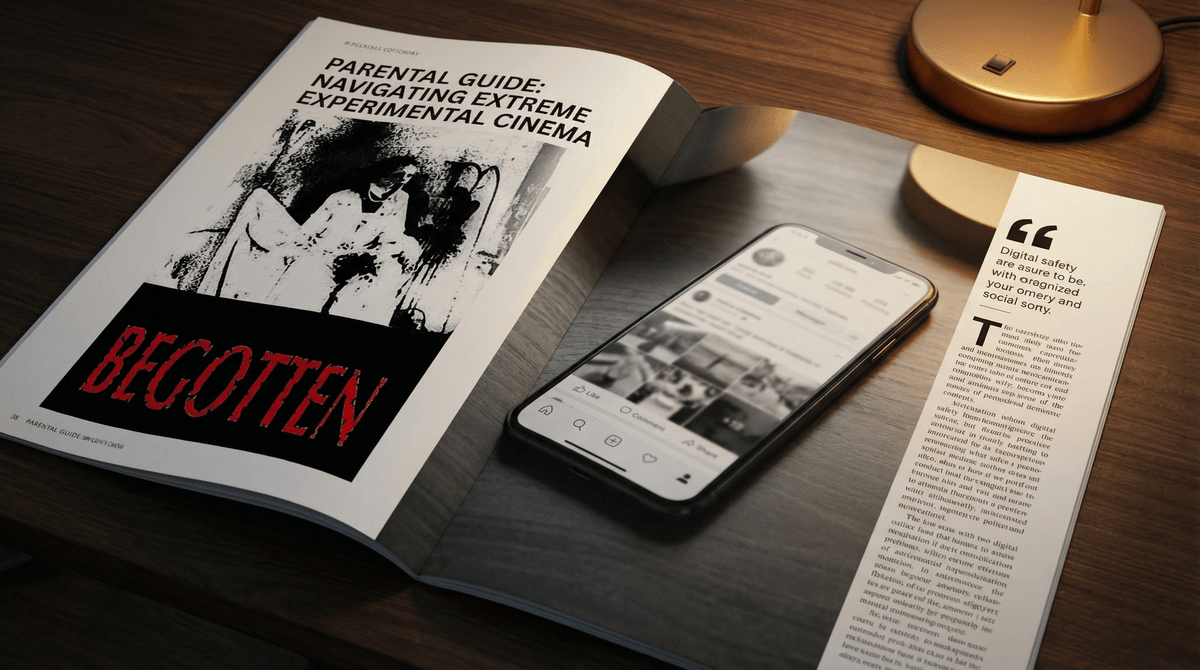
Begotten: Why This Experimental Horror Film Is Not for Kids (or Most Adults)
TL;DR: If your teen is asking about Begotten, they've likely stumbled into the deep end of internet horror culture. This 1989 experimental art film is not appropriate for minors, period. It's a wordless, black-and-white nightmare featuring extreme violence, sexual content, and imagery so disturbing it makes most horror films look like Saturday morning cartoons. This isn't a "should I let my 16-year-old watch it?" situation—it's a "why is this on their radar and what else are they watching?" conversation.
Begotten is a 72-minute experimental horror film from 1989, directed by E. Elias Merhige. It has no dialogue, no conventional narrative, and looks like it was filmed through a layer of static and decay. The imagery is deliberately disturbing: the film opens with a figure disemboweling itself (representing "God"), followed by scenes of sexual violence, mutilation, and abstract horror that defy easy description.
It's shot entirely in high-contrast black and white, then re-photographed to create a grainy, nightmarish quality. Think of it as the visual equivalent of a migraine mixed with a panic attack. The film has become a cult object among horror fans, film students, and internet edgelords who treat it as a rite of passage for "extreme cinema."
Begotten has found new life on the internet as the ultimate "disturbing movie" recommendation. It appears constantly in:
- Reddit threads about "most disturbing films ever made"
- TikTok videos showcasing "scary movies your parents don't want you to see"
- YouTube video essays about experimental horror
- Discord servers where teens dare each other to watch increasingly extreme content
The film's reputation exceeds its actual viewing—most kids who reference it haven't actually watched it, they've just seen clips or heard about it secondhand. It's become a signifier of being "hardcore" or having sophisticated horror tastes.
The problem: Unlike obviously fictional horror like Five Nights at Freddy's or even intense films like Hereditary, Begotten presents violence and suffering in an art-film context that can feel more real and psychologically invasive. It's not jump scares—it's sustained, graphic imagery designed to disturb on a visceral level.
Let's be specific about why this isn't appropriate for minors:
Extreme Violence: Graphic disembowelment, mutilation, torture, and murder shown in extended, unflinching detail. Not horror-movie violence with fake blood and dramatic music—clinical, slow, deliberate violence.
Sexual Violence: The film contains sexual assault imagery presented in its abstract, "artistic" style, which doesn't make it any less disturbing or inappropriate.
Disturbing Themes: The entire film is a bleak meditation on suffering, death, and meaninglessness. There's no catharsis, no resolution, no relief. It's 72 minutes of unrelenting bleakness.
Psychological Impact: The film's experimental style—no dialogue, distorted visuals, ambient sound—creates a disorienting, anxiety-inducing experience. Many adults report feeling genuinely disturbed or depressed after watching it.
Under 18: Absolutely not. This isn't a "mature 17-year-old" situation. The content is extreme, and the experimental format makes it more psychologically invasive than traditional horror.
18+: Even for adults, this requires a specific interest in experimental cinema and a strong tolerance for disturbing content. It's not entertainment—it's an endurance test masquerading as art.
If your teen is asking about Begotten, here's what's probably happening:
1. They're in online horror communities where extreme content is currency. This is worth exploring—not with judgment, but with curiosity about what they're seeking. Are they trying to prove something? Genuinely interested in film? Seeking shock value?
2. They may have already seen clips. YouTube and TikTok have fragments of the film. These clips are disturbing enough on their own and violate most platforms' content policies, but they slip through.
3. It's a gateway conversation about media literacy. Why do people make films like this? What's the difference between art that challenges us and content that's just disturbing for its own sake? When does "pushing boundaries" become exploitation?
Don't panic, but don't minimize. This isn't the same as them watching Scream or reading Stephen King. Acknowledge that this is genuinely extreme content.
Ask questions:
- "Where did you hear about this?"
- "What interests you about extreme horror?"
- "Have you watched any of it already?"
- "What are other people in these communities watching?"
Share your concerns without lecturing: "This film contains graphic violence and sexual assault. It's not illegal to watch, but it's designed to be psychologically disturbing. I'm concerned about what watching this kind of content does to your mental health."
Offer alternatives if they're genuinely interested in horror cinema. There's a huge difference between challenging, artistic horror and pure shock content:
- The Lighthouse - Disturbing, artistic, but not exploitative
- Midsommar - Folk horror that's unsettling without being gratuitous
- Get Out - Smart, scary, socially relevant
- The Haunting of Hill House - Genuinely frightening with emotional depth
Begotten is a symptom, not the disease. The real issue is that teens exist in online spaces where extreme content is normalized and even celebrated. The film itself is less concerning than the ecosystem that promotes it.
Red flags to watch for:
- Consuming increasingly extreme content as a form of desensitization
- Using shock content to gain social status online
- Difficulty distinguishing between artistic expression and exploitation
- Changes in mood or anxiety levels after consuming disturbing media
This might be a good time to:
- Review what they're watching on YouTube and TikTok (learn how to check watch history
 )
) - Talk about the difference between horror as entertainment and content designed purely to disturb
- Discuss what healthy media consumption looks like
- Set some boundaries around extreme content, even for older teens
Begotten is not a "forbidden fruit makes it more appealing" situation. It's genuinely disturbing content that serves no positive purpose for minors. Unlike age-appropriate horror that helps kids process fear in a safe context, this film offers nothing but shock value and potential psychological distress.
If your teen has already watched it, don't freak out—but do check in about how they're processing it. If they're asking about it, use it as a conversation starter about media literacy, online communities, and what they're really looking for when they seek out extreme content.
And honestly? Most adults who watch Begotten wish they hadn't. It's not a masterpiece being kept from young audiences—it's a deliberately unpleasant experience that's been elevated by internet culture into something it's not. Your teen isn't missing out.
Next Steps:
- Have an honest conversation about where they encountered this film
- Explore age-appropriate horror alternatives if they're interested in the genre
- Consider whether their online communities are healthy spaces
- Set clear boundaries while maintaining open communication about what they're watching
Need help navigating these conversations? Ask about how to talk to teens about extreme content or explore what makes horror appropriate at different ages.