

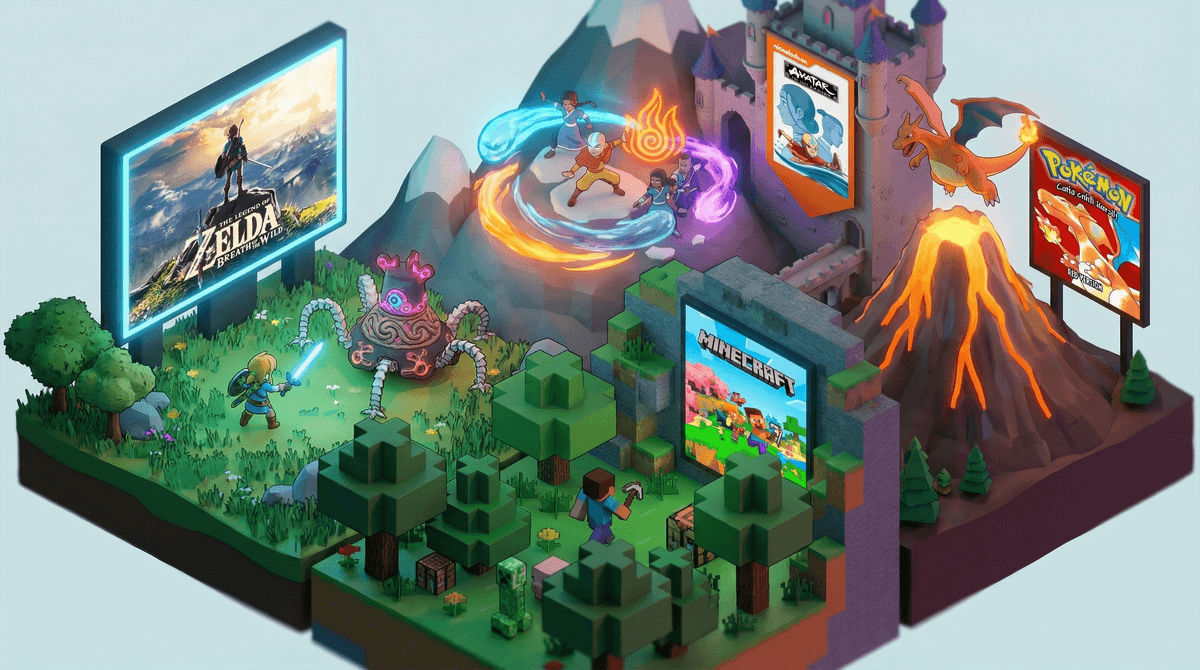
You're scrolling through game ratings and suddenly see "Fantasy Violence" listed under content descriptors. Or maybe you're checking out a new animated show and the rating mentions it. Fantasy violence is essentially combat or conflict that happens in clearly unrealistic, imaginary settings — think cartoon characters bonking each other with oversized hammers, magical creatures battling with spells, or superhero fights with exaggerated action.
The key word here is "fantasy." We're talking about violence that's obviously not real-world. No blood spurting, no realistic injuries, no guns that look like actual firearms. It's Pokémon creatures using "Thunder Shock" on each other, not a war documentary.
Screenwise Parents
See allRating systems like the ESRB (for games) and TV Parental Guidelines use "fantasy violence" to distinguish between a knight fighting a dragon in Zelda versus the realistic combat you'd see in Call of Duty. Same action — fighting — but wildly different contexts and impacts.
Here's the thing: not all violence in media affects kids the same way. Research consistently shows that context matters enormously. A study in the Journal of Youth and Adolescence found that realistic violence had measurably different effects on kids than cartoonish or fantasy violence, particularly around desensitization and aggressive behavior.
Fantasy violence often comes with built-in distance markers that help kids' brains process it differently:
- Visual cues: Bright colors, exaggerated movements, impossible physics
- Consequences that aren't realistic: Characters who bounce back instantly, no lasting harm
- Clear good vs. evil narratives: Often teaching problem-solving or teamwork
- Magical or sci-fi elements: Dragons, spells, laser swords — obviously not replicable
That said, "fantasy" doesn't automatically mean "appropriate for all ages." A 5-year-old and a 12-year-old will process the same fantasy violence very differently. And some kids are more sensitive to any kind of conflict, fantasy or not.
ESRB (Video Games):
- E10+ (Everyone 10+): Mild fantasy violence — think Minecraft fighting zombies with a sword, Mario Kart throwing shells
- T (Teen 13+): Fantasy violence with more intensity — Fortnite battle royale, Genshin Impact combat
TV Parental Guidelines:
- TV-Y7-FV: Fantasy violence in shows directed at kids 7+ — Avatar: The Last Airbender, Ninjago
- TV-PG: May contain some fantasy violence suitable for older kids with parental guidance
Movies (MPAA):
- PG: May contain some action/fantasy violence — most superhero movies land here
- PG-13: More intense fantasy violence — think Marvel movies with extended battle sequences
It's Not Just About the Label
The "fantasy violence" tag is a starting point, not the full story. Two games with the same rating can feel completely different. Splatoon (shooting ink at opponents) and Hollow Knight (dark, bug-based combat) both have fantasy violence, but the tone and intensity differ wildly.
Questions to ask beyond the rating:
- How is conflict resolved? Is it always through combat, or are there other options?
- What's the emotional tone? Silly and lighthearted or dark and intense?
- Are there consequences shown, even fantasy ones?
- Does your kid tend to get hyped up or anxious from action content?
Age-Appropriate Guidance
Ages 4-7: Even mild fantasy violence can be processed as real by younger kids. Their brains are still developing the ability to distinguish fantasy from reality consistently. Shows like Bluey or Puffin Rock resolve conflicts without any combat.
If you do allow fantasy violence content, look for:
- Very cartoonish, clearly unrealistic visuals
- Immediate recovery (no one stays hurt)
- Minimal frequency of violent scenes
- Clear teaching moments about kindness
Ages 8-12: Most kids this age can handle moderate fantasy violence and understand it's not real. This is the Pokémon, Roblox adventure games, Spider-Man movies age range.
Watch for:
- How much time they're spending in combat-focused content
- Whether they're processing it appropriately (not acting out aggressively)
- Balance with other types of play and content
Ages 13+: Teens can generally handle more intense fantasy violence and understand nuance. They're playing Zelda: Tears of the Kingdom, watching Demon Slayer, discussing plot and strategy.
The conversation shifts to:
- Media literacy (how violence is used in storytelling)
- Distinguishing between fantasy violence and realistic/glorified violence
- Their own comfort levels and boundaries
Instead of blanket rules, try conversations:
"I noticed there's a lot of fighting in that show. How do you feel watching it? Does it seem real or more like a cartoon?"
"What do you think would actually happen if someone got hit like that in real life?"
"I'm okay with fantasy fighting in games, but I want to make sure you're also playing games that aren't just about combat. What else are you interested in?"
Co-view or co-play when possible, especially with younger kids or new content. Your presence helps them process what they're seeing and gives you insight into how they're reacting.
Fantasy violence is a content descriptor, not a verdict. It tells you there's some form of combat or conflict, but in a clearly unrealistic context. Whether it's appropriate for your kid depends on their age, sensitivity, the specific content, and your family values.
The goal isn't to shield kids from all conflict in media — stories have included good-versus-evil battles since forever. It's about making sure the content matches their developmental stage and that they're processing it in healthy ways.
Trust your instincts. If something feels too intense for your kid, even with a "fantasy" label, that's valid. And if your 10-year-old is handling Breath of the Wild beautifully and talking about the story and puzzles, that's also valid.
Want to dig deeper? Check out specific game guides to see how fantasy violence shows up in the games your kids are actually asking to play.
Curious about the difference between fantasy and realistic violence? Learn more about how rating systems distinguish between types of violent content.
Need alternatives? There are tons of engaging games and shows that resolve conflict through puzzle-solving, cooperation, or creativity instead of combat. Explore non-violent games and shows that still keep kids engaged.