

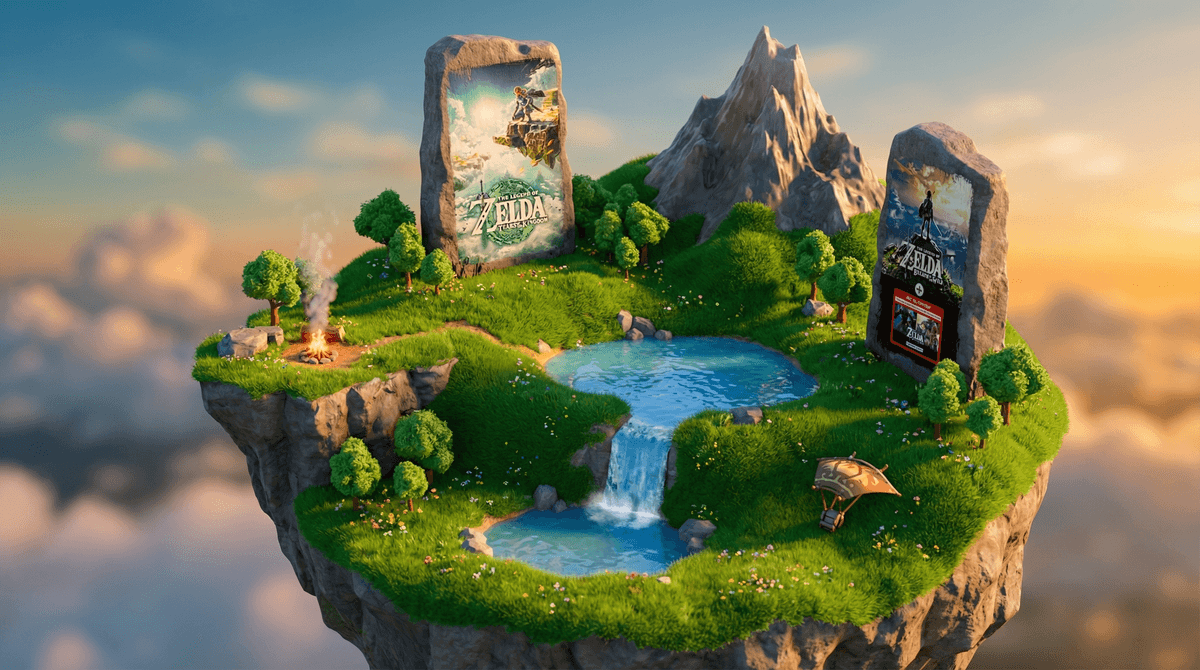
Released in 2017 for the Nintendo Switch (and Wii U), Breath of the Wild is the game that made Zelda cool again—and turned a generation of kids into amateur survivalists who can't walk past a mushroom without wanting to pick it.
It's an open-world adventure game where you play as Link, waking up after a 100-year nap to find that the kingdom of Hyrule has been destroyed by an evil force called Calamity Ganon. Your job? Explore, survive, solve puzzles, fight enemies, and eventually save Princess Zelda and the kingdom. But here's the twist: you can do almost all of that in any order you want.
Unlike most games that hold your hand through a linear story, Breath of the Wild drops you into a massive world and says "go figure it out." You can climb almost any surface, glide with a paraglider, cook food for health boosts, tame wild horses, and even skip straight to the final boss if you're brave (or reckless) enough .
.
The game has an ESRB rating of E10+ (Everyone 10 and up) for fantasy violence and mild suggestive themes. But let's break down what that actually means for your kid.
Freedom. This is the big one. Kids are tired of being told what to do all day—school, homework, chores, "put your shoes away," "no you can't have a snack right now." In Breath of the Wild, they get to make their own choices. Want to ignore the main quest and spend three hours hunting down every shrine? Go for it. Want to see if you can surf down a mountain on your shield? Try it. The game rewards curiosity and experimentation in a way that feels genuinely empowering.
Problem-solving that actually feels smart. The puzzles in this game—especially in the 120+ shrines scattered across the map—require real creative thinking. There's often more than one solution, which means kids get to feel like geniuses when they figure out their own way through. It's not "find the red key for the red door" stuff. It's "how can I use physics, fire, ice, and magnetism to get this ball into that hole?"
The world is gorgeous and alive. Hyrule is stunning. Sunsets, storms, wildlife, ancient ruins—it's the kind of game where kids will just stop and look around. There's a meditative quality to it that's honestly rare in gaming.
It's challenging but fair. Early on, you're weak. Enemies can kill you in one hit. Your weapons break constantly (more on that frustration in a minute). But as you explore, find better gear, and learn enemy patterns, you get stronger. It teaches persistence without feeling punishing.
The Combat & Violence
Yes, there's combat. Link fights monsters with swords, bows, spears, and bombs. Enemies include skeletal creatures, goblin-like Bokoblins, and various fantasy beasts. When you hit them, there's no blood—just puffs of smoke or purple malice. When enemies die, they dissolve into dark mist and drop loot.
It's fantasy violence, not realistic. There are no guns, no humans fighting humans, no gore. The tone is more "fairy tale adventure" than "war game." Think Lord of the Rings battle scenes, not Call of Duty.
That said, some enemies can be legitimately creepy. The Guardians—ancient robotic creatures with glowing red eyes that shoot lasers—have scared more than a few kids (and adults). They make a terrifying beeping sound when they lock onto you, and early in the game when you're weak, they can one-shot you. Some kids find this thrilling. Others find it stressful.
Difficulty & Frustration
This game does not hold your hand. There's a brief tutorial area, and then you're on your own. Kids who are used to games with quest markers, mini-maps, and clear objectives might feel lost at first.
Weapons break. This is the #1 complaint from kids (and adults). Your sword will break mid-battle. Your favorite bow will snap. It's by design—it forces you to experiment with different weapons and keep exploring. But it's also incredibly frustrating for kids who get attached to their gear.
You will die. A lot. Especially early on. Fall damage is real. Enemies are tough. Stamina runs out. This is a game that rewards patience and learning from mistakes, which is great for resilience-building but can be rage-inducing for kids with low frustration tolerance.
Screen Time Warning
This is a time sink. The main story can take 40-50 hours. If your kid wants to complete everything? We're talking 100+ hours easily. The open-world design means there's always "just one more thing" to explore, one more shrine to find, one more korok seed to collect (there are 900 of those little guys, and yes, some kids will try to find them all).
It's not designed with addictive microtransactions or daily login rewards like Roblox or Fortnite, but it is designed to make you want to keep playing because the world is so rich and rewarding.
The Good Stuff
Zero online interaction. This is a single-player game with no chat, no multiplayer, no strangers. Your kid is just playing the game, which from a safety perspective is a huge relief.
No microtransactions. You buy the game once (usually $50-60), and that's it. No loot boxes, no battle passes, no "Mom can I buy V-Bucks" conversations. There is DLC (downloadable content) that adds extra story and challenges, but it's optional and a one-time purchase.
Genuinely educational. Kids learn resource management (cooking, inventory), spatial reasoning (navigation without a GPS), physics concepts (the game's engine is surprisingly realistic), and persistence. Some kids have learned to read maps better from this game than from any geography lesson.
Inspires creativity. The game's physics engine allows for wild experimentation. Kids share their discoveries—how to launch yourself across the map with bombs, how to cheese a boss fight, how to build elaborate contraptions. There's a whole YouTube ecosystem of Zelda trick videos, and many kids get inspired to create their own content.
Ages 8-10: This is the ESRB's minimum, and it's about right for kids who are comfortable with fantasy combat and can handle some challenge and frustration. They might need help with some of the trickier puzzles or navigation. Consider playing together, especially at the start.
Ages 10-12: The sweet spot. Most kids this age have the patience, problem-solving skills, and reading comprehension to really enjoy the game independently. They'll still get frustrated, but they're more likely to push through.
Ages 13+: Honestly, teenagers often love this game as much as younger kids. It's not "babyish" at all—the world is complex, the story has emotional depth, and the challenge is real.
Sensitive kids: If your child is easily scared, the Guardians and some of the darker areas (like Hyrule Castle) might be too much. The game has a lonely, post-apocalyptic vibe that some kids find melancholy. But there's no jump scares or horror elements.
Kids with ADHD or executive function challenges: The open-world nature can be overwhelming without clear structure. Some kids thrive with the freedom; others get lost and frustrated. Consider setting small, achievable goals together ("Let's find three shrines today") rather than focusing on completing the whole game.
Breath of the Wild is, frankly, one of the best games of the last decade. It's creative, beautiful, challenging, and genuinely rewarding. It encourages exploration, problem-solving, and persistence. There's no online toxicity, no microtransactions, and no content that should keep you up at night.
The real parenting challenge here isn't safety—it's screen time management. This game is designed to be immersive and time-consuming. You'll need to set boundaries, because "just five more minutes" will turn into an hour without your kid even noticing.
If your kid is ready for some fantasy combat, can handle frustration without melting down, and you're okay with them spending significant time in a video game, this is one of the good ones. It's the kind of game that might actually teach them something while they're having fun—and that's about as good as it gets.
- Set clear time limits upfront. Decide together how much Zelda time is reasonable per day/week before the game even starts.
- Check in about frustration. If you hear yelling or controller-throwing vibes, it might be time for a break.
- Consider playing together. Even if you're not a gamer, watching your kid play and helping them think through puzzles can be a great bonding experience.
- If your kid loves it, the sequel Tears of the Kingdom is even bigger and better (and more complex).
- Looking for alternatives? Check out our guide to games like Zelda for other great open-world adventures.