

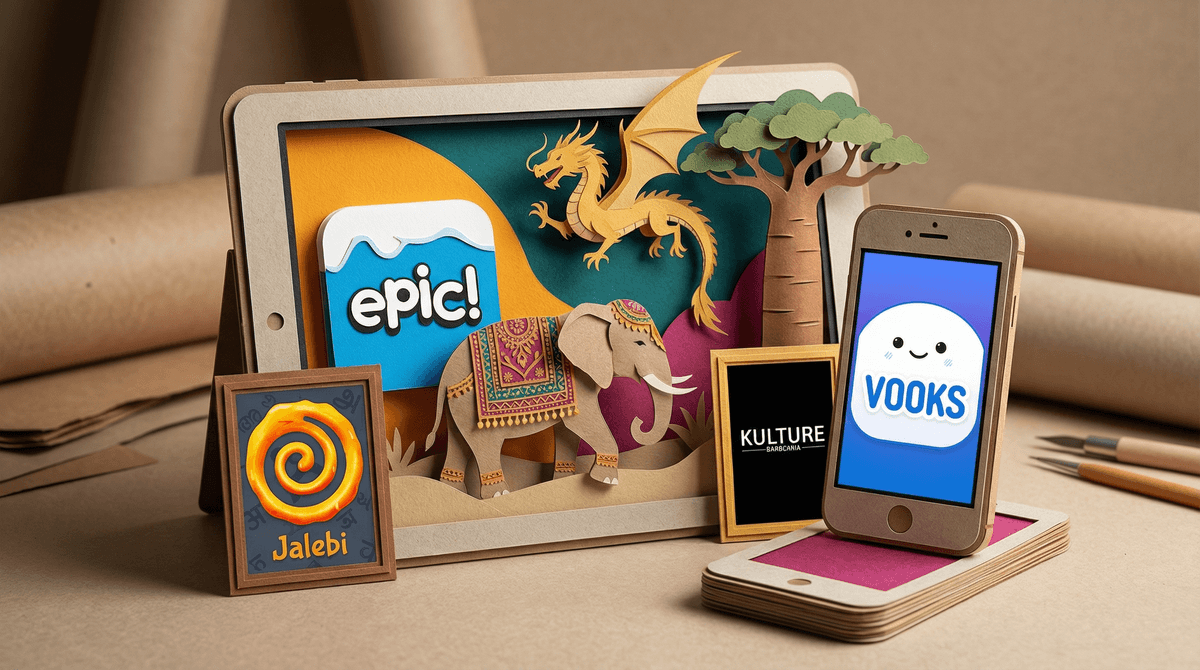
The Ultimate Guide to Cultural Storytelling Apps for Families
Look, I'll be honest: when my friend told me her 7-year-old was obsessed with an app about Filipino folktales, I was skeptical. Another screen? Another subscription? But then she showed me her kid explaining the story of the mango tree to his grandma in Tagalog, and I got it.
Cultural storytelling apps aren't just another way to keep kids quiet in the car. They're actually doing something pretty remarkable—connecting kids to heritage, traditions, and stories that don't always make it into mainstream media. And in a world where Bluey is the closest thing to "diverse" content many families see, that matters.
These are apps specifically designed to share folktales, myths, legends, and cultural narratives from around the world—or from specific cultural communities. Unlike generic story apps that might sprinkle in a few "multicultural" tales, these platforms center cultural authenticity, often working with community elders, storytellers, and cultural experts.
Some are focused on a single culture or language. Others offer a global library. Most combine narration, interactive elements, and illustrations that actually respect the source material (no more whitewashed Disney versions of everything).
Here's the thing: representation isn't just about feeling good. Research shows that kids who see their own culture reflected in media develop stronger self-identity and cultural pride. And kids who engage with diverse stories? They develop empathy, cultural awareness, and a less US-centric worldview.
But beyond the research, there's something practical here. If you're raising kids in a multicultural family, trying to maintain a heritage language, or just want your kids to understand that not everyone celebrates the same holidays or tells the same stories—these apps can help.
Plus, let's be real: if we're going to give kids screen time anyway, might as well make it count.
Caribu (Ages 2-10)
This video-calling app with a built-in library of books is actually brilliant for long-distance grandparents. The cultural storytelling collection includes books in multiple languages, and you can read together in real-time over video. It's not exclusively cultural content, but the library is surprisingly diverse, and the connection piece is huge for families maintaining cultural ties across distances.
The catch: Requires a subscription ($8/month), and you need another person on the other end who's willing to download it.
Rivet by Google (Ages 5-10)
Free (actually free, not "free trial then $10/month"). Massive library of leveled readers including folktales and cultural stories from around the world. The reading support features are solid—kids can tap words for definitions, and there's optional narration.
Why it works: No pressure, no ads, no in-app purchases. Kids can explore independently, and the cultural content is woven throughout rather than segregated into a "multicultural" section.
Mussila (Ages 3-8)
Okay, this is technically a music education app, but hear me out: it includes traditional music and instruments from around the world, with stories about their cultural significance. If your kid is into music, this is a sneaky way to introduce cultural context.
Real talk: The free version is limited. The paid version ($60/year) is steep unless your kid is genuinely into music.
Epic! (Ages 2-12)
This digital library has a genuinely impressive collection of culturally diverse books, including many from independent publishers who focus on authentic representation. You can search by language, cultural theme, or specific holidays/traditions.
Parent note: The teacher version is free (if you qualify), but the family version is $10/month. Also, it's a rabbit hole—kids can easily drift from cultural folktales to Captain Underpants in three clicks.
Vooks (Ages 2-8)
Animated storybooks that include a solid selection of culturally diverse titles. The animation quality varies, but the narration is professional, and they've clearly put thought into representation.
The downside: Another subscription ($5/month), and some kids find the animation style distracting rather than engaging.
Desi Kids (Ages 3-10)
South Asian stories, songs, and educational content. If you're raising kids in a South Asian household or want to introduce those narratives, this is purpose-built for you.
Little Stories (Ages 3-8)
African and Caribbean folktales with beautiful illustrations. Small library, but high quality.
Kulture Kiddies (Ages 3-8)
Black cultural stories and experiences. The app is newer and the library is still growing, but what's there is thoughtfully done.
Linguapop (Ages 4-10)
Language learning through cultural stories. Spanish, French, Mandarin, and more. If you're trying to maintain a heritage language, this combines language practice with cultural context.
Not all "multicultural" apps are created equal. Some are basically tourism—surface-level, stereotypical, or just plain wrong. Look for apps that credit cultural consultants, work with community members, or are created by people from those cultures.
Language matters. If you're trying to maintain a heritage language, look for apps that offer full narration in that language, not just English with a few words sprinkled in.
Free doesn't mean bad. Some of the best cultural content is on free platforms like Rivet or through library apps like Libby/OverDrive (which often have international collections).
Screen time is still screen time. Even the most culturally enriching app is still a screen. Balance matters. Consider pairing app time with real-world cultural experiences—cooking traditional foods, attending cultural events, or connecting with community members.
Ages 2-5: Look for apps with simple narration, interactive elements (tap to hear a word, swipe to turn the page), and short stories. Vooks and Rivet work well here.
Ages 6-8: Kids can handle longer stories, more complex themes, and can start exploring independently. Epic! and Desi Kids are solid choices. This is also a good age to introduce apps that explain cultural context, not just tell stories.
Ages 9-12: Older kids can engage with mythology, historical narratives, and more nuanced cultural content. Look for apps that include discussion questions or cultural background information. At this age, you might also consider podcasts like Wow in the World which occasionally covers cultural topics, or Brains On! for science stories from diverse perspectives.
Cultural storytelling apps aren't going to solve everything. They won't replace actual cultural immersion, community connection, or conversations with family members. But they can be a tool—one that helps kids see themselves in stories, understand others' experiences, and engage with traditions that matter.
The best app is the one your kid will actually use. Try a few free options first. See what sticks. And remember: the goal isn't to turn screen time into a cultural education marathon. It's just to make sure that when your kids are on screens, they're seeing a world that looks like the actual world—diverse, complex, and full of stories worth telling.
Next Steps: Download Rivet (it's free, no excuses), browse the cultural collection, and let your kid pick a story that looks interesting to them. See what happens. And if you're looking for more ways to balance screen time with cultural connection, check out this guide on screen time alternatives that incorporate cultural activities.