

Twitch and What Parents Must Know About Game Streaming
Twitch is a live streaming platform where people broadcast themselves playing video games, creating art, cooking, chatting, or doing basically anything while viewers watch and interact in real-time through chat. Think of it like YouTube, but live—and with a chat room running alongside every stream where thousands (sometimes millions) of people are typing at once.
Amazon owns it. It's massive. And there's a really good chance your kid is watching it, even if you've never heard of it.
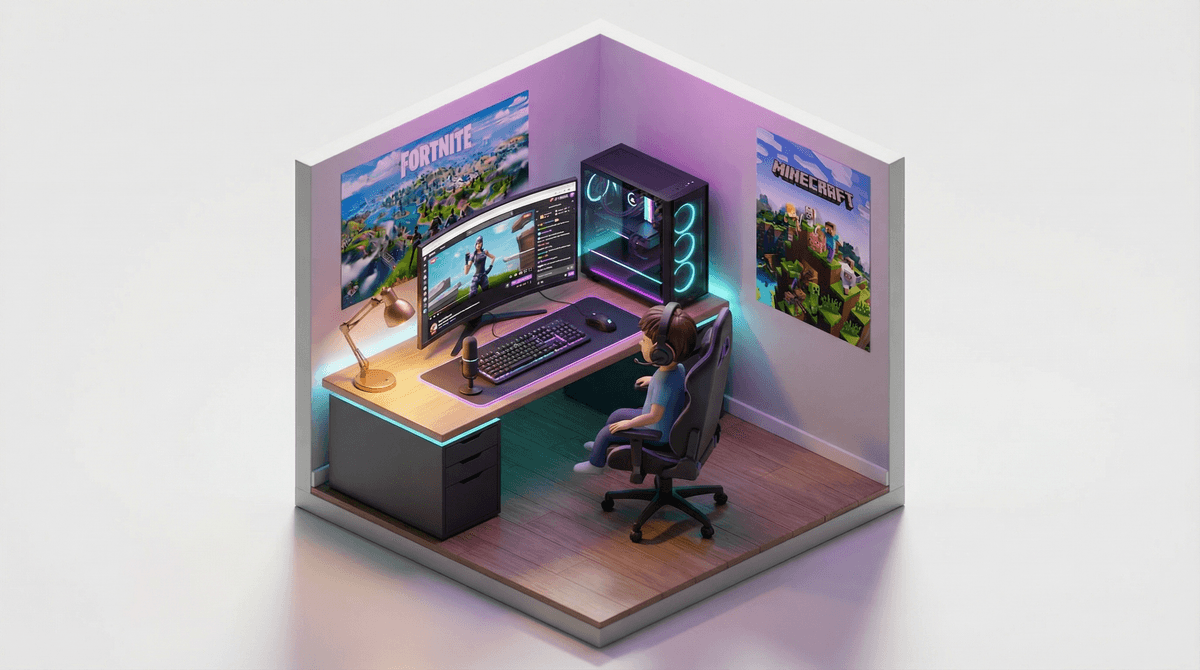
The typical Twitch experience: Your kid pulls up a stream of someone playing Minecraft or Fortnite, and they're not just watching gameplay—they're watching a personality. The streamer is talking, joking, reacting, interacting with chat, maybe raging when they die. It's entertainment. It's community. And for a lot of kids, it's their version of sitting on the couch watching TV.
Let's be real: watching someone else play a game sounds boring to most parents. But here's what kids are actually getting from it:
They're learning. Seriously. Kids watch streamers to get better at games, learn strategies, discover new games, and see how the pros do it. It's like watching game film if you're into sports.
It's social. Chat is chaotic, but it's also where kids feel connected to something bigger. They're part of an audience, sharing reactions in real-time, spamming emotes, participating in inside jokes. For kids who feel isolated or awkward IRL, Twitch can feel like belonging.
It's personality-driven. Kids aren't just watching gameplay—they're watching people. Streamers are funny, skilled, dramatic, relatable. They have catchphrases. They have beef with other streamers. They have lore. It's parasocial relationships 101, and kids are all in.
It's free. Unlike buying a new game or paying for a movie, Twitch is free to watch. You can subscribe to a streamer or donate, but you don't have to. For kids without disposable income, it's accessible entertainment.
Okay, here's where it gets real. Twitch has some legit concerns, and you need to know what you're dealing with.
The Chat Is Unmoderated Chaos
Twitch chat moves fast. Depending on the stream size, hundreds or thousands of messages fly by every second. And while streamers can have moderators, plenty of streams have minimal moderation. That means:
- Profanity everywhere. F-bombs, slurs, sexual language—it's all there.
- Toxicity and harassment. Trolls, spam, hateful messages. It's the internet at its worst sometimes.
- Predatory behavior. Yes, adults can and do use chat to target kids. Asking for personal info, trying to move conversations off-platform, grooming behavior—it happens.
Your kid doesn't need to participate in chat to see it. It's right there on the screen.
Streamers Are Not Filtered for Kids
Twitch has a minimum age of 13 to create an account, but there's no age verification. And streamers are not creating content for children. They swear. They make sexual jokes. They discuss adult topics. They sometimes stream in bikinis or revealing clothing (yes, there's a whole "hot tub stream" category that became a thing).
Even streamers who seem family-friendly can have off days, or their chat can spiral. There's no rating system like movies or games.
Donations, Subscriptions, and Spending Real Money
Kids can spend money on Twitch in a few ways:
- Subscriptions ($5-$25/month) to support a streamer and get perks like custom emotes
- Bits (Twitch's currency) to "cheer" and send animated messages in chat
- Direct donations through third-party services like PayPal
It feels like supporting a creator, but it adds up fast. And kids often don't understand that clicking "subscribe" means real money leaving your account every month until you cancel.
Exposure to Gambling and Sponsored Content
Some streamers do "casino streams" where they gamble with real or virtual money on stream. It's controversial, and Twitch has tried to crack down, but it's still prevalent. Kids watching this content are being exposed to gambling behavior normalized as entertainment.
Streamers also do sponsored streams—getting paid to play certain games or promote products. It's advertising, but it doesn't always feel like it to kids.
Under 13: Twitch's terms say no, and honestly, I agree. The platform isn't designed for younger kids. If your kid is watching, it should be with you, on a specific streamer you've vetted, with chat turned off.
Ages 13-15: This is where it gets tricky. Plenty of middle schoolers are on Twitch. If you're allowing it:
- Watch streams together first to vet the streamer
- Turn off or hide chat (you can collapse it)
- Set up parental controls on payment methods
- Have ongoing conversations about what they're watching and who they're interacting with
Ages 16+: Teens are going to access this whether you like it or not. Focus on media literacy: talk about parasocial relationships, spending money on creators, recognizing when content crosses a line, and understanding that streamers are performing a persona.
1. Watch a stream with your kid. Ask them who they watch and why. Sit down for 20 minutes and actually see what they're seeing. You'll learn a lot.
2. Turn off chat or use "follower-only" mode. You can collapse chat entirely in settings, or streamers can set chat to "follower-only" or "subscriber-only" which reduces some chaos.
3. Lock down payment methods. Make sure your kid can't subscribe or donate without your permission. Check your bank statements for Twitch charges.
4. Talk about parasocial relationships. Help them understand that streamers don't actually know them , even if it feels personal. Streamers are entertainers running a business.
5. Set boundaries around screen time. Twitch is designed to keep you watching. Streams can go for hours. Set limits on how long they can watch, just like any other screen time.
6. Use Twitch's built-in tools. You can enable "low latency mode" to reduce chat interaction, block specific users, and report problematic content. It's not perfect, but it's something.
Twitch isn't inherently evil, but it's also not a kids' platform. It's the Wild West of live streaming—unfiltered, unmoderated, and designed to maximize engagement (which means keeping eyeballs glued to screens).
That said, there are genuinely great creators on Twitch. Educational streams, wholesome gaming communities, creative content. The platform itself is neutral—it's the content and chat that vary wildly.
Your job as a parent isn't to ban Twitch outright (unless that's your call, no judgment). It's to know what your kid is watching, set boundaries, and have ongoing conversations about what they're seeing and why it matters.
If your kid is watching Twitch, you need to be aware. Not hovering, not freaking out—just aware. Because the risks are real, but so is the appeal. And the more you understand it, the better you can guide them through it.