

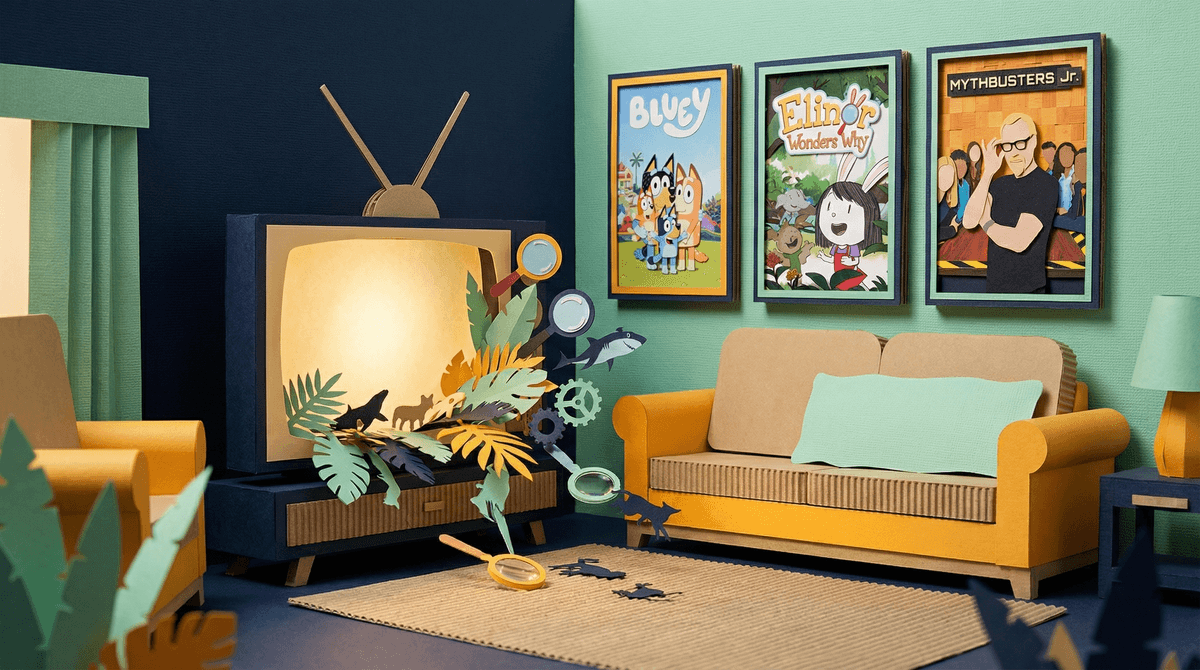
Look, we all know the difference between a kid zoned out on their fourth hour of random YouTube videos versus a kid who just watched something that made them run to you with seventeen questions about how volcanoes work. That's the difference between passive consumption and curiosity-sparking content.
Curiosity-sparking TV is programming that makes kids want to learn more, try something new, or see the world differently. It's not just "educational TV" (though that can be part of it). It's content that ignites that beautiful "wait, but how does that work?" energy that makes childhood magical.
The good news? There's actually a ton of great content out there. The challenge? It's buried under an avalanche of low-effort stuff designed purely to keep eyeballs glued to screens.
Here's the thing: not all screen time is created equal. A kid watching Bluey is getting something fundamentally different than a kid watching toy unboxing videos for two hours.
Research consistently shows that high-quality educational content can actually support learning and development. Shows that encourage questions, model problem-solving, or introduce new concepts can complement what kids are learning elsewhere. But here's the catch: it only works if the content is age-appropriate and if there's some connection to the real world (even just talking about what they watched).
The other piece that matters? Curiosity is a muscle. Kids who learn to ask questions and seek answers become adults who do the same. In an age where AI can answer anything instantly, the ability to ask good questions and maintain genuine curiosity might be the most valuable skill we can help develop.
Not every "educational" show is created equal. Here's what to look for:
It asks questions, not just answers them. The best shows model curiosity by wondering out loud. They don't just deliver facts; they show the process of discovery.
It connects to real life. Whether it's science, history, art, or social-emotional learning, great content helps kids see how what they're watching relates to their actual world.
It leaves room for imagination. Ironically, the best curiosity-sparking content doesn't explain everything. It leaves gaps for kids to fill in with their own thinking.
It respects kids' intelligence. No baby talk, no talking down. Kids can handle complex ideas when they're presented well.
Ages 2-5: Building Wonder About the World
Bluey - Yes, everyone recommends it, and yes, it's actually that good. Beyond the emotional intelligence stuff, it's constantly showing kids how to turn everyday objects into imaginative play.
Octonauts - Real marine biology wrapped in adventure stories. Kids come away knowing actual facts about sea creatures.
Daniel Tiger's Neighborhood - Social-emotional learning that actually works. It models curiosity about feelings and relationships.
Elinor Wonders Why - Specifically designed to model scientific thinking and observation. Underrated gem.
Ages 6-9: Expanding Horizons
The Magic School Bus Rides Again - The reboot holds up. Ms. Frizzle's sister brings the same energy to a new generation.
Brainchild - Netflix series that tackles big concepts (creativity, emotions, social media) in genuinely engaging ways. Each episode is like a really good YouTube video stretched to the right length.
Odd Squad - Math concepts wrapped in spy adventures. Genuinely funny for adults too.
Wild Kratts - Animal biology through the lens of adventure. The Kratt brothers have been doing this for decades and they're still good at it.
Ages 10-13: Deeper Dives
Mythbusters Jr. - The scientific method in action. Shows kids that testing ideas is fun.
Spy in the Wild - BBC nature documentary that uses robot animals with cameras. The footage is mind-blowing and the science is real.
Explained - Vox's documentary series on Netflix. Not specifically for kids, but the episodes are short and tackle interesting questions about how the world works. Watch with them and discuss.
The Who Was? Show - History sketches based on the popular book series. Makes historical figures feel like real people with interesting stories.
Co-viewing is still the gold standard. Even the best show becomes more valuable when you can talk about it together. "What did you think about..." or "That made me wonder..." goes a long way.
Don't stress about every minute. Yes, some TV is just entertainment, and that's okay. The goal isn't to turn every screen moment into a teaching opportunity. But when you're choosing what to put on, might as well choose something that might spark something.
Follow their interests. If your kid is obsessed with space, lean into space content. If they're all about animals, find the best animal shows. Curiosity grows when it's fed.
Watch out for "junk food" educational content. Some shows claim to be educational but are really just flashy entertainment with a thin veneer of learning. If it's overstimulating, moving too fast, or feels more like an ad than a show, trust your gut.
YouTube is a mixed bag. There ARE great educational channels (Crash Course Kids, SciShow Kids, National Geographic Kids), but the algorithm will quickly pull them toward brain rot if you're not careful. Consider setting up a supervised YouTube experience rather than just letting them browse.
Not all screen time is equal, and that's actually empowering. You don't have to ban TV or feel guilty about it. You just have to be intentional about what you're choosing.
The best curiosity-sparking content doesn't feel like homework. It feels like discovery. It makes kids ask questions, want to try things, or see the world a little differently. That's the stuff worth putting on.
And honestly? If your kid is watching something that makes them excited to tell you about it, you're probably doing something right.
Take inventory. What are your kids actually watching right now? Not what you wish they were watching, but what's actually happening. No judgment, just data.
Try one new show this week. Pick something from the list above that matches your kid's age and interests. See what happens.
Create a "curiosity playlist." Work with your kids to build a list of shows they can choose from during screen time. Give them agency within boundaries.
Check out our guide to screen time that doesn't suck for more ideas on making digital time actually valuable.
Want more specific recommendations based on your kid's interests? Find shows for your specific situation - it can get way more personalized than a blog post ever could.