

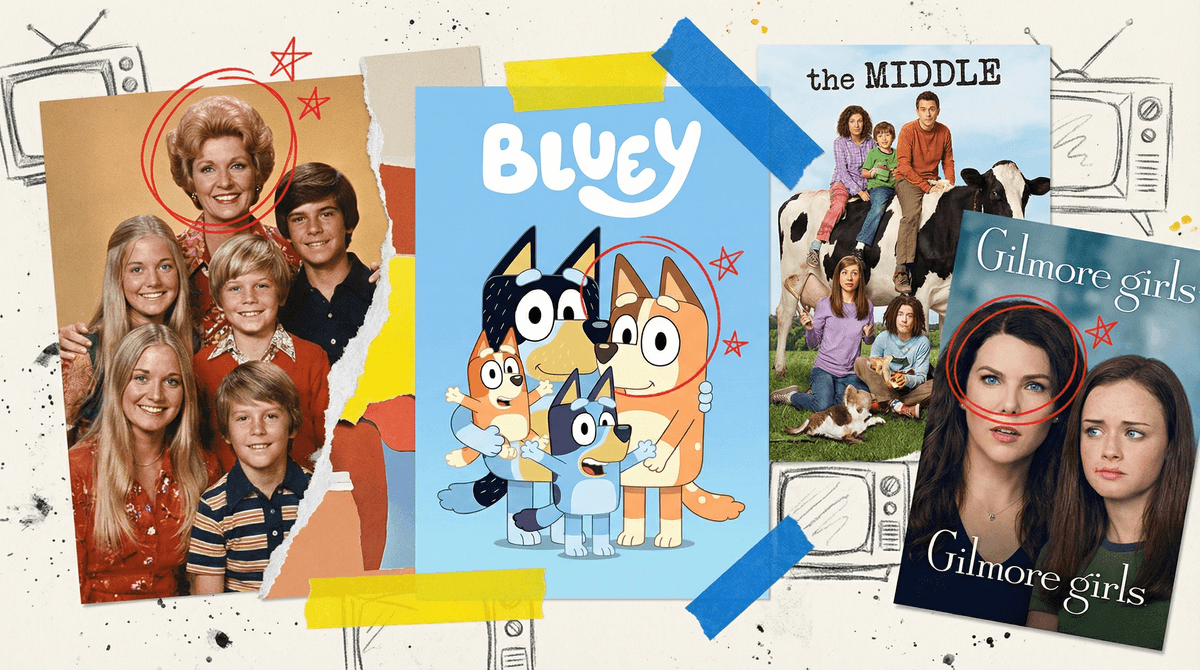
Look, we need to talk about TV moms. Because whether we realize it or not, the fictional mothers our kids watch are quietly shaping their understanding of what "normal" parenting looks like—and honestly? It's doing a number on us too.
From the impossibly put-together Carol Brady to the hot-mess-express realness of modern sitcom moms, television has been serving up maternal role models for decades. And our kids are watching, absorbing, and building their internal database of "what moms are supposed to be like" based on these characters.
The thing is, TV moms have evolved dramatically. We've gone from apron-wearing, problem-solving-in-22-minutes perfection to characters who actually yell, make mistakes, and sometimes hide in the pantry eating chips. And that shift? It matters more than you might think.
Here's what's wild: kids don't always distinguish between fictional parenting and real expectations. When your 8-year-old watches a TV mom who never loses her temper, always has the perfect advice, and somehow maintains a spotless house while working full-time and volunteering at school—they're not thinking "wow, unrealistic." They're thinking "that's what moms do."
And for us parents? We're not immune either. We watch these characters and unconsciously measure ourselves against them. Even when we know it's fiction, there's this tiny voice asking why we can't be more like [insert impossibly patient TV mom here].
The research on this is actually pretty clear: media representations of parents influence both children's expectations and parents' own self-perception. Kids who grow up watching only "perfect" TV parents can develop unrealistic standards. Meanwhile, parents who see more diverse, realistic portrayals report feeling less isolated in their struggles.
The "Perfect" Era (1950s-1980s)
June Cleaver, Carol Brady, Clair Huxtable—these moms were aspirational to the point of being basically mythological. Always composed, always wise, always available. They made parenting look like a job you could ace if you just tried hard enough.
Shows like The Brady Bunch and Leave It to Beaver presented motherhood as a calling that required perfection, patience, and pearls. Even The Cosby Show's Clair Huxtable, who was a lawyer and definitely more modern, still managed to be impossibly balanced and wise.
The "Hot Mess" Backlash (1990s-2010s)
Then came the pendulum swing. Roseanne Conner was loud, messy, and struggling financially. The moms on Malcolm in the Middle and Everybody Loves Raymond were stressed, imperfect, and sometimes kind of mean. This was refreshing! Until it became its own trope—the frazzled, wine-drinking, barely-holding-it-together mom.
The "Real But Still Aspirational" Sweet Spot (2010s-Now)
Shows like Bluey (yes, Chilli is a DOG but stay with me), The Middle, Black-ish, and Abbott Elementary (where we see teachers who are also mothers) have found something closer to reality. These moms make mistakes, lose their patience, and don't always have the answers—but they're trying, and they genuinely care.
When your kids watch TV moms, they're absorbing lessons about:
Emotional regulation: Does the mom yell and then apologize? Does she model healthy conflict resolution? Or does she either never get upset (unrealistic) or always blow up (also not great)?
Work-life balance: Is she a stay-at-home mom, a working mom, or something in between? How is that portrayed—as a choice, a struggle, a source of guilt?
Relationship dynamics: How does she interact with her partner (if she has one)? Is it equal? Respectful? Or is she either the nag or the saint?
Perfectionism vs. reality: Does she mess up? Do her kids see her as human? Or is she a problem-solving machine who never shows vulnerability?
Most Unrealistic But We Love Her Anyway: Lorelai Gilmore (Gilmore Girls)—she's a best friend who happens to be a mom, which is lovely but also... not always how parenting works when your kid is actually 16.
Most Real and It Hurts: Frankie Heck (The Middle)—she forgets things, she's exhausted, she's doing her best with limited resources, and she doesn't pretend otherwise.
Best Model for Actual Parenting: Chilli (Bluey)—yes, she's a cartoon dog, but she sets boundaries, admits when she's wrong, makes time for herself, and shows her kids that parents are people too. This show is genuinely teaching better parenting than most parenting books.
Most Aspirational Without Being Impossible: Rainbow Johnson (Black-ish)—she's successful, loving, and flawed. She struggles with identity, career, and parenting, and the show doesn't pretend she has it all figured out.
Most Likely to Make You Feel Better About Your Parenting: Beverly Goldberg (The Goldbergs)—she's overbearing, embarrassing, and way too involved, but her kids know they're loved. Sometimes that's enough.
For younger kids (ages 5-10): They're taking these portrayals pretty literally. If they're watching shows with "perfect" TV moms, it's worth having conversations about how real families work. Bluey is genuinely excellent for this age because it shows realistic family dynamics in a way kids can understand.
For tweens (ages 10-13): They're starting to compare you to TV moms, consciously or not. This is a good age to watch shows together and talk about what's realistic vs. what's exaggerated for comedy or drama. Shows like The Middle or Young Sheldon can spark good conversations.
For teens (ages 13+): They're developing more critical thinking about media, but they're also more susceptible to idealized portrayals. Shows like Gilmore Girls are fun, but it's worth acknowledging that the "mom as best friend" dynamic doesn't always translate to real life—and that's okay.
Try this: Next time you're watching together, just casually mention something like:
"That mom handled that way better than I would have. In real life, I probably would've just sent everyone to their rooms and eaten ice cream."
Or: "You know what I appreciate about this show? The mom actually gets frustrated and doesn't always know what to do. That feels more real."
You don't need to turn every viewing into a teaching moment, but occasional observations help kids develop media literacy about family portrayals.
TV moms range from impossibly perfect to deliberately imperfect, and both extremes can mess with our heads—and our kids' expectations. The best TV moms are the ones who show that parenting is hard, mistakes happen, apologies matter, and love doesn't require perfection.
Your kids are going to watch these shows regardless. The question is whether you're helping them think critically about what they're seeing, and whether you're giving yourself permission to be the real, imperfect, trying-your-best parent you actually are—not the TV version.
- Watch something together and pay attention to how the mom is portrayed. Is she realistic? Aspirational? A caricature?
- Ask your kids what they think makes a "good mom" and see if their answers reflect TV tropes or real life
- Give yourself a break the next time you compare yourself to a fictional character who has a team of writers making her look good
- Explore shows that model realistic family dynamics that might be worth adding to your rotation
And remember: June Cleaver had a full hair and makeup team. You're doing fine.