

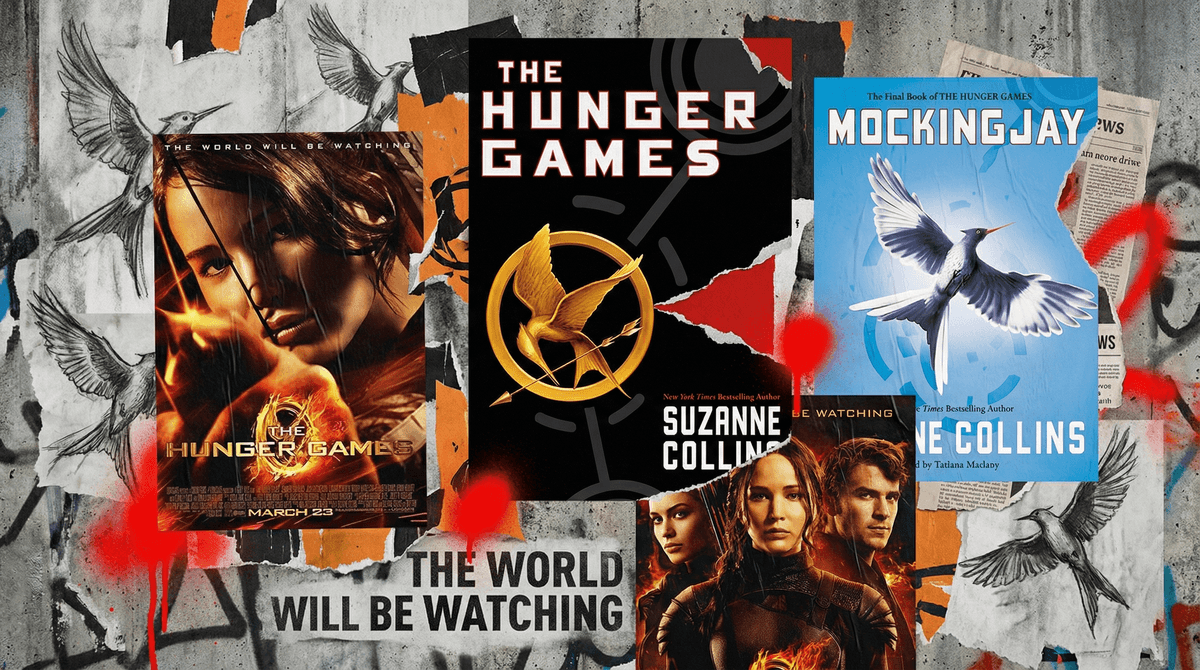
The Hunger Games is a dystopian book series by Suzanne Collins that became a massive cultural phenomenon in the 2010s—and it's having a serious resurgence right now. The prequel movie The Ballad of Songbirds and Snakes dropped in 2023, and suddenly a whole new generation of middle schoolers is discovering Katniss Everdeen.
The premise: In a post-apocalyptic nation called Panem, the authoritarian Capitol forces each of its 12 districts to send two teenagers (called "tributes") to fight to the death in a televised arena called the Hunger Games. It's brutal, it's political, and it's surprisingly smart about power, propaganda, and resistance.
The original trilogy follows 16-year-old Katniss, who volunteers to take her younger sister's place in the Games. What starts as a survival story becomes a full-blown rebellion against a fascist government. There are three books (The Hunger Games, Catching Fire, and Mockingjay) and four movies that are pretty faithful adaptations.
Here's the thing: The Hunger Games hit different in 2024-25 than it did in 2012. Kids today are way more media-literate about propaganda, wealth inequality, and social justice than previous generations. They're growing up watching TikToks about late-stage capitalism and climate anxiety—so a story about teens fighting back against a system that literally sacrifices children for entertainment? Yeah, that resonates.
Plus, Katniss is an incredible protagonist. She's not a chosen one with magical powers—she's a regular girl who's good with a bow, fiercely protective of her family, and makes messy, human decisions under impossible pressure. She's not trying to be a symbol; she becomes one reluctantly. That authenticity matters to kids who can smell performative activism from a mile away.
And let's be real: the love triangle between Katniss, Peeta, and Gale is still catnip for tweens and teens figuring out their own feelings about relationships, loyalty, and what they value in other people.
The books: Ages 11-12+
The original trilogy is marketed as Young Adult, but it's definitely on the mature end. There's graphic violence (kids killing kids), psychological trauma, war, and some pretty dark themes about PTSD and propaganda. That said, Collins doesn't glorify the violence—it's portrayed as horrific and traumatizing, which is kind of the point.
Most 11-12 year olds who are strong readers can handle the content, especially if they're already into dystopian or action-adventure stories. Sensitive kids or younger readers might want to wait until 13-14.
The movies: Ages 12-13+
The films are rated PG-13, and they earn it. The violence is less graphic than the books (you don't see as much blood), but it's still intense. Kids die on screen. There are scenes of torture, bombing civilians, and psychological manipulation. The first movie is the most "arena survival" focused; the later films get increasingly political and war-heavy.
If your kid has watched Marvel movies or other action franchises, they can probably handle The Hunger Games movies—but be prepared for some heavier emotional content than your typical superhero fare.
The prequel (The Ballad of Songbirds and Snakes): Ages 13+
This one's actually darker and more morally complex than the original trilogy. It follows a young Coriolanus Snow (who becomes the villain of the main series) as he mentors a tribute from District 12. It's a character study of how someone becomes a fascist, and it requires more emotional maturity to process. I'd save this for kids who've already read/watched the original series and are at least 13-14.
This isn't Battle Royale with a YA filter
Yes, teenagers kill each other. But the violence is never celebrated—it's portrayed as a tragedy orchestrated by adults in power. The Games are explicitly framed as a tool of oppression and entertainment, a way to keep the districts traumatized and divided. Collins is writing about violence, not glorifying it.
The politics are the point
The Hunger Games is fundamentally about authoritarianism, class warfare, media manipulation, and revolution. Katniss becomes the "Mockingjay," a symbol of rebellion—but the books are really smart about how symbols can be used and manipulated by all sides. The "good guys" aren't always good, and the ending is intentionally bittersweet and complicated.
If your kid is reading this, they're going to have questions about government, propaganda, and resistance. This is a feature, not a bug. These are incredible conversation starters.
Trauma and PTSD are major themes
Katniss has nightmares, panic attacks, and struggles with survivor's guilt throughout the series. The books don't shy away from the psychological cost of violence and war. For some kids, this representation is validating and important. For others, it might be triggering or overwhelming—especially if they're dealing with their own anxiety or trauma.
The romance is secondary (but still there)
There's a love triangle, but it's not the driving force of the story. Katniss is focused on survival and protecting her family; the romance subplot is about how war and trauma affect relationships. By the end, she chooses the person who represents healing and peace, not excitement and intensity. It's actually a pretty mature take on love.
The ending is realistic, not Hollywood
Without spoiling too much: the books don't end with everyone happy and healed. People die. Katniss is permanently changed. The new government isn't perfect. Some kids find this unsatisfying; others find it honest and powerful. Just know that this isn't a tidy, feel-good wrap-up.
If your kid is reading or watching The Hunger Games, here are some conversation starters:
- "What do you think the Capitol represents?" (Talk about wealth inequality, exploitation, how governments maintain power)
- "Why do you think the Games are televised?" (Discuss media, propaganda, desensitization to violence)
- "Do you think Katniss is a hero?" (Explore moral complexity, the cost of resistance, reluctant leadership)
- "How would you survive the Games?" (This is the fun one—let them strategize and think through alliances, resources, skills)
- "What do you think about how the rebels use Katniss?" (Talk about how movements can exploit individuals, even for "good" causes)
You can also connect it to current events in age-appropriate ways—climate protests, social movements, media literacy, how governments respond to dissent. This series is basically a masterclass in critical thinking about power.
The Hunger Games is violent, political, and emotionally heavy—but it's also one of the smartest, most thoughtful YA series out there. If your kid is ready for it (and most 12+ readers are), it's going to stick with them. It might make them angry about injustice. It might make them think differently about media and power. It might give them nightmares.
But it will also give them a protagonist who fights back, who protects the vulnerable, who questions authority, and who survives. In 2026, that feels pretty damn relevant.
If you're unsure whether your kid is ready, read the first book yourself (it's a quick read) or watch the first movie together. You'll know pretty quickly if they can handle it—and if they can, you're in for some really meaningful conversations.
Want more dystopian recommendations? Check out alternatives to The Hunger Games for kids who loved this series, or explore how to talk to kids about difficult themes in books .
.