

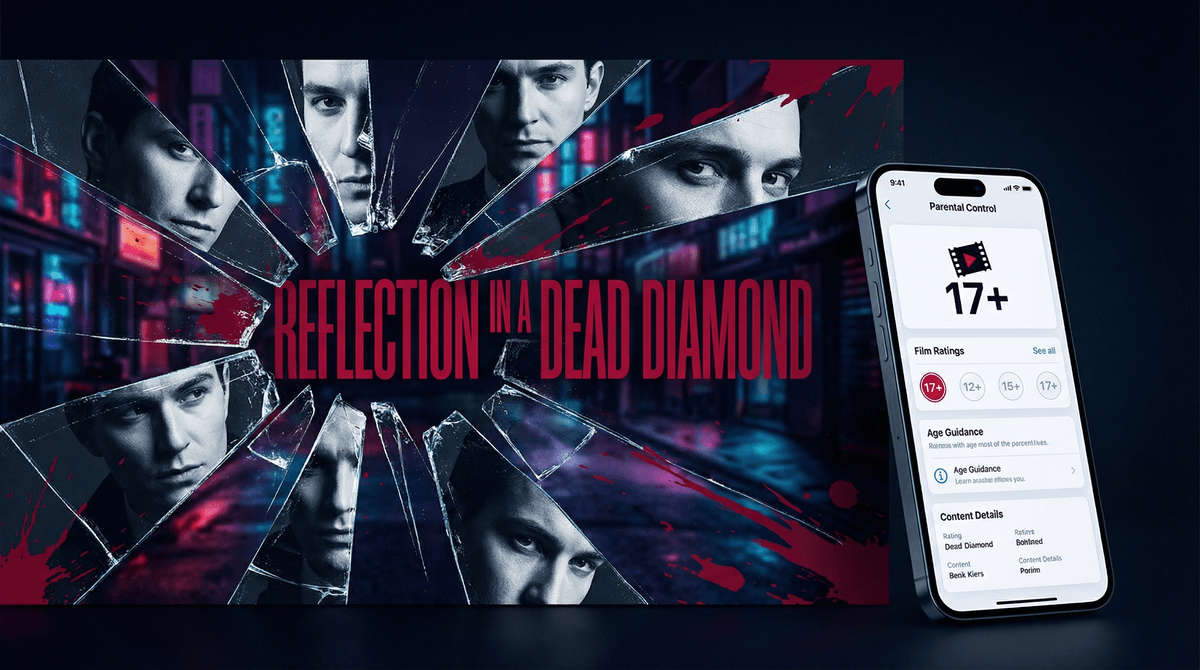
Reflection in a Dead Diamond: A Parent's Guide to This Stylish but Violent Thriller
TL;DR: This isn't for kids. Reflection in a Dead Diamond is an experimental spy thriller with graphic violence, disorienting editing, and mature themes that will appeal to film students and arthouse fans—but it's firmly 17+ territory. If your teen is into Tenet or Memento, they might appreciate the craft, but prepare them for the brutality.
Reflection in a Dead Diamond is a 2024 indie spy thriller that's been making waves in film festival circuits and among cinephiles on Film Twitter. Think if Christopher Nolan directed a European art film with the violence level of John Wick—it's visually stunning, narratively fragmented, and absolutely drenched in blood.
The plot follows a disillusioned intelligence operative navigating a web of double-crosses and moral ambiguity, told through a non-linear structure that jumps between timelines. The "reflection" in the title isn't just metaphorical—the film literally uses mirrors, reflective surfaces, and inverted imagery as both a visual motif and a narrative device.
It's the kind of movie that film students will write essays about and casual viewers will find either pretentious or brilliant. There's no middle ground here.
If your high schooler is into film as an art form—not just entertainment—they've probably heard about this one. It's been all over TikTok film circles, with creators breaking down the symbolism and camera techniques. The director has a cult following among Gen Z cinephiles who appreciate experimental storytelling.
The appeal:
- Genuinely innovative cinematography that plays with perspective
- A protagonist who's morally complex, not a clear hero
- The kind of "puzzle box" narrative structure that rewards multiple viewings
- Aesthetic that's been turned into countless video edits on social media
Your teen might also be interested because it's been compared to Everything Everywhere All at Once in terms of visual ambition, though it's far darker in tone.
Here's where we need to get real. This movie earns its R rating several times over.
What you're dealing with:
- Multiple scenes of close-range shootings with graphic wound detail
- A torture sequence that's genuinely difficult to watch (about 4 minutes long)
- Hand-to-hand combat that emphasizes the physical damage—broken bones, blood, realistic injury
- Two deaths by stabbing shown in unflinching detail
- A car crash sequence that's visceral and disturbing
The violence isn't Marvel-style consequence-free action. It's brutal, grounded, and meant to make you uncomfortable. The camera doesn't look away. If your teen struggled with the intensity of The Batman or found Dune too intense, this is significantly more graphic.
Beyond the violence:
Language: Frequent strong profanity throughout, including multiple f-bombs. Not gratuitous, but definitely present.
Sexual content: One brief sex scene (about 30 seconds, no nudity but clearly implied) and some sexual references in dialogue.
Substance use: Characters drink and smoke throughout. One scene involves drug use in a club setting.
Themes: The entire film grapples with moral relativism, betrayal, and whether violence can ever be justified. The protagonist does terrible things, and the movie doesn't provide easy answers about whether they're redeemable.
Mental health: The main character exhibits symptoms of PTSD and dissociation. Some of the fragmented storytelling is meant to reflect their fractured mental state.
Even if your teen can handle the content, they need to be prepared for the form. This isn't a straightforward thriller.
The film uses:
- Non-linear chronology that requires active engagement to follow
- Scenes that play forward then backward
- Unreliable narrator techniques where we can't trust what we're seeing
- Long stretches with minimal dialogue
- Deliberately confusing editing in action sequences
About 20 minutes in, my screening had multiple walkouts—not because of violence, but because people couldn't follow what was happening. If your teen gets frustrated with movies that don't spoon-feed the plot (Inception made them angry), they'll likely bounce off this hard.
17+: This is the floor. Even mature 17-year-olds should go in knowing what they're getting into.
Not appropriate for:
- Anyone under 16, full stop
- Teens who are sensitive to graphic violence
- Anyone currently struggling with trauma or PTSD
- Teens who prefer clear narrative structures
Potentially appropriate for:
- Film students or aspiring filmmakers (ages 17+)
- Teens who've successfully engaged with challenging films like Arrival or Blade Runner 2049
- Young adults (18+) interested in spy thrillers beyond the Mission: Impossible formula
This is a film school movie, not a Friday night popcorn flick. If your teen wants to watch it, have a conversation about why. Are they genuinely interested in experimental filmmaking? Or did they just see cool clips on TikTok?
If it's the latter, they're probably going to be bored and disturbed in equal measure.
Co-viewing recommendation: If you're watching with a 17-year-old, this could actually be valuable. The film raises legitimate questions about morality, loyalty, and the psychological cost of violence. Those are conversations worth having—but only if everyone's prepared for the intensity.
Alternative suggestion: If your teen is interested in stylish spy thrillers but you're (rightfully) concerned about the violence, consider:
- The Man from U.N.C.L.E. (PG-13, stylish and fun)
- Atomic Blonde (R, still violent but more conventional)
- Tinker Tailor Soldier Spy (R, cerebral with minimal violence)
If they're into the experimental narrative structure specifically, check out guides to mind-bending movies that might scratch the same itch with less graphic content.
If your teen has already seen it or you're discussing whether they should:
Ask:
- "What specifically interests you about this film?"
- "Have you watched other movies with non-linear storytelling? How did you feel about them?"
- "Are you prepared for graphic violence that's meant to be disturbing?"
Discuss:
- The difference between violence as entertainment vs. violence as commentary
- How filmmakers use style to reinforce themes
- Whether the protagonist's actions can be justified, even in context
- How the fragmented structure relates to trauma and memory
Frame it: "This is a film that demands something from you as a viewer. It's not going to hold your hand. If you're ready for that challenge and can handle the intensity, we can talk about watching it together or you watching it and us discussing after."
Reflection in a Dead Diamond is an accomplished piece of filmmaking that's absolutely not for most teenagers. The violence is genuinely disturbing, the style is intentionally challenging, and the themes are heavy.
For the right 17+ viewer—someone who's genuinely into film as an art form and can handle intense content—it could be a formative viewing experience. For everyone else, it's going to be either boring or traumatizing or both.
This is not a "maybe" movie. It's a firm no for under-17, and even for older teens, it requires serious consideration of their maturity level and interest in challenging cinema.
If you're unsure, err on the side of waiting. The film will still be there when they're 18 or 19, and they'll probably get more out of it with a bit more life experience anyway.
Need more guidance on age-appropriate thrillers? Check out spy movies for teens or ask about specific concerns you have about this or similar films.