

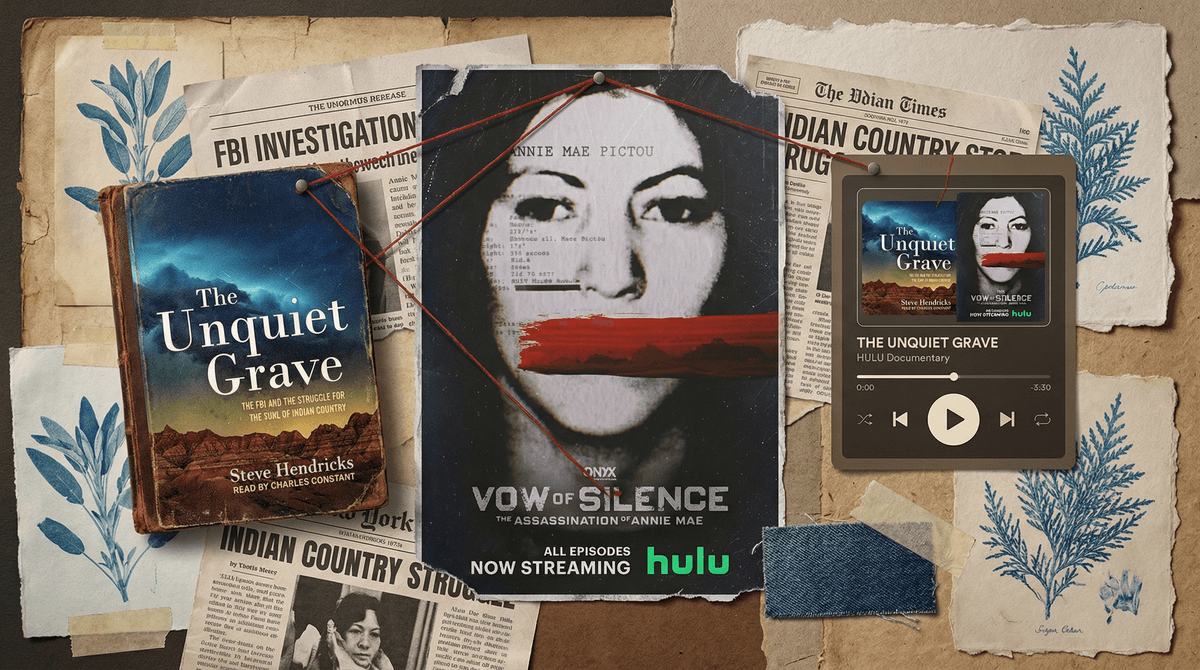
Vow of Silence is a 2024 documentary series on Hulu that investigates the 1975 murder of Annie Mae Aquash, a Mi'kmaq activist and prominent member of the American Indian Movement (AIM). The series digs into decades of silence, conspiracy theories, and FBI involvement surrounding her death—and honestly, it's heavy stuff. This isn't your typical true crime entertainment; it's a deep dive into Indigenous activism, government surveillance, betrayal within movements, and the ongoing fight for justice that many families still face today.
The documentary is well-made and compelling, but it's also deeply political and emotionally intense. If your teen is into true crime (and let's be real, they probably are—it's everywhere), this one offers something most others don't: a lens into systemic injustice against Indigenous people and the complicated legacy of activism in America.
True crime is absolutely dominating teen media consumption right now. Between TikTok deep dives, podcasts like Crime Junkie, and shows like Only Murders in the Building, kids are consuming murder mysteries like it's their job. But most true crime content treats these stories as puzzles to solve or entertainment to binge—rarely do they grapple with why these crimes happened or what they reveal about power, justice, and marginalized communities.
Vow of Silence is different. It's not just "whodunit"—it's about what happens when the people who are supposed to protect you are actually surveilling and undermining you. It's about Indigenous sovereignty, the brutal history of government treatment of Native activists, and how trauma and silence can echo through generations.
If your teen is already consuming true crime content (and statistically, they are), this is one of the rare opportunities to use that interest as a bridge to conversations about history, justice, and Indigenous rights—topics that often get glossed over in school.
Not for younger kids. This is firmly a 16+ conversation, and even then, it depends on your teen's maturity and interest in political/historical content.
Why 16+?
- Graphic content: The series discusses murder, includes crime scene photos, and doesn't shy away from the violence Annie Mae faced
- Complex political context: Understanding the FBI's COINTELPRO operations, the Wounded Knee occupation, and AIM's internal conflicts requires some historical baseline
- Emotional weight: This isn't entertainment—it's about real people, ongoing trauma, and unresolved grief within Indigenous communities
That said, if you have a 14 or 15-year-old who's genuinely interested in social justice, history, or activism, watching together could be incredibly valuable. This is not a "let them watch alone" situation.
The True Crime Angle
Your teen probably found this through TikTok or true crime forums. The algorithm loves a good unsolved mystery, and Annie Mae's story has all the elements: murder, conspiracy, FBI involvement, and decades of unanswered questions.
But unlike a lot of true crime content that sensationalizes or trivializes violence, Vow of Silence treats Annie Mae as a full human being—an activist, a mother, a woman caught between her commitment to her people and the dangerous politics of a movement under siege.
The Indigenous Rights Context
Here's what most schools don't teach: the American Indian Movement was heavily infiltrated and targeted by the FBI in the 1970s. The government saw Indigenous activists fighting for treaty rights and sovereignty as threats. Annie Mae's murder happened in this context—and the documentary explores how paranoia, government pressure, and internal betrayals led to her death.
This is a chance to talk about:
- Why Indigenous activists were (and still are) targeted
- The legacy of broken treaties and stolen land
- How movements can be undermined from within
- The ongoing crisis of Missing and Murdered Indigenous Women (MMIW)
It's Not Just History
One of the most powerful aspects of the series is that this isn't resolved. Annie Mae's family is still fighting for answers. Indigenous communities are still dealing with disproportionate violence, lack of justice, and systemic neglect. If your teen walks away thinking "wow, that was messed up but at least it's over," you've got more talking to do.
If your teen wants to watch this—or already has—here are some conversation starters:
"What made you interested in this story?"
Let them lead. Are they into true crime generally? Did they learn about AIM in school? Are they interested in activism?
"What surprised you most?"
This can reveal what they're taking away—whether it's the FBI involvement, the complexity of AIM's internal politics, or Annie Mae's personal story.
"How does this connect to things happening now?"
Talk about MMIW, Land Back movements, Standing Rock, or other contemporary Indigenous activism. Learn more about ongoing Indigenous rights movements .
.
"How do you think the media usually covers Indigenous stories—or doesn't?"
This is a great media literacy question. Why do some stories go viral while others are ignored? Who decides what's "newsworthy"?
"What would justice look like in this case?"
There's no easy answer, and that's the point. Let them sit with the complexity.
True crime isn't going anywhere, and honestly, I'd rather teens engage with something like Vow of Silence—which treats its subject with dignity and connects personal tragedy to systemic injustice—than another sensationalized murder podcast that treats victims as entertainment.
But this is heavy, politically charged content that requires context. If your teen is ready for it, it's an incredible opportunity to talk about activism, justice, Indigenous history, and how we reckon with uncomfortable truths about our country.
Watch it together if you can. Pause when things get intense. Follow up with resources from Indigenous creators and activists. And recognize that if your teen is asking to watch this, they're probably ready to have bigger conversations about justice, power, and what it means to fight for what's right—even when it's dangerous.
- Co-watch if possible: This is best experienced together, with space to pause and discuss
- Follow Indigenous creators: TikTok and Instagram have incredible Indigenous educators who provide ongoing context—learn more about Indigenous voices to follow
- Read more about AIM and Annie Mae: Books like The Unquiet Grave by Steve Hendricks provide deeper context
- Support MMIW organizations: If this story moves your teen, channel that into action—there are organizations doing critical work on this issue today
And if true crime is your teen's thing, check out our guide to age-appropriate true crime content that goes beyond entertainment.