

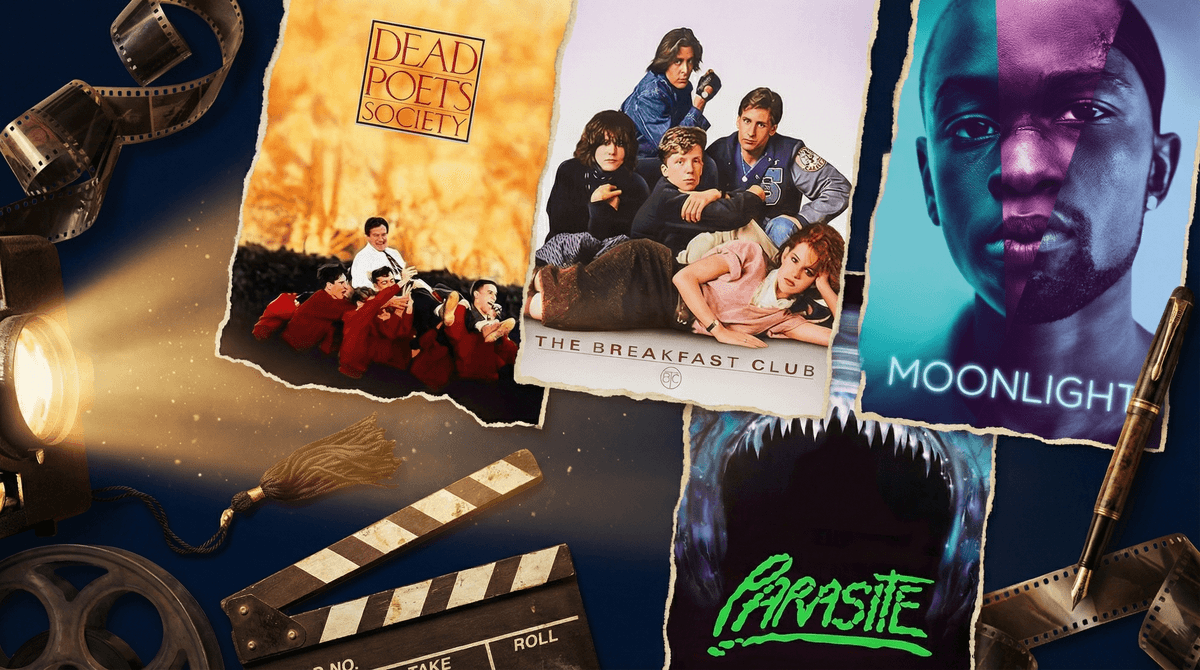
The Top 15 Must-Watch Movies for Every High Schooler
TL;DR: High school is when movies can become more than entertainment—they're conversation starters about identity, empathy, justice, and what it means to be human. Here are 15 films that actually deliver on that promise, organized by theme. Not all are "teen movies" (some are better), and yes, some have mature content—that's kind of the point.
Quick links to the must-watches:
High schoolers are navigating identity formation, peer pressure, first relationships, college decisions, and increasingly complex social issues. The right movie at the right time can crack open a conversation that would never happen over dinner.
These aren't just "good movies for teens"—these are films that treat young viewers with respect, that don't talk down, and that trust them to handle complexity. Some are rated R. Some have language or mature themes. That's intentional. If your teen is old enough to scroll TikTok unsupervised, they can handle Moonlight.
Dead Poets Society (1989, PG)
The gold standard for "inspiring teacher" movies. Robin Williams as an English teacher who encourages students to "seize the day" and think for themselves. Yes, it's earnest. Yes, it ends tragically. Yes, your teen will roll their eyes at the poetry but secretly be moved.
Why it works: It's about the tension between parental expectations and personal dreams—something every high schooler is navigating in some form. The standing-on-desks scene is corny but effective.
Age range: 13+
The Breakfast Club (1985, R)
Five stereotypes walk into Saturday detention: the brain, the athlete, the basket case, the princess, and the criminal. What emerges is a surprisingly nuanced look at how labels limit us and how everyone's dealing with something.
Why it works: The dialogue holds up. The "we're all pretty bizarre" speech is still relevant. And it's a masterclass in how people from different social groups can actually connect when forced to be real with each other.
Content note: Language, some sexual references, discussion of abuse. The R rating is mostly for language—nothing graphic.
Age range: 14+
Lady Bird (2017, R)
Greta Gerwig's semi-autobiographical film about a high school senior in Sacramento trying to figure out who she is while navigating a complicated relationship with her mom. It's funny, it's painful, and the mother-daughter dynamic is so accurate it hurts.
Why it works: It captures the specific cringe of late high school—the desperate desire to be somewhere else, the performative rebellion, the way you can love and resent your parents simultaneously. Plus, it's one of the few films that shows a realistic teen friendship falling apart.
Age range: 15+
12 Angry Men (1957, Not Rated)
A jury deliberates whether to convict a teenager of murder. One juror has reasonable doubt. For 96 minutes, we watch him slowly convince the others to actually examine their biases and assumptions.
Why it works: It's a clinic in critical thinking, persuasion, and how prejudice operates. Also, it's entirely in one room with twelve middle-aged men in suits, and somehow it's riveting. Great for teens learning about rhetoric and debate.
Age range: 13+
To Kill a Mockingbird (1962, Not Rated)
They probably read the book in English class. The film adaptation is remarkably faithful and Gregory Peck's Atticus Finch is the moral center many of us wish existed in real life.
Why it works: It's about standing up for what's right even when your community is against you. And Scout's perspective as a child witnessing injustice adds a layer that resonates with teens who are just starting to see systemic problems clearly.
Age range: 12+
Get Out (2017, R)
Jordan Peele's horror-thriller about a Black man visiting his white girlfriend's family for the weekend. What starts as awkward microaggressions becomes something far more sinister.
Why it works: It's genuinely scary and entertaining, but it's also a brilliant examination of liberal racism and how "good intentions" can mask something deeply wrong. Teens who've experienced being the only [fill in the blank] in a space will recognize the discomfort immediately.
Content note: Violence, horror elements, racial themes. This one deserves the R rating.
Age range: 16+
Moonlight (2016, R)
Three chapters in the life of Chiron, a Black gay man growing up in Miami. It's quiet, it's beautiful, and it's devastating in the best way.
Why it works: It's about identity formation in an environment that doesn't make space for who you are. The film trusts silence and subtlety—a nice counter to the everything-loud-all-the-time aesthetic of most teen media. Essential viewing for understanding intersectionality.
Content note: Drug use, some violence, sexual content. Mature themes throughout.
Age range: 15+
The Truman Show (1998, PG)
Jim Carrey's Truman Burbank has lived his entire life in a massive TV set without knowing it. Everyone around him is an actor. His whole life is a reality show.
Why it works: In the age of social media performance, curated identities, and surveillance capitalism, this film hits different than it did in 1998. Great conversation starter about authenticity, privacy, and what's real versus what's performed.
Age range: 12+
The Matrix (1999, R)
Reality is a simulation. You can take the red pill and see the truth or the blue pill and stay comfortable. Neo takes the red pill.
Why it works: Beyond the groundbreaking action sequences, it's fundamentally about questioning authority and waking up to systems of control. Also, the "what is real" question is increasingly relevant as AI gets better at generating convincing fakes.
Content note: Violence, some language. The R rating is mostly for action violence.
Age range: 14+
Inception (2010, PG-13)
Dreams within dreams within dreams. Corporate espionage through shared dreaming. A spinning top that may or may not be the key to understanding reality.
Why it works: It rewards attention and discussion. The ending is deliberately ambiguous. Great for teens who like puzzles and complex narratives. Also, it's just incredibly well-crafted filmmaking.
Age range: 13+
Ferris Bueller's Day Off (1986, PG-13)
Ferris fakes sick, takes his best friend's dad's Ferrari, and has the perfect day in Chicago. His principal is determined to catch him.
Why it works: It's pure wish fulfillment—the fantasy of taking a day to actually live instead of just going through the motions. Ferris breaks the fourth wall and talks directly to the audience, which makes it feel like he's letting you in on the scheme. The "life moves pretty fast" monologue remains perfect.
Age range: 12+
The Perks of Being a Wallflower (2012, PG-13)
Charlie is a freshman struggling with mental health issues who gets adopted by a group of misfit seniors. It's about finding your people and learning that everyone's fighting battles you can't see.
Why it works: It handles trauma, mental health, and LGBTQ+ identity with care while still being a genuine coming-of-age story. The "we are infinite" moment in the tunnel is earned, not cheesy.
Content note: References to sexual abuse, suicide, mental health struggles. Heavy themes but handled well.
Age range: 14+
Coco (2017, PG)
Yes, it's animated. Yes, it's Pixar. No, that doesn't make it less essential. Miguel wants to be a musician despite his family's ban on music. He ends up in the Land of the Dead on Día de los Muertos and learns about his family's history.
Why it works: It's about intergenerational trauma, family expectations, and the importance of remembering where you come from while still pursuing your dreams. Also, it's one of the most culturally authentic mainstream films about Mexican culture. And if you don't cry during "Remember Me," you might be a robot.
Age range: 8+
Parasite (2019, R)
A poor family cons their way into working for a wealthy family. Things get complicated. Then they get dark.
Why it works: It's a thriller, a dark comedy, and a searing critique of class inequality all at once. Bong Joon-ho's direction is flawless. The film never tells you what to think—it just shows you and lets you draw conclusions. Perfect for teens starting to understand economic systems and privilege.
Content note: Violence, language, sexual content. Definitely earns the R rating, especially in the third act.
Age range: 16+
Spirited Away (2001, PG)
Hayao Miyazaki's masterpiece about a girl whose parents are turned into pigs and who must work in a bathhouse for spirits to save them.
Why it works: It's visually stunning, narratively complex, and thematically rich. It's about growing up, finding courage, and environmental stewardship. Also, it proves that animation isn't just for kids—this is sophisticated storytelling that happens to be hand-drawn.
Age range: 10+
Whiplash (2014, R)
A young jazz drummer studies under an abusive instructor who pushes him to his limits and beyond. It's intense, it's uncomfortable, and it raises real questions about the cost of greatness.
Why it works: It's about ambition, perfectionism, and whether abuse in the name of excellence is ever justified. (Spoiler: it's not, but the film is smart enough to let that be complicated.) Great for teens in competitive environments—whether that's sports, academics, or the arts.
Content note: Intense verbal and emotional abuse, some language. The R rating is for language and intensity.
Age range: 15+
For younger high schoolers (13-15): Start with Dead Poets Society, 12 Angry Men, The Truman Show, Ferris Bueller's Day Off, and Coco. These have mature themes but lighter content.
For older high schoolers (16+): Everything on this list is fair game, but Get Out, Parasite, and Whiplash are particularly good for juniors and seniors who can handle complexity and moral ambiguity.
R ratings: Several of these are rated R, mostly for language, mature themes, or violence. Use your judgment based on your teen's maturity and what they're already exposed to. If they're on social media, they've seen worse than anything in The Breakfast Club.
Watch together when possible: Not in a forced "family movie night" way, but genuinely. These films are better with discussion.
Don't force the conversation: Let them marinate. Sometimes the best discussions happen three days later when something reminds them of a scene.
Ask open questions: "What did you think about...?" not "Here's what you should learn from this movie."
Follow their interests: If they loved Inception, check out other mind-bending films. If Moonlight resonated, explore more films about LGBTQ+ identity.
Use them as curriculum: These films work great alongside what they're studying. Reading about the civil rights movement? Watch To Kill a Mockingbird. Studying rhetoric? 12 Angry Men is your friend.
High school is when kids start asking the big questions: Who am I? What do I believe? What kind of person do I want to be? These films don't provide easy answers, but they model how to ask better questions.
Not every movie will land with every teen. That's fine. But exposing them to stories that challenge, provoke, and move them is part of helping them develop into thoughtful, empathetic adults who can handle complexity.
And honestly? These are just good movies. If you haven't seen Parasite or Moonlight, you're missing out. Watch them for yourself first, then decide if your teen is ready.
For more film recommendations, check out our guides on coming-of-age movies, films about social justice, or movies that teach critical thinking.