

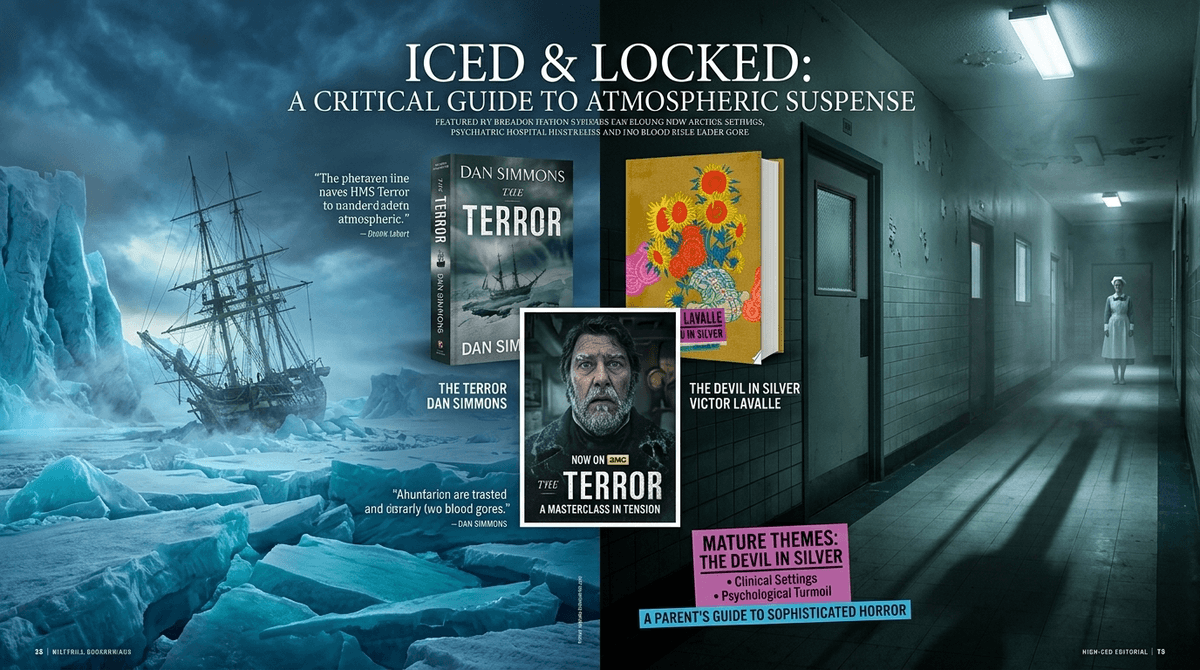
The Terror is a masterclass in atmospheric dread, but it is absolutely not for kids—and for most teens, it’s a "wait until you’re older" situation. This isn't the fun, jump-scare horror of a summer slasher; it’s a grueling, high-prestige exploration of what happens when humans are stripped of their dignity, their health, and eventually, their humanity. Between the graphic cannibalism in Season 1 and the suffocating psychiatric hospital setting of the recently released Season 3, it’s a heavy lift even for seasoned adult viewers.
The Terror is brilliant, bleak, and deeply R-rated in its intensity. While the historical and literary roots are fascinating, the series features extreme gore, body horror (think scurvy and self-mutilation), and profound psychological trauma. It’s best reserved for adults or perhaps very mature 17+ teens who can handle "existential crisis" horror. If they want the survival vibe without the nightmare fuel, try Master and Commander or The Martian instead.
Unlike most shows that stick to one story, The Terror is an anthology. Each season tackles a different historical or literary "hellscape," and none of them pull punches.
Based on The Terror by Dan Simmons, this season follows the real-life disappearance of the Franklin Expedition in the 1840s. Two British ships get stuck in the ice, and things go south fast. It’s not just the giant supernatural polar bear hunting them—it’s the lead poisoning, the scurvy (which is depicted with stomach-turning detail), and the inevitable descent into cannibalism. It’s a slow-burn tragedy that feels cold to the bone.
This season shifts to a Japanese-American internment camp during WWII. It blends historical atrocity with a yūrei ghost story. The horror here is more focused on cultural trauma and the monsters humans become when fueled by racism and fear. It’s arguably the most "important" season, but the depiction of war crimes and suicide makes it a tough watch for a family movie night.
Fresh off its May release, the third installment—based on the novel The Devil in Silver by Victor LaValle—moves the horror to a modern-day psychiatric hospital. Starring Dan Stevens, it leans hard into "institutional horror." We're talking about the terror of being trapped in a system that doesn't believe you’re sane, mixed with a literal monster roaming the halls. It’s claustrophobic, politically charged, and deeply upsetting.
If your teen has seen Stranger Things or The Last of Us, they might think they’re ready for this. They probably aren't. Here is where the friction usually happens:
- The Gore is Clinical: In Season 1, you see the effects of scurvy—teeth falling out, old scars reopening. It’s not "cool" movie gore; it’s biological horror that feels disturbingly real.
- The Pacing is Glacial: This is prestige TV. It moves slowly. For a kid used to the TikTok-speed editing of modern horror, The Terror might feel like homework—until someone gets their legs sawn off.
- The Cannibalism: There is no "polite" way to handle this. Season 1 deals with the logistics of eating your crewmates to survive. It’s handled with gravity, but it’s still a lot for a developing brain to process.
- The Hopelessness: Most teen-centric media has a "win" condition. In The Terror, the environment usually wins. The nihilism is the point, which can be a real downer for younger viewers.
If your teen is genuinely interested in the "survival against the elements" or "historical mystery" aspect of the show, there are ways to scratch that itch without the psychiatric hospital hellscapes.
For the "Survival at Sea" fans:
- Master and Commander: The Far Side of the World: All the 19th-century naval detail, none of the soul-crushing cannibalism.
- The Martian: It’s the ultimate "science your way out of a death trap" story. It’s optimistic where The Terror is bleak.
For the "Literary Horror" fans:
- Yellowjackets: It still has survival and cannibalism themes, but it's framed through a teen lens and feels more like a thriller than a funeral march.
- A Ghost Story: If they liked the slow, atmospheric dread of Season 2, this is a beautiful, meditative take on hauntings that isn't nearly as traumatic.
The biggest thing to understand about The Terror is that it’s adult-targeted literary fiction. It’s the TV equivalent of a 600-page historical novel that wins a Pulitzer. If you have an older teen (17+) who is a serious history buff or a fan of Victorian literature, they might get a lot out of the production design and the acting. But even then, you’ll want to be ready for some very dark conversations afterward.
If you decide to let your older teen watch (or if they’ve already binged it at a friend's house), don't just let the credits roll in silence. Ask these:
- "What makes a monster?" In every season, there is a supernatural element, but the humans are usually doing the worst things. Who was the real villain?
- "How does the setting change the characters?" In Season 1, the ice changes the men. In Season 3, the hospital changes the patients. How much of "who we are" is just a result of where we are?
- "Why do we watch this?" Horror like this is meant to make us feel uncomfortable. Why is it satisfying to watch people survive (or fail to survive) the impossible?
Q: Is "The Terror" appropriate for a 14-year-old? No, it's generally too intense. Between the graphic body horror, cannibalism, and heavy psychological themes, it’s a lot for a 14-year-old to handle. Stick to our best shows for kids list for better options.
Q: Which season of "The Terror" is the scariest? It depends on what scares you. Season 1 is the most "gory," Season 2 is the most "haunted," and Season 3 is the most "psychologically disturbing." Most fans agree Season 1 is the most effective overall.
Q: Is "The Terror" based on a true story? Season 1 is based on the real Franklin Expedition of 1845, though it adds supernatural elements. Season 2 uses the real history of Japanese-American internment camps as its backdrop.
The Terror is one of the best things on television, but it’s a heavy, jagged pill to swallow. It’s for the parents to watch after the kids are in bed—and maybe with the lights on. If your teen is itching for prestige horror, maybe start them with something like The Sixth Sense first and see how they handle the atmosphere before dropping them into the Arctic ice.
- Check out our digital guide for high schoolers to find shows that hit the "mature" mark without the trauma.
- Explore our best movies for kids list for historical dramas that are a bit more accessible.
- Get a horror recommendation
 based on what your kid already likes.