

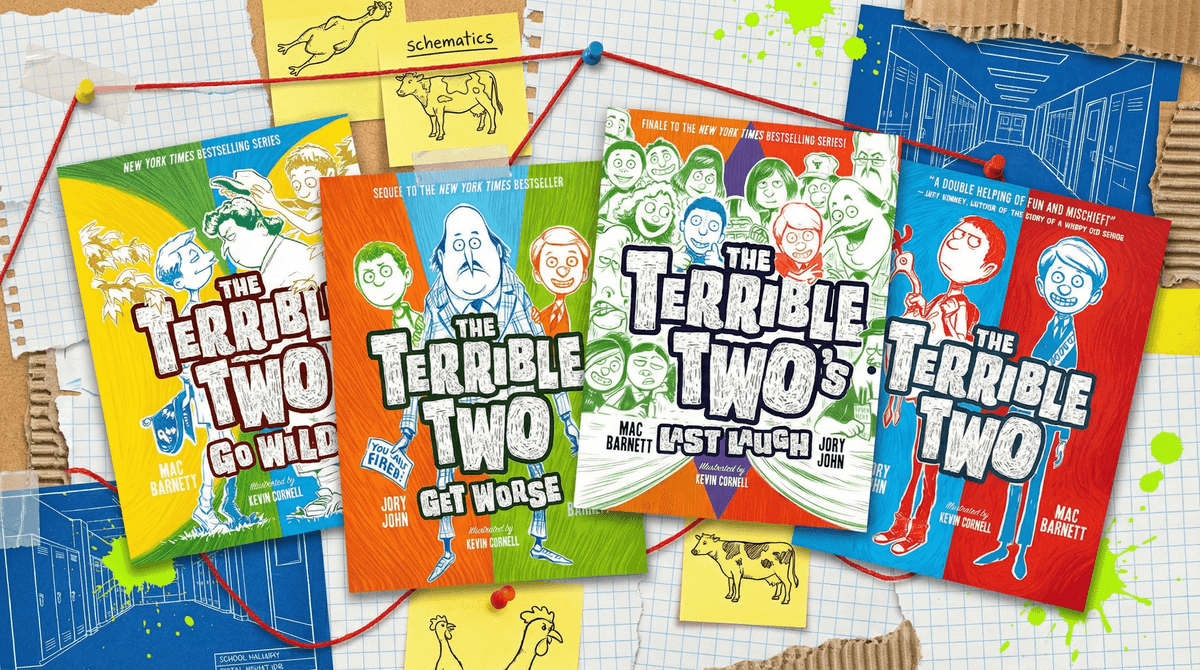
The Terrible Two series is a chapter book collection by Mac Barnett and Jory John that follows Miles Murphy and Niles Sparks, two middle schoolers who become best friends through their shared love of elaborate pranks. The series includes four books: The Terrible Two, The Terrible Two Get Worse, The Terrible Two Go Wild, and The Terrible Two's Last Stand.
Think of it as Diary of a Wimpy Kid meets Ocean's Eleven—there's humor, friendship, and genuinely clever problem-solving, but instead of heists, it's pranks. And not just whoopee cushion stuff. We're talking coordinated, multi-day operations involving fake cows and elaborate disguises.
The books are aimed at ages 8-12 and hit that sweet spot where kids are reading independently but still want something genuinely funny. Each book is around 200 pages with occasional illustrations, making them accessible for reluctant readers while still offering enough substance for strong readers.
It celebrates being clever. Miles and Niles aren't troublemakers for the sake of chaos—they're strategic thinkers who plan meticulously. Kids love watching them outsmart adults and other students through creativity rather than meanness. There's a real problem-solving element that feels like watching a heist movie unfold.
The friendship is genuinely heartwarming. What starts as rivalry (both boys think they're the best prankster at Yawnee Valley Science and Letters Academy) becomes a deep friendship. They learn to work together, support each other, and navigate conflicts. It's rare to find books for this age group that model healthy male friendship so well.
The humor actually lands. These books are legitimately funny—not just "funny for kids." The pranks are creative (turning the entire school into a beach, convincing everyone there's a cow loose in the building), and the writing has enough wit that parents reading aloud won't want to gouge their eyes out.
There's a satisfying underdog element. The boys often prank Principal Barkin, an authoritarian figure who deserves some comeuppance. Kids love seeing authority figures (safely) challenged, especially when those figures are being unreasonable.
The pranks are elaborate but not mean-spirited. This is probably your biggest question: is this going to inspire my kid to become a menace? Here's the thing—the pranks in these books are so elaborate and require so much coordination that they're basically fantasy. No kid is going to replicate them without serious adult involvement (at which point you'd notice).
More importantly, the books consistently show the boys thinking about consequences and who might get hurt. They avoid pranks that would genuinely upset people or cause real problems. There's an ethical framework here, even if it's not explicitly stated.
That said, yes, some kids will try pranks. If your child is already inclined toward mischief, these books might inspire some attempts. But honestly? That's a teaching opportunity. You can talk about the difference between harmless fun and actual disruption, about consent and boundaries, about reading the room.
The books celebrate creativity and collaboration. Beyond the pranks, these stories are about two kids who are really good at something working together to become even better. They plan, they strategize, they fail and adjust. These are actually valuable skills, just applied to... unconventional ends.
There's surprising emotional depth. The third book deals with Miles moving away and the boys trying to maintain their friendship long-distance. The fourth tackles legacy and what it means to leave your mark. These aren't just silly prank books—they're about friendship, identity, and growing up.
The school setting is exaggerated but recognizable. Principal Barkin is cartoonishly strict, which helps kids understand this is fiction. The school rules are absurd (no talking in hallways, mandatory school uniforms that look like prison jumpsuits). This creates clear distance between the book world and real life.
Ages 7-8: These kids can probably handle the reading level, but might take the pranks more literally. If you have a rule-follower, they might be stressed by the rule-breaking. If you have a boundary-pusher, you might want to wait a year or two.
Ages 9-11: The sweet spot. Kids this age can appreciate the humor, understand the fantasy element, and engage with the friendship themes. They're also old enough to have conversations about ethics and consequences.
Ages 12+: Some middle schoolers still love these books, though others might find them too young. If your tween enjoys Captain Underpants or Dog Man, they'll probably still enjoy The Terrible Two.
If your kid is reading these books (or you're reading them together), here are some conversation starters:
"What makes a prank funny versus mean?" This is the big one. Talk about intent, impact, and consent. The boys in the book think carefully about who their pranks affect—that's worth discussing.
"Could you actually pull off any of these pranks?" Most of them require resources, planning, and coordination that kids don't have. This can help maintain the fantasy/reality boundary.
"What do you think about Miles and Niles' friendship?" The books model apology, compromise, and working through conflict. These are great discussion points.
"What would happen if someone did this at your school?" Let them think through real consequences versus book consequences. It's a good reality check.
The Terrible Two series is genuinely well-written, funny, and celebrates creativity and friendship. Yes, it's about pranks, but it's also about collaboration, problem-solving, and ethical thinking (even if the ethics are applied to mischief).
Will some kids be inspired to try pranks? Maybe. But they're also inspired by YouTube, their friends, and their own developing sense of humor. These books at least model thinking things through and considering consequences.
For most families, this series is a great choice for independent reading. The books are engaging enough to hook reluctant readers, funny enough to be genuinely enjoyable, and substantive enough to offer real value beyond the laughs.
If you're concerned about your specific kid's reaction, read the first book together. See how they respond, what they find funny, and what questions they have. That'll tell you everything you need to know about whether this series is right for your family.
And honestly? If the worst thing your kid is reading is a book that celebrates creativity, friendship, and clever thinking—even in service of pranks—you're probably doing okay.
Want to explore similar books? Check out guides for other funny middle-grade series like Wimpy Kid, Timmy Failure, or The Wednesday Wars for something with similar humor but less mischief.
Curious about what other kids this age are reading? Find popular books for 9-11 year olds to get personalized recommendations based on your child's interests and reading level.
Want to set some boundaries around pranks? It might be worth having a family conversation about what's funny versus what's disruptive. Learn more about setting family expectations around behavior that works for your specific household values.