

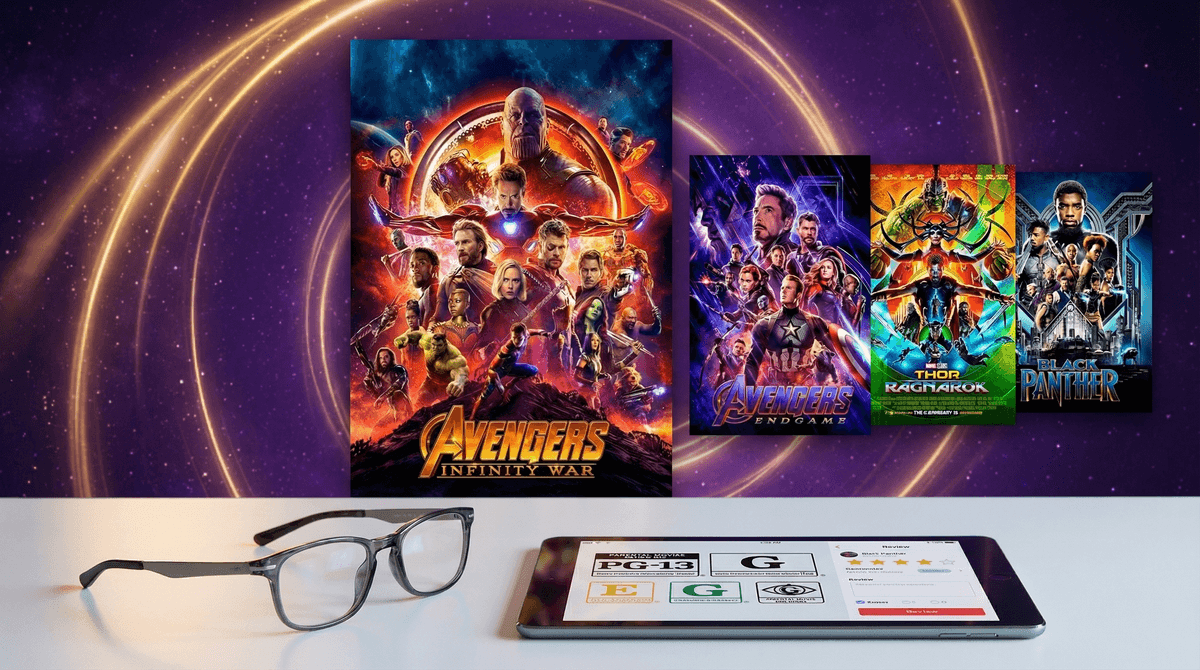
Avengers: Infinity War: What Parents Need to Know Before the Epic Battle
TL;DR: Avengers: Infinity War is rated PG-13 for intense sci-fi action violence, some language, and emotionally devastating character deaths. Best for ages 11+, though your Marvel-obsessed 9-year-old has probably already seen it three times. The violence is constant but not gory, and the real gut-punch is watching beloved heroes literally turn to dust. If your kid can handle the emotional weight of major character deaths and a villain who actually wins, they can handle this movie.
Let's be real: by 2018, when Infinity War dropped, we'd already had 18 Marvel movies. Your kids had probably seen Iron Man quip his way through a dozen battles, watched Captain America punch Nazis, and giggled at Groot saying "I am Groot" on repeat.
But Infinity War changed the game. This isn't a movie where the good guys win after a big fight scene. The villain wins. Thanos snaps his fingers, half the universe dies, and the credits roll. Full stop.
That ending hit different. Kids who'd grown up with these characters watched Spider-Man literally disintegrate in Tony Stark's arms, begging "I don't want to go." Parents reported theaters full of stunned silence and actual tears from kids (and let's be honest, adults too).
The PG-13 rating is earned through sheer volume of action sequences. We're talking:
- Constant battles: Lasers, explosions, hand-to-hand combat, space battles, you name it
- Intense but not graphic: People get thrown through walls, stabbed with alien weapons, and choked, but there's minimal blood
- The snap: Characters literally dissolve into ash on screen—it's not violent per se, but it's deeply disturbing
- Torture scene: Thanos tortures Nebula to force information from Gamora—it's brief but intense
The violence is sci-fi/fantasy style—think more "laser blasts and magical hammers" than "realistic war movie." No one's getting their limbs blown off or bleeding out realistically. But the emotional violence is real. Watching Gamora get thrown off a cliff by her adoptive father to gain a magical stone? That's heavy stuff.
Ages 8 and under: Probably not. Even if they've seen other Marvel movies, the runtime alone (2 hours 40 minutes) is brutal, and the ending will likely be confusing or upsetting. The stakes feel real in a way that earlier, more lighthearted Marvel movies don't.
Ages 9-10: Maybe, if they're Marvel superfans who've seen most of the previous movies. They need context to understand who these characters are and why we care. Without that emotional investment, it's just a long action movie. But even Marvel-literate kids this age might struggle with the ending—it's genuinely sad, and there's no resolution. You're basically signing up to immediately watch Avengers: Endgame to get closure.
Ages 11-13: The sweet spot. Most middle schoolers can handle the action, understand the complex plot about Infinity Stones and the moral questions Thanos raises, and process the emotional weight. They might still be upset, but they can contextualize it as "part one of a two-part story."
Ages 14+: Absolutely fine. Teens can appreciate the storytelling ambition, debate whether Thanos has a point (he doesn't, but they'll argue about it), and handle the darker tone.
This is movie #19 in a 23-movie saga. If your kid hasn't seen at least Thor: Ragnarok, Black Panther, and Captain America: Civil War, they'll be lost. The movie assumes you know who everyone is and why they're fighting. There are literally dozens of characters, and the film doesn't stop to explain relationships or backstories.
The runtime is a beast. At 2 hours and 40 minutes, this is longer than most kids' attention spans. There's no natural "break point" either—it's relentless from start to finish.
Language is mild but present. A handful of "shit," "damn," and "ass" scattered throughout. Nothing your middle schooler hasn't heard on the bus.
Thanos is a compelling villain. He's not cackling-evil—he genuinely believes he's saving the universe by killing half of all life to prevent overpopulation and resource depletion. This moral complexity is actually great for discussions with older kids about how villains justify their actions , but younger kids might find it confusing.
The character deaths are what stick with kids. Not just that heroes die, but how they die:
- Loki gets strangled in the opening scene
- Gamora is thrown off a cliff by Thanos (her adoptive father) as a sacrifice
- Vision gets the Mind Stone ripped out of his head
- The snap: Spider-Man, Black Panther, most of the Guardians of the Galaxy, Doctor Strange, Scarlet Witch, Falcon, Bucky, and more all disintegrate on screen
The Spider-Man death scene is particularly rough. Tom Holland's performance as a terrified teenager who knows he's dying is genuinely heartbreaking. Parents should be prepared for questions like "Are they really dead?" and "Will they come back?"
The honest answer: Yes, they come back in Endgame, but your kid doesn't know that yet. The year between Infinity War and Endgame's release was genuinely stressful for young Marvel fans.
Despite the darkness, this movie is catnip for Marvel fans:
- Everyone shows up: It's the ultimate crossover event, with characters from across the entire MCU fighting together
- The action is spectacular: The Wakanda battle, the Titan fight, Thor's entrance in Wakanda—these are peak superhero cinema
- It treats kids like they're smart: The plot is complex, the stakes are real, and the movie doesn't dumb things down
- It's what they've been building to: For kids who've been watching since Iron Man or The Avengers, this is the payoff
If you watch together (recommended for younger viewers), here are some conversation topics:
- "Do you think Thanos has a point about overpopulation?" (Spoiler: No, genocide is never the answer, but it's worth discussing why his logic is flawed)
- "Which character's death hit you hardest?" Let them process their feelings
- "What would you do if you were in [character's] position?" The movie is full of impossible choices—great for ethical discussions
- "Why do you think the heroes couldn't work together better?" The conflict between Tony and Steve carries over from Civil War and costs them dearly
Avengers: Infinity War is a genuinely great superhero movie that takes real risks with its story and characters. It's also intense, emotionally heavy, and ends on a devastating cliffhanger.
Watch it with your kid if they're under 12. Not because of the violence (though that's a factor), but because they'll likely need to talk through the ending. Be prepared to either immediately watch Endgame or have a conversation about how sometimes stories have sad parts before the happy ending.
For teens, it's a great movie to watch together and discuss. The themes of sacrifice, the cost of heroism, and whether the ends justify the means are all worth exploring.
And if your kid is already obsessed with Marvel? They've probably seen it already. But watching it together gives you a chance to understand what they're responding to and why they're drawing Thanos on all their homework.
Just maybe have Endgame queued up for immediately after. Trust me on this one.