

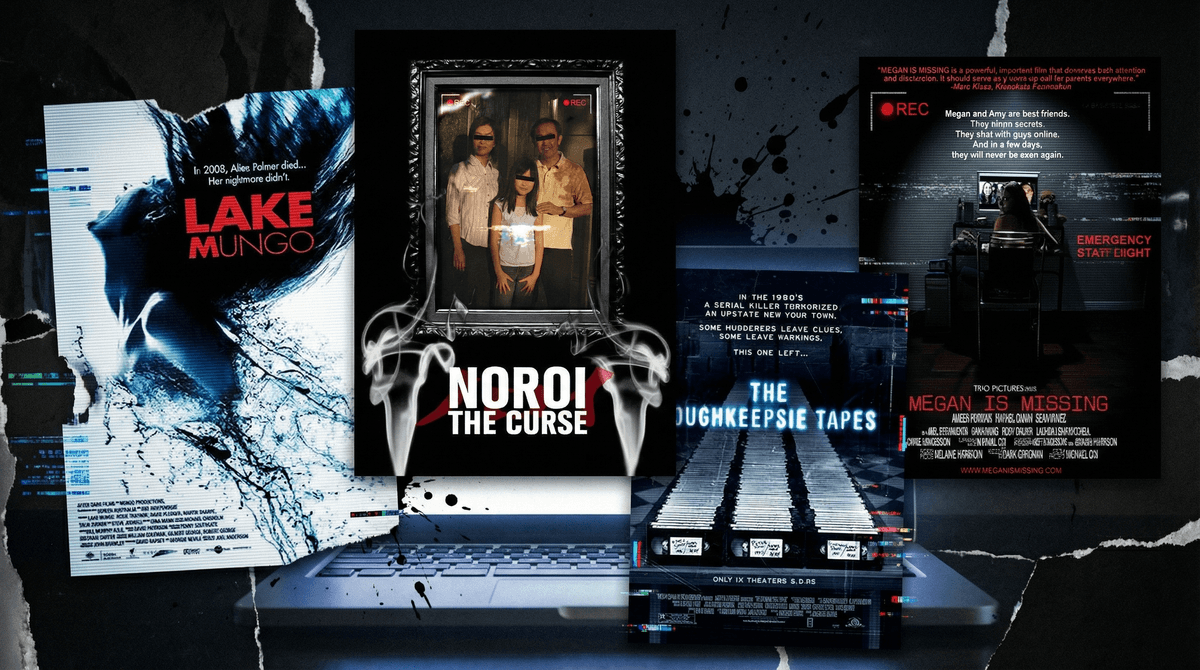
Look, we need to talk about the found footage horror movies your teens are watching at sleepovers or finding on streaming platforms at 2am. Not The Blair Witch Project or Paranormal Activity — those are practically classics at this point. I'm talking about the deeply disturbing, boundary-pushing found footage films that exist in this weird internet-native space where "unwatchable" becomes a badge of honor.
Movies like Megan Is Missing, The Poughkeepsie Tapes, Noroi: The Curse, and Lake Mungo have developed cult followings among teens specifically because they're "the scariest thing you'll ever watch" according to TikTok. These aren't your standard jump-scare fests. They're slow-burn psychological horror that often includes realistic depictions of violence, sexual assault, child endangerment, and genuinely traumatic imagery presented as "real footage."
The found footage format makes everything feel more real — that's the whole point. And that realism is exactly what makes these films particularly problematic for younger viewers who are still developing their ability to process disturbing content.
Here's the thing: teens have always been drawn to testing their limits with scary content. It's developmentally normal. Horror movies are a safe way to experience danger, prove bravery to peers, and explore darker emotions in a controlled environment.
But the internet has completely changed the game. What used to require sneaking into an R-rated movie or finding your dad's horror VHS collection now takes three clicks on a streaming service or a quick Reddit search for "most disturbing movies ever made."
The social currency is real too. On TikTok and YouTube, there's an entire genre of "I watched [terrifying movie] so you don't have to" reaction videos. Teens watch these movies specifically to participate in the cultural conversation, to say they made it through, to prove they're not easily scared. It's similar to the appeal of creepypasta and internet horror , but with actual films that can be significantly more graphic.
Traditional horror movies have visual language that screams "this is fake" — dramatic music, perfect lighting, obvious special effects, recognizable actors. Found footage strips all that away. The shaky camera, the amateur acting, the deliberate low quality — it all makes the brain work harder to maintain that "this isn't real" boundary.
For younger teens (ages 13-15), whose brains are still developing critical thinking and emotional regulation skills, this format can be genuinely harmful. These films often include:
- Realistic depictions of sexual violence (like the final 20 minutes of Megan Is Missing, which is genuinely unwatchable)
- Extended torture sequences presented as "real" documentary footage
- Child endangerment and death shown in graphic detail
- Psychological manipulation that can trigger anxiety or paranoia
- Images that stick with you in ways traditional horror doesn't
I'm not being pearl-clutchy here. I'm talking about content that many adults find deeply disturbing and struggle to process. The director of Megan Is Missing has literally said he made it as a cautionary tale and didn't intend for it to be entertainment.
Ages 13-14: Most teens this age are not ready for extreme found footage horror, full stop. If they're interested in the genre, start with gateway horror that's actually age-appropriate:
- A Quiet Place (intense but not graphic)
- The Sixth Sense (psychological without being traumatic)
- Stranger Things (horror-adjacent with teen protagonists)
Ages 15-16: Some teens in this range can handle more intense horror, but it really depends on the individual kid. Classic found footage like The Blair Witch Project or Cloverfield might be appropriate. But films with realistic sexual violence or extended torture? Still a hard no for most.
Ages 17-18: At this point, you're having conversations about content rather than making blanket rules. But even mature 17-year-olds should be warned about the specific content in films like Megan Is Missing or The Poughkeepsie Tapes. These aren't just "scary" — they can be legitimately traumatizing.
They're probably already hearing about it: Even if your teen hasn't watched these films, they're seeing TikToks about them, hearing friends discuss them, and getting exposed to clips and screenshots. The cultural conversation is happening whether we like it or not.
The "based on a true story" thing is usually BS: Many of these films claim to be real or based on true events. They're not. But teens don't always know how to verify this, and the ambiguity is part of the appeal (and the harm).
Watching together isn't always the answer: Sometimes the parenting advice is "watch it with them!" But honestly? You probably don't want to watch Megan Is Missing with your 14-year-old. Some content is just not appropriate, and co-viewing doesn't make it magically okay.
Post-viewing matters: If your teen has already watched something disturbing, they might not tell you because they're worried about getting in trouble. Create space for them to process what they've seen without immediate consequences. Here's how to talk about disturbing content they've already consumed.
Have the conversation before the sleepover: Talk to your teen about what kinds of movies are off-limits and why. Be specific. "No R-rated movies" is too vague. "No movies with realistic sexual violence or extended torture scenes" is clearer.
Check in with other parents: Yes, it's awkward. Do it anyway. A quick text: "Hey, what are the kids planning to watch tonight? We're trying to avoid extreme horror films." Most parents will appreciate the heads up.
Use the ratings, but go deeper: R-rated doesn't tell you enough. Use Common Sense Media or Screenwise media pages to understand the specific content. The difference between an R-rating for language vs. an R-rating for graphic sexual violence is massive.
Acknowledge the appeal without endorsing it: "I get that these movies are popular and people say they're the scariest thing ever. That's exactly why I'm concerned — some of this content is designed to be traumatizing, not just scary."
Not all horror is created equal, and found footage horror specifically is designed to bypass the mental filters that help us process scary content as "just a movie." Your teen's brain is still developing the ability to regulate emotions and maintain healthy boundaries around disturbing content.
This isn't about being overprotective or sheltering your kids from the world. It's about recognizing that some content is genuinely harmful, especially when presented in a format that makes it feel real. The fact that something is popular on TikTok doesn't make it appropriate.
If your teen is pushing back, try this: "I'm not saying you can never watch intense horror. I'm saying let's build up to it with movies that are scary but don't include realistic sexual violence or torture. If you can handle The Blair Witch Project or The Conjuring, we can talk about what's next."
And if they've already watched something deeply disturbing? Don't freak out. Create space for conversation. Ask what they thought, how it made them feel, whether anything stuck with them in an uncomfortable way. Sometimes the processing is more important than the prevention.
Want to explore age-appropriate horror alternatives? We can help you find movies that deliver scares without trauma.