

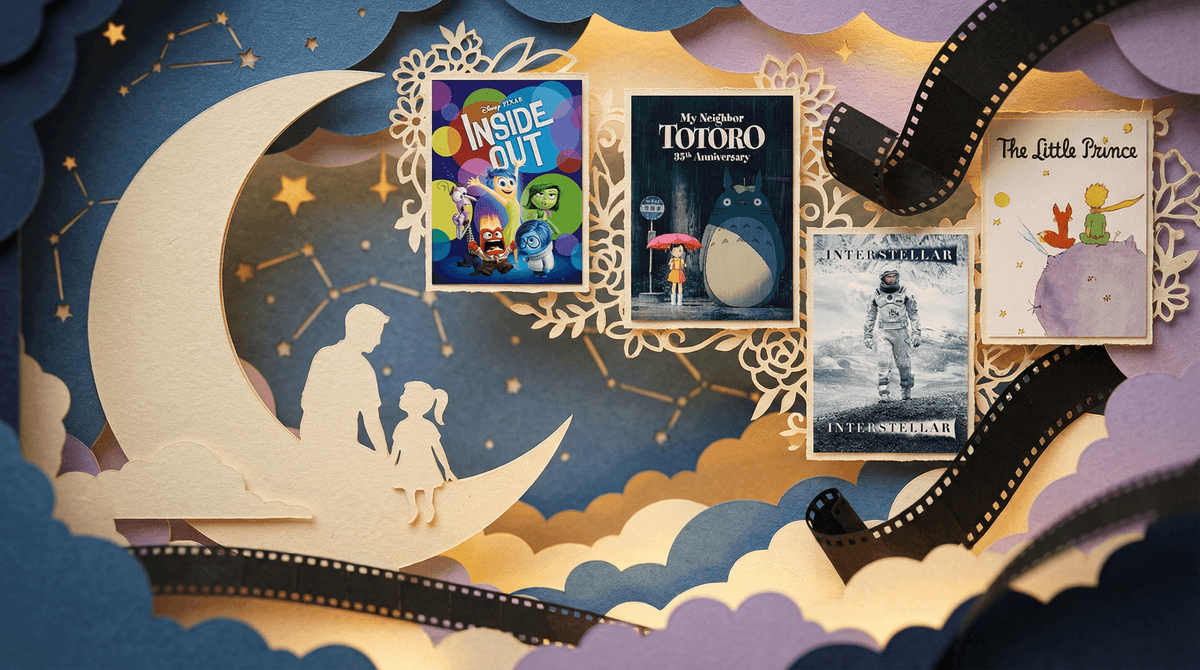
Look, we're not talking about some Hallmark formula here. Father-daughter movies are films that actually explore the complexity, tenderness, and sometimes messiness of this specific relationship. They're the movies where dads aren't just background characters or comic relief, and daughters aren't just plot devices. These are stories where that bond drives the narrative, where you see real connection, growth, and—yeah, I'll say it—some tears.
The best ones work on multiple levels. Your kid gets an adventure or a story they're invested in. You get to watch something that doesn't make you want to check your phone every five minutes. And somewhere in there, both of you might find a moment to talk about something real.
Here's the thing about father-daughter dynamics: they're formative in ways we're still understanding. Research shows that positive father involvement correlates with better emotional regulation, higher self-esteem, and healthier future relationships for daughters. But you don't need a study to tell you that—you probably already know that the relationship between a dad and his daughter is just... different.
The right movie can open up conversations that feel impossible to start on a random Tuesday night. It gives you a shared language, a reference point. "Remember in that movie when..." becomes a way to talk about trust, or fear, or growing up, or letting go.
Plus, in an era where so much of kids' media consumption is algorithm-driven YouTube shorts and TikTok, sitting down together for a complete narrative arc is actually radical. You're modeling focused attention. You're sharing an emotional experience. You're not just in the same room—you're actually together.
Studio Ghibli's My Neighbor Totoro (Ages 4+)
My Neighbor Totoro is the gold standard for younger kids. Two sisters move to the countryside with their father while their mother recovers in the hospital. The father in this film is present, patient, and emotionally available in ways that feel refreshingly real. No big speeches, no manufactured drama—just a dad navigating a hard situation with his kids and doing his best. The magical forest spirits are a bonus. This one works for kids as young as 4, and honestly, it hits different when you're the parent watching.
Inside Out (Ages 7+)
Inside Out isn't explicitly about the father-daughter relationship, but Riley's dad plays a crucial role in her emotional journey. What makes this brilliant is how it shows both parents trying to understand their daughter's inner world—and sometimes getting it wrong. It's one of the best conversation starters about emotions and mental health you'll find. The sequel is solid too, but the original remains the one that makes grown adults cry in theaters.
The Princess Bride (Ages 8+)
The Princess Bride has the grandfather-grandson framing device, but let's be real—this works beautifully for dads and daughters too. It's funny, quotable, and secretly teaches kids about narrative structure and storytelling. Plus, Buttercup is nobody's damsel in distress, despite the princess label. Fair warning: your kid will quote this for years. "Inconceivable!" "You keep using that word..."
Spirited Away (Ages 9+)
Another Miyazaki masterpiece, Spirited Away shows Chihiro's parents transformed into pigs (stay with me here), forcing her to navigate a magical bathhouse alone to save them. It's about growing up, finding courage, and the lengths we go to for family. The father figure here is complicated—he's both the reason she's in danger and worth saving. That complexity is valuable. Ages 9+ because it gets genuinely scary and weird in the best way.
Whale Rider (Ages 10+)
Whale Rider is a stunning New Zealand film about Pai, a Māori girl who challenges her grandfather's traditional beliefs about leadership and gender. While it's technically grandfather-granddaughter, the dynamic mirrors many father-daughter relationships where a girl has to prove herself worthy of respect. It's powerful, culturally rich, and will spark conversations about tradition, change, and what it means to honor both. Some intense themes, so 10+ is right.
The Father of the Bride (1991) (Ages 11+)
The Father of the Bride starring Steve Martin is pure comfort viewing. It's about a dad struggling to let go as his daughter gets married. Yes, it's dated in some ways (the 90s were a different time), but the emotional core holds up. Martin's internal monologue about his daughter growing up too fast? That's the stuff. Best for tweens and up who can appreciate the comedy and won't be bored by the slower pace.
Turning Red (Ages 11+)
Turning Red is ostensibly about a mother-daughter relationship, but the father's quiet, supportive presence is worth noting. He's the mediator, the one who sees his daughter clearly even when she's literally turning into a giant red panda. Sometimes the best father figures are the ones who know when to step back and when to step up. Plus, it's hilarious and deals with puberty in the most bonkers way possible.
Interstellar (Ages 12+)
Interstellar is Christopher Nolan doing space epic meets father-daughter emotional devastation. Cooper leaves his daughter Murph to save humanity, and the entire film hinges on that relationship across time and space. It's big, it's ambitious, and yes, Matthew McConaughey ugly-crying while watching his daughter's video messages will wreck you. The science is dense, so this is better for middle schoolers who can handle the complexity. Also, it's nearly three hours, so plan accordingly.
The Farewell (Ages 13+)
The Farewell focuses on a granddaughter and her grandmother, but the family dynamics—including her father's role—are beautifully rendered. It's about cultural differences, family secrets, and what it means to say goodbye. Awkwafina is phenomenal. This one's for older teens who can appreciate the slower, more contemplative pace and complex family dynamics.
Lady Bird (Ages 14+)
Lady Bird is primarily about a mother-daughter relationship, but Lady Bird's father is the emotional anchor of the film. He's struggling with depression and job loss, trying to keep the peace, and quietly supporting his daughter's dreams even when he can't afford them. It's honest about how hard it is to be a parent, and how hard it is to be a teenager. High schoolers will see themselves; parents will see themselves. Everyone will cry.
Ages 4-7: Stick with Ghibli. My Neighbor Totoro and Ponyo are gentle, magical, and won't give anyone nightmares. The emotional themes are accessible without being dumbed down.
Ages 8-10: Inside Out, The Princess Bride, and Spirited Away hit the sweet spot of adventure and emotion. These kids can handle more complex narratives and scarier moments, but still want clear good vs. evil dynamics.
Ages 11-13: This is when you can introduce more nuanced family dynamics. Turning Red, The Father of the Bride, and Whale Rider all deal with identity, growing up, and changing relationships with parents.
Ages 14+: Teens can handle the emotional complexity of Lady Bird, The Farewell, and Interstellar. These films don't provide easy answers, and that's the point.
Don't force the conversation. The worst thing you can do is pause the movie and say, "So what did we learn about father-daughter relationships?" Let it breathe. If your kid wants to talk, they'll bring it up—maybe right then, maybe two days later in the car.
Your kid might not cry at the parts you cry at. That's fine. They're processing it differently. My Neighbor Totoro might wreck you because you're thinking about your own childhood or your own kids. Your daughter might just think the cat bus is cool. Both responses are valid.
Some of these movies are about letting go. If you're not ready to think about your daughter growing up, maybe save Interstellar and The Father of the Bride for when you are. Or watch them anyway and have a good cry. Sometimes that's what we need.
Representation matters. This list skews toward certain cultural perspectives. Seek out father-daughter stories from different cultures and backgrounds. Whale Rider and The Farewell are starting points, but there's a whole world of cinema out there.
The best father-daughter movies aren't about perfect dads or perfect daughters. They're about people trying to understand each other, sometimes failing, sometimes succeeding, and always loving each other through it. They're about the specific tenderness and tension of this relationship—the way dads want to protect their daughters from the world while also preparing them for it, and the way daughters need both independence and reassurance that their dad will always be there.
These movies won't solve your parenting challenges or guarantee deeper conversations. But they might give you a shared experience to reference, a moment of connection in an increasingly disconnected world, and maybe—if you're lucky—a reason to sit together on the couch without anyone checking their phone.
Make it a thing. Pick one night a month for father-daughter movie night. Let her choose sometimes, you choose sometimes. Make popcorn. Turn off phones. Be present.
Build a list together. Ask your daughter what she wants to watch. Use this list as a starting point, but let her have ownership. Check out our guide to age-appropriate movies for more ideas.
Balance the heavy with the light. Not every movie night needs to be an emotional journey. Sometimes you just want to watch Paddington (which, by the way, has an underrated father figure in Mr. Brown) and laugh at a bear eating marmalade sandwiches.
And if you're looking for more family movie recommendations beyond the father-daughter dynamic, we've got you covered .
.