

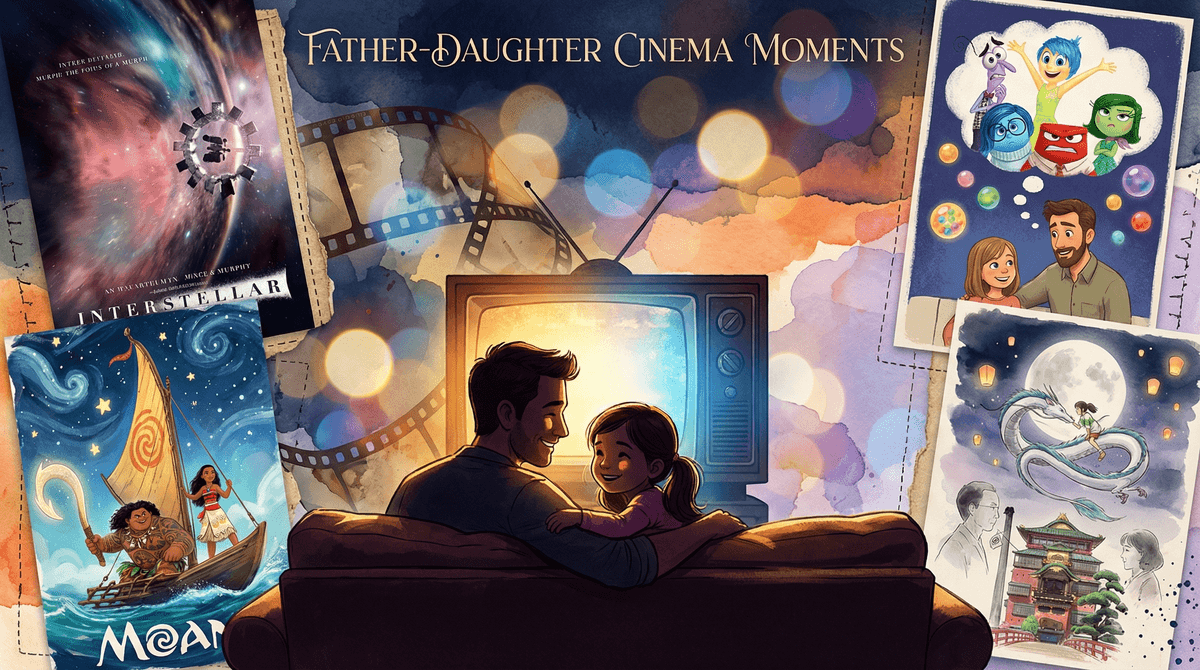
The Most Heartwarming Father-Daughter Movies for Family Movie Night
TL;DR: Looking for movies that celebrate the dad-daughter bond without the cringe? Here are the ones that actually deliver the feels:
- Spirited Away - Ages 8+ (trust me on this one)
- Inside Out - Ages 7+
- The Princess Bride - Ages 8+
- My Neighbor Totoro - Ages 4+
- Moana - Ages 5+
- Father of the Bride - Ages 10+ (for the Steve Martin version)
- Interstellar - Ages 12+
There's something about father-daughter movies that hits different. Maybe it's watching dads fumble through emotions they don't quite know how to express, or daughters realizing their superhero dad is actually just a regular human trying his best. Either way, when done right, these movies create moments that stick with families long after the credits roll.
The thing is, not all "heartwarming father-daughter movies" lists are created equal. Some are packed with saccharine Hallmark-style films that'll have everyone reaching for their phones within 20 minutes. Others lean so hard into the "dad learns a lesson" trope that it becomes unwatchable.
This list focuses on films where the father-daughter relationship feels real - complete with misunderstandings, growth, and those quiet moments that matter more than grand gestures.
Ages 8+
Wait, hear me out. While Chihiro's dad gets turned into a pig within the first 20 minutes (classic Studio Ghibli), this movie is fundamentally about a daughter finding her courage when her parents can't protect her. The relationship between Chihiro and her father at the beginning - him dismissing her fears, her feeling unheard - is painfully accurate. By the end, when she has to save her parents through her own resourcefulness, there's this beautiful shift in family dynamics.
Yes, it's weird. Yes, there are moments that might confuse younger viewers. But for kids 8 and up who can handle some strangeness, this is a masterclass in storytelling about growing up and seeing your parents as flawed humans.
Ages 4+
If Spirited Away is too intense, Totoro is the gentler Miyazaki option. The dad in this film is quietly revolutionary - he's present, he listens, he validates his daughters' feelings about moving and their mother's illness. There's no dramatic arc where he "learns to be a better father." He's just... there. Steady. Kind. Exactly what his daughters need during a difficult time.
This one works beautifully for younger kids and has become a comfort watch for many families. The father-daughter moments are subtle but powerful - him laughing with them about the "soot sprites," taking their concerns seriously, creating safety in uncertainty.
Ages 7+
Riley's dad gets less screen time than her personified emotions, but the scenes they share are devastatingly real. The dinner table scene where he completely misreads what Riley needs? That's every parent who's tried to "fix it" with logic when their kid just needed to be heard.
The film doesn't villainize him for this - it just shows how easy it is to miss the emotional signals when you're focused on the practical stuff (moving, new job, getting settled). By the end, when he's able to just sit with Riley in her sadness, it's a quiet lesson in emotional presence that's worth the price of admission alone.
The movie also opens up incredible conversations about how to talk to kids about emotions , which is a bonus for intentional parents.
Ages 5+
Technically about a father-daughter conflict, but that's what makes it so good. Chief Tui isn't a villain - he's a scared dad trying to keep his daughter safe by limiting her world. Sound familiar?
The movie doesn't resolve this with "dad was totally wrong." Instead, it shows how both father and daughter can be right from their own perspectives, and how sometimes kids need to push against boundaries to become who they're meant to be. The reconciliation scene is earned, not handed to us.
Plus, the music absolutely slaps, and your kids will be singing "How Far I'll Go" for approximately 6-8 months. You've been warned.
Ages 8+
The framing device of a grandfather reading to his sick grandson is technically grandfather-grandson, but the spirit of the thing - an older generation sharing something they love with a younger one who's skeptical at first - captures something essential about parent-child relationships.
This movie has become a multi-generational touchstone for a reason. It's funny, quotable, genuinely romantic without being gross, and has actual stakes. Kids who think they're "too old" for fairy tales get won over, which is its own kind of magic.
Fair warning: the torture scene and the eels might be intense for sensitive 8-year-olds. Know your kid.
Father of the Bride (1991)
Ages 10+
Steve Martin's performance as a dad losing his mind over his daughter's wedding is comedy gold, but underneath the hijinks is something genuinely touching. George Banks's inability to accept that his little girl is grown up - the basketball scene where he remembers her as a child - will wreck any parent watching.
This works best for tweens and teens who can appreciate the humor and aren't going to be bored by the wedding planning plot. It's also a sneaky-good conversation starter about how families change as kids grow up.
The 2022 remake is fine, but the '91 version has more heart.
Ages 12+
This is the one that will absolutely destroy you. Christopher Nolan's space epic is fundamentally a movie about a father's love for his daughter spanning time and space - literally.
The scene where Cooper watches decades of messages from his kids, realizing his daughter is now older than he is? Bring tissues. Plural. The entire film builds to the question: what would you sacrifice for your children? How do you make impossible choices when there are no good options?
This is not for younger kids. It's long (nearly 3 hours), conceptually complex, and emotionally intense. But for middle schoolers and up who can handle the science fiction elements and existential questions, it's an unforgettable experience.
The relationship between Cooper and Murph - the hurt, the anger, the love that persists despite everything - feels earned in a way that many father-daughter movie relationships don't.
Ages 13+
While this is technically about a granddaughter and her grandmother (Nai Nai), Billi's relationship with her father is quietly central to the story. Her dad, caught between Chinese and American cultural values, trying to protect both his mother and his daughter from pain - it's a nuanced portrayal of immigrant family dynamics that doesn't get enough credit.
This one requires some maturity to appreciate. It's slow, contemplative, and deals with death and cultural differences in ways that might not land with younger viewers. But for teens who are starting to see their parents as complex people navigating multiple worlds, it's powerful stuff.
Ages 10+
Not technically a father-daughter story (it's foster father and foster son), but the dynamic is pure found-family gold. Hec's gruff exterior slowly melting as he comes to care for Ricky is the kind of emotional arc that transcends gender dynamics.
This New Zealand film is funny, heartfelt, and has the kind of adventure plot that keeps kids engaged while the emotional stuff sneaks up on you. If you've got a kid who rolls their eyes at "emotional movies," try this one.
Ages 13+
Bo Burnham's directorial debut is painfully accurate about middle school awkwardness, but the real heart is Kayla's single dad trying his absolute best while having no idea what he's doing.
The poolside conversation near the end - where he tells her she's the coolest person he knows, and you can see her not quite believing it but needing to hear it anyway - is one of the most realistic father-daughter moments in recent cinema.
This is specifically for teens and parents of teens. It deals with social media anxiety, puberty, and middle school social dynamics in ways that younger kids won't connect with. But if you've got a middle schooler, watching this together (maybe not in the same room, because awkward) can open up conversations that are otherwise hard to start.
Ages 4-7: Stick with My Neighbor Totoro, Moana, and maybe Finding Nemo (which is technically father-son but works for everyone).
Ages 8-11: Add Spirited Away, Inside Out, The Princess Bride, and Hunt for the Wilderpeople.
Ages 12+: Everything above plus Interstellar, Father of the Bride, The Farewell, and Eighth Grade.
These are guidelines, not rules. You know your kid's maturity level and what they can handle. Some 10-year-olds can handle Interstellar's complexity; others will be bored. Some 13-year-olds will find Eighth Grade too cringey because it hits too close to home.
The common thread through all these films isn't that dads are perfect. It's that they're trying. They mess up, they miss signals, they project their own fears onto their kids. But they show up, they adjust, they grow.
That's the stuff that resonates with kids - not the grand gestures, but the moments of genuine connection. The dad who admits he was wrong. The father who validates feelings he doesn't fully understand. The parent who lets their kid be scared or sad without trying to immediately fix it.
These movies also avoid the tired trope where the daughter exists solely to teach the dad a lesson about what really matters. The daughters in these films have their own arcs, their own growth, their own stories. The father-daughter relationship is central, but it's not the only thing happening.
Some families have found success making father-daughter movie nights a regular tradition - maybe once a month, dad and daughter pick something from this list (or other family-friendly movies) and make it an event. Popcorn, blankets, phones away, the whole deal.
The key is the conversation after. Not a forced "what did we learn" discussion, but just... talking about it. What moments landed? What felt real? Did anything remind them of your own relationship?
For dads who struggle with emotional conversations (and let's be real, that's a lot of dads), having a movie as a springboard can make these talks feel less awkward. "Remember that scene where..." is easier than "let's discuss our feelings."
Father-daughter relationships are complicated, beautiful, messy, and constantly evolving. These movies capture different aspects of that dynamic - the protectiveness, the letting go, the misunderstandings, the moments of perfect understanding.
Not every movie will work for every family. Some will hit at the wrong time, or the humor won't land, or it'll be too intense or not intense enough. That's fine. The goal isn't to find the perfect movie - it's to create opportunities for connection.
And if you end up ugly-crying during Interstellar while your daughter awkwardly pats your shoulder, well, that's just good parenting.
- Browse more family movie recommendations organized by age and interest
- Check out movies that teach emotional intelligence
- Explore conversation starters for after movie night
- Find alternatives to Disney movies if you're Disney'd out
Now go make some memories. And maybe grab some tissues.