

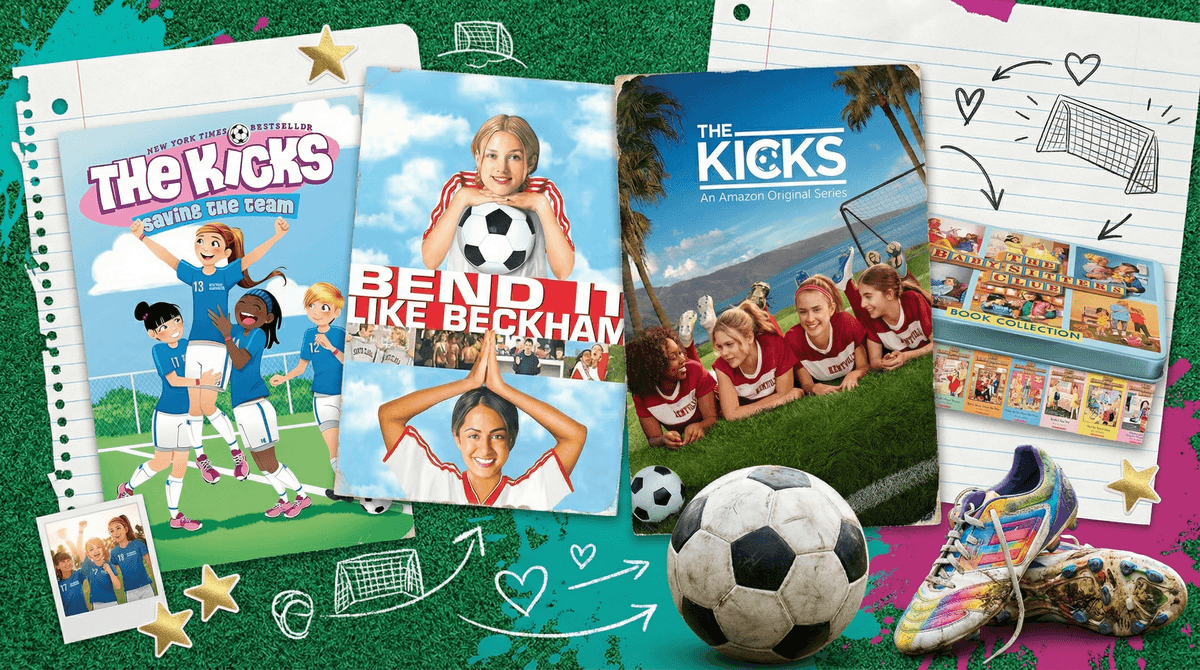
The Kicks is a middle-grade book series written by Olympic gold medalist Alex Morgan (yes, the soccer star) that follows Devin Burke, a 12-year-old soccer player who moves from Connecticut to California and joins a struggling girls' soccer team. The series spawned a Netflix original show that ran for one season (10 episodes) in 2016, bringing the books to life with a wholesome focus on friendship, teamwork, and navigating middle school drama.
The books and show tackle real tween issues—friendship breakups, family moves, academic pressure, and finding your place—all wrapped up in the world of competitive youth soccer. Think The Baby-Sitters Club meets Bend It Like Beckham, with a healthy dose of girl power and sports culture.
It's genuinely about girls supporting girls. In an era where so much tween content centers on competition between girls (looking at you, certain Disney Channel shows), The Kicks is refreshingly focused on collaboration and lifting each other up. The team starts out terrible and has to work together to improve—there's no mean girl who needs to be defeated, just kids learning to communicate and trust each other.
The sports aspect is real. Alex Morgan's involvement means the soccer scenes and terminology feel authentic, not like adults guessing what youth sports look like. Kids who play soccer will recognize the drills, the dynamics, the pressure from coaches and parents. Kids who don't play soccer still get pulled into the underdog story.
It tackles actual middle school stuff. The show and books don't shy away from the awkwardness of being 11-13: feeling left out, navigating cliques, dealing with parents who don't quite get it, academic stress, and figuring out who you are when everything feels uncertain.
Here's where it gets interesting for parents thinking about screen time. The Netflix series is a genuinely solid adaptation—it's one of those rare cases where you can feel good about either the books or the show, or both.
About 40% of families in our community use Netflix with kids profiles, while another 40% use regular Netflix accounts (and 20% don't use it at all). If you're already in that Netflix household camp, The Kicks is one of the better options in the tween category—it's actually age-appropriate for the age group it targets, which honestly can't be said for a lot of content marketed to this demographic.
The show is rated TV-G and genuinely earns it. No inappropriate content, no sneaky mature themes, no cringe-worthy "how did this get in a kids' show?" moments. Each episode is about 25 minutes, which makes it manageable for families with screen time limits.
Books: Ages 8-12 (though confident readers at 7 might enjoy them, and some 13-year-olds still appreciate the series)
The reading level is accessible for most third and fourth graders, but the content resonates most with kids in that 9-12 sweet spot who are either experiencing or about to experience middle school social dynamics. There are 8 books in the series, so it's a good option for kids who get attached to characters and want to follow them through multiple stories.
Show: Ages 7-13
The Netflix series skews slightly younger than the books in terms of viewing age—the visual storytelling makes it accessible to younger kids who might not be ready to read the books yet. That said, it's not babyish for older elementary and middle schoolers.
The representation is pretty good. The cast is diverse, and it feels natural rather than forced. Different family structures are shown (single parents, two-parent households), and while it's not perfect, it does a better job than many shows from this era at showing what actual friend groups look like.
Sports culture is portrayed realistically (for better and worse). The show includes the pressure kids feel from coaches and parents about performance, which can be a good conversation starter about healthy vs. unhealthy competition. Some parents love this; others feel it might add to existing sports pressure their kids face.
It's genuinely wholesome, but not preachy. The lessons about teamwork and friendship emerge naturally from the story rather than being heavy-handed "very special episode" moments. Characters make mistakes and learn from them like actual humans.
The fashion and tech are dated. The show is from 2016, so if your kid is particular about aesthetics, they might find it feels "old." The phones, the clothes, the slang—it's all very mid-2010s. Some kids don't care; others find it distracting.
If you're trying to balance books and screens (and honestly, who isn't?), The Kicks offers some interesting options:
Book-first approach: Read a book together or have them read independently, then watch the corresponding episodes as a reward or family activity. This builds reading motivation and gives you built-in conversation starters.
Screen-first approach: Watch a few episodes together, and if they're hooked, suggest the books as a way to continue the story. Sometimes reluctant readers need a visual entry point.
Alternating: One chapter, one episode, back and forth. Some families swear by this method for building reading stamina.
For families using supervised streaming (about 32% in our community use Amazon Prime this way, and similar patterns hold for Netflix), The Kicks is a great option for kids who are ready for some independence but where you still want to know exactly what they're watching.
The Kicks series—both books and show—represents the kind of content that makes the "is screen time bad?" question more nuanced. Yes, it's media consumption. But it's also modeling positive friendship dynamics, showing girls in sports as normal and valued, depicting diverse families, and telling stories about resilience and teamwork.
Is it going to change your kid's life? Probably not. But it's solid, age-appropriate content that won't make you cringe when you walk through the room, and it might actually spark some good conversations about friendship, trying your best, and what it means to be a good teammate—on the field and in life.
If your kid loves The Kicks, consider exploring other sports-centered middle-grade series like Ghost by Jason Reynolds or checking out other empowering shows for tweens .
.
If you're trying to balance books and screens in your house, talk with Screenwise about strategies that work for your specific family situation—because what works for one household might not work for yours, and that's completely okay.