

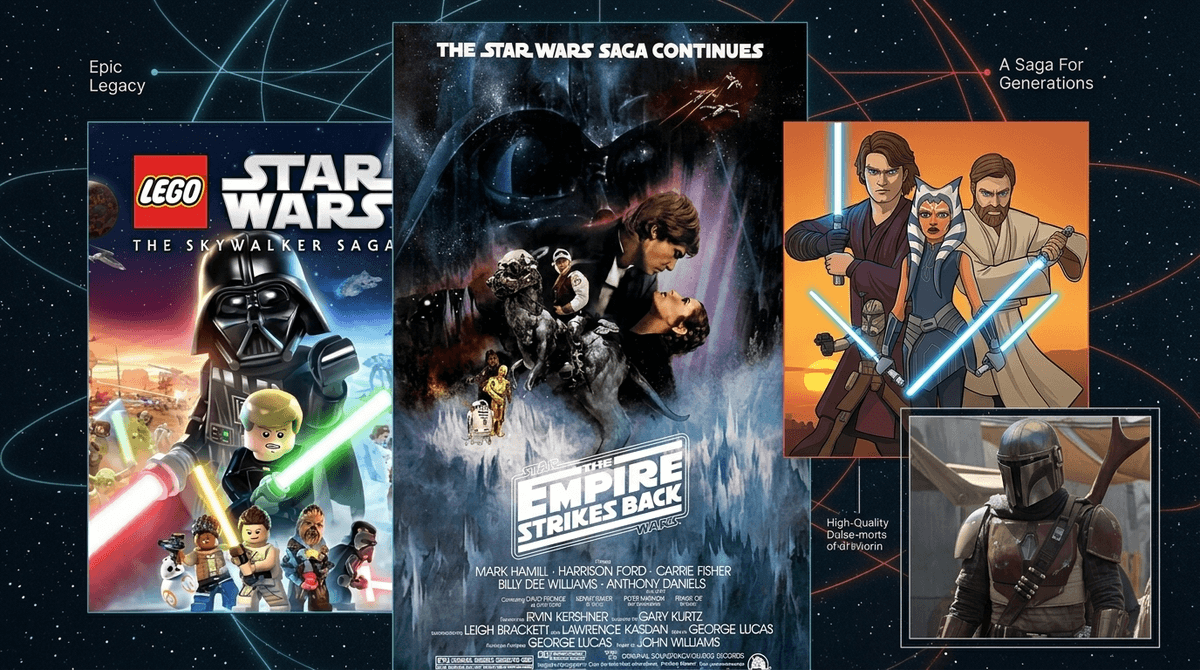
TL;DR
The Empire Strikes Back is the gold standard for sequels, but it’s a massive tonal shift from A New Hope. It’s darker, the "good guys" essentially lose, and it features the most famous fatherhood reveal in cinema history. It’s perfect for kids ages 7-8+ who are ready to move beyond "happily ever after" and start talking about resilience, complicated families, and the fact that failure is actually the best teacher.
Quick Links for the Galaxy-Bound Parent:
- The Movie: The Empire Strikes Back
- The Next Chapter: Return of the Jedi
- The Prequel Context: The Phantom Menace
- The Best Game Tie-in: LEGO Star Wars: The Skywalker Saga
- For the Younger Siblings: Star Wars: Young Jedi Adventures
If somehow you’ve dodged pop culture for forty years, here’s the deal: The Empire Strikes Back is the second installment of the original Star Wars trilogy. It picks up with the Rebellion on the run. Luke Skywalker goes to a swamp to find a tiny green puppet named Yoda, Han Solo tries to outrun the fleet in an asteroid field, and everything culminates in a lightsaber duel that changes everything we thought we knew about the Skywalker family tree.
It’s the movie that took a fun space adventure and turned it into a multi-generational myth. It’s also the movie that proves you can have a "downer" ending and still be the most beloved entry in a franchise.
In a world of "instant win" culture—where kids get Robux for clicking a button or expect to be the "Imposter" every single round in Among Us—Empire is a necessary reality check.
It teaches kids that:
- Failure isn't the end. Luke fails his training. Han gets captured. The Rebels lose their base. Yet, the story continues.
- Mentorship is messy. Yoda isn't a "cool" teacher; he’s demanding, cryptic, and kind of a jerk at first.
- Choices have consequences. Luke rushes off to save his friends before he’s ready, and he pays for it (literally) with his right hand.
This is the core experience. If your kid has seen the first movie, they’re likely clamoring for this. It’s a masterpiece of pacing and character development. Just be prepared for the questions afterward—there will be many.
If your kid finishes Empire and becomes obsessed with the lore, this is the deep dive. It fleshes out the "Dark Side" and the complexities of war in a way that makes the movies even better. It starts a bit "kiddy" but gets very sophisticated by the end.
This is the ultimate "co-op" parenting tool. It allows you to play through the events of Empire together but with the classic LEGO humor that lightens the mood. It’s a great way to "process" the movie’s heavier moments through play.
For parents looking to get kids off screens, this new trading card game is exploding in popularity. It uses the characters from Empire and requires strategic thinking and math—much better for the brain than mindless skibidi toilet memes on YouTube.
For the older kids (12+), this game captures the "feeling" of being a Jedi on the run during the Empire’s reign. It’s challenging and focuses heavily on the theme of overcoming past trauma.
While the original Star Wars is a pretty safe bet for most 6-year-olds, Empire cranks up the intensity.
- Ages 5-7: Might find the Wampa (snow monster) attack or the Dagobah cave scene (Luke fighting a ghost version of Vader) pretty scary. If your kid is sensitive to "scary faces" or monsters, maybe wait a year or watch with a hand on the remote.
- Ages 8-10: This is the sweet spot. They are old enough to understand the emotional weight of the "I am your father" reveal and can handle the scene where Han Solo is frozen in carbonite.
- Ages 11+: They’ll start to appreciate the cinematography and the moral ambiguity. This is a great age to talk about why Vader chose the path he did.
The "Father" Reveal
If your child doesn't know the twist yet, protect it at all costs. We live in a world of spoilers, but seeing a kid’s face when Vader drops the truth bomb is a top-tier parenting moment. It’s a huge psychological shift for a child to realize that the personification of evil is actually related to the hero. It opens the door for conversations about "good vs. evil" not being as simple as different colored shirts.
The Violence
It’s "Star Wars violence," meaning there’s no blood, but there is a hand being chopped off and a man being tortured with electricity. It’s stylized, but the sound design makes it feel more visceral than the first film.
The "Dark Side" and Mental Health
Empire introduces the idea that the "Dark Side" is fueled by fear, anger, and hate. For an intentional parent, this is a perfect metaphor for emotional regulation. When Luke gets angry, he loses. When he’s calm, he learns.
Learn more about how to talk to kids about emotional regulation using movies
After the credits roll, don't just ask "Did you like it?" Try these:
- "Why do you think Yoda didn't want to train Luke at first?" (Talks about patience and maturity).
- "How do you think Luke felt when he found out the truth about his dad?" (Explores empathy and complex emotions).
- "Was it right for Luke to leave his training early to save Han and Leia, even if it meant he wasn't ready to fight Vader?" (The classic loyalty vs. duty debate).
- "Lando betrayed them, but then he tried to help. Can someone be a 'bad guy' and then change their mind?" (Redemption and nuance).
The Empire Strikes Back isn't just "brain rot" entertainment. It’s a cultural touchstone that provides a framework for talking about failure, family trauma, and the discipline required to master a skill (or the Force).
In an era where kids are bombarded with "weird" content and "Ohio" jokes that make no sense, Star Wars offers a cohesive, high-quality narrative that actually asks something of its audience. It asks them to sit with the discomfort of a loss and wait for the hope of a sequel.
If your family is officially "Star Wars pilled" after watching Empire, here’s how to keep the momentum going without letting it turn into a 24/7 screen-time binge:
- Build the world: Grab some LEGO Star Wars sets and recreate the Battle of Hoth on the living room floor.
- Read the lore: Check out The Jedi Academy series by Jeffrey Brown for a humorous, kid-friendly take on Force training.
- Compare and Contrast: Watch The Last Jedi (eventually) to see how modern Star Wars handles the same themes of failure and mentorship.
- Check the Community: Use Screenwise to see what percentage of other parents in your school district are letting their 2nd graders watch the more intense Mandalorian episodes.