

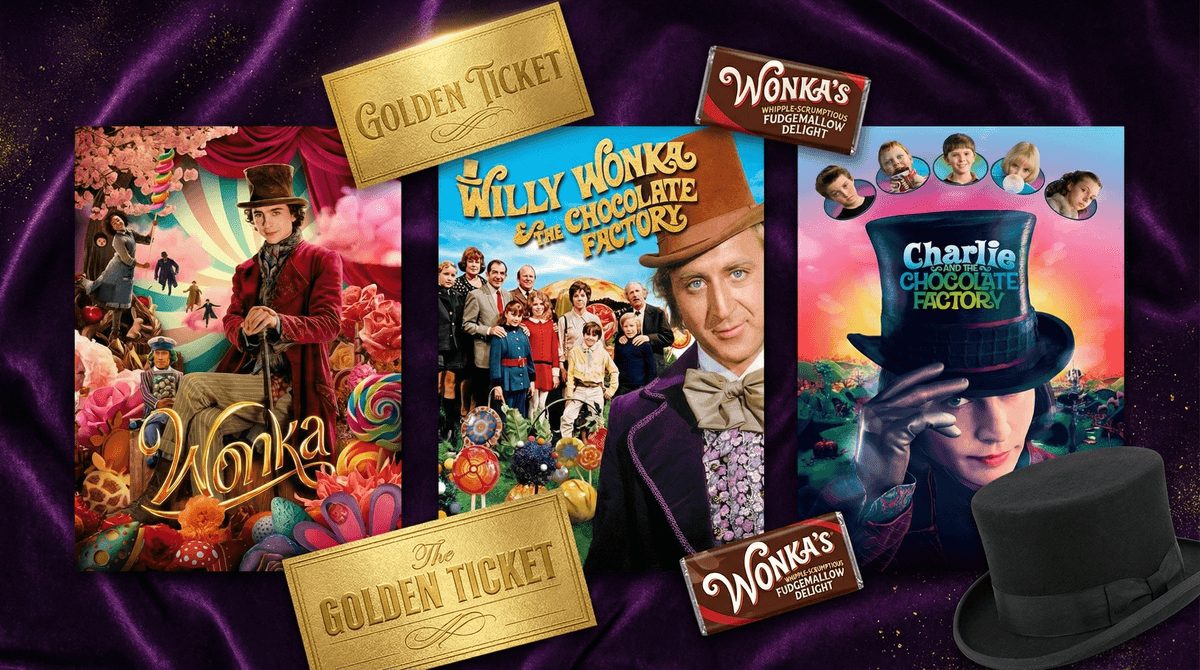
Which Willy Wonka Movie Should Your Family Watch? A Parent's Ranking Guide
TL;DR: There are four major Willy Wonka movies, and they're wildly different in tone, scares, and age-appropriateness. Wonka (2023) is the safest bet for younger kids (7+), Willy Wonka & the Chocolate Factory (1971) is a beloved classic with some genuinely terrifying moments (8+), Charlie and the Chocolate Factory (2005) is Tim Burton weird (10+), and Tom and Jerry: Willy Wonka and the Chocolate Factory (2017) exists but you can skip it.
So your kid wants to watch a Willy Wonka movie. Maybe they heard about it at school, maybe you mentioned the golden ticket thing offhand, or maybe they saw Timothée Chalamet doing his thing on TikTok. Either way, you're about to discover that "Willy Wonka movie" is not a simple category.
We've got four theatrical releases spanning five decades, each with a completely different vibe, and honestly? Some of them are going to give your kid nightmares while others might put them to sleep. Let me break down which version works for which kid.
1. Wonka (2023) — Ages 7+
This is the one you want if you have younger kids or sensitive viewers. It's a prequel musical starring Timothée Chalamet as young Willy Wonka, and it's genuinely delightful. Think less "psychedelic nightmare fuel" and more "Paddington meets La La Land."
Why it works: The tone is consistently upbeat and whimsical. There are no child deaths (even fake ones), no body horror with blueberries, no nightmare boat rides. It's about Wonka learning to make chocolate and taking down a corrupt chocolate cartel. Yes, really.
The music slaps: If you're going to have songs stuck in your head, these are pleasant ones. Hugh Grant plays an Oompa Loompa and he's hilarious. The whole thing feels like it was made by people who actually like children.
Parent bonus: It's visually gorgeous, the story moves, and you won't be fielding questions about whether Augustus Gloop is dead.
Watch out for: It's long (nearly 2 hours), and there's some mild peril. One character briefly appears to drown but is fine. The villains are mean but not scary.
2. Willy Wonka & the Chocolate Factory (1971) — Ages 8-10+
The Gene Wilder classic. This is the one you probably grew up with, the one with "Pure Imagination" and the golden tickets and all that nostalgic goodness. It's also significantly darker than you remember.
The good: Gene Wilder's performance is iconic. The songs are legitimately great. The practical effects and set design hold up beautifully. It has real heart and a clear moral message about greed and entitlement.
The nightmare fuel: That boat tunnel scene. You know the one. Gene Wilder screaming while images of chickens getting their heads cut off and centipedes crawl across faces flash on screen. It's genuinely disturbing, and it comes out of nowhere. Multiple generations of children have been traumatized by this scene, and your kid might be next.
Also, the kids getting eliminated one by one can be genuinely upsetting. Augustus gets sucked up a pipe, Violet turns into a giant blueberry, Veruca gets attacked by squirrels and thrown down a garbage chute, and Mike gets shrunk to the size of a chocolate bar. The Oompa Loompas literally sing about how these kids might die. "Oompa Loompa doopity-dead, Augustus Gloop is probably dead" is not an exaggeration of the lyrics.
Real talk: If your kid is sensitive to scary imagery, wait on this one. If they can handle some darkness and you're there to talk through it, this is a genuine classic worth watching together. Just be ready to fast-forward through that tunnel scene. Nobody needs that in their life.
Age sweet spot: Most kids 8-10+ can handle it with some prep. Younger kids who are desensitized to scarier content might be fine, but know your kid.
3. Charlie and the Chocolate Factory (2005) — Ages 10+
Tim Burton's version with Johnny Depp. This is... a lot. Depp plays Wonka as a deeply weird, possibly traumatized man-child with daddy issues and a bowl cut. It's visually stunning in that distinctive Burton way, but it's also aggressively strange.
Why it's ranked third: The tone is all over the place. It's trying to be faithful to Roald Dahl's book (which is darker than the 1971 movie), but it also adds a whole psychological backstory about Wonka's dentist father (Christopher Lee) that feels tacked on. The result is a movie that's neither as fun as the original nor as emotionally coherent as it wants to be.
The weird factor: Johnny Depp's Wonka is... unsettling. He's got a weird voice, odd mannerisms, and seems to actively dislike children. Some kids find this hilarious. Others find it creepy. The Oompa Loompas are all played by the same person (Deep Roy) digitally multiplied, which creates an uncanny valley effect.
The visuals: Stunning. Burton's aesthetic is in full force, and the factory looks incredible. The chocolate room is gorgeous. But beautiful doesn't always mean kid-friendly.
Parent perspective: This one divides families. Some kids love the weirdness and quotable lines. Others are put off by how strange everything is. It's also less scary than the 1971 version in terms of jump scares, but more unsettling in a psychological way.
Best for: Older kids (10+) who appreciate Tim Burton's style, or families who want to compare it to the original. It's also the most faithful to the book, if that matters to you.
4. Tom and Jerry: Willy Wonka and the Chocolate Factory (2017) — Ages 5+ (but why though)
This is a direct-to-video animated movie that mashes up Tom and Jerry with the 1971 film. It's exactly as weird as that sounds. They literally took the original movie and animated Tom and Jerry into it, with new voice actors redoing the lines.
The concept: Tom and Jerry are... there. They're in the chocolate factory. They do Tom and Jerry things while the Willy Wonka plot happens around them. It's bizarre.
Who is this for?: Very young kids (5-7) who love Tom and Jerry and aren't ready for the live-action versions? Maybe? It removes most of the scary elements from the original, but it also removes most of the magic. It's not bad, exactly, just... unnecessary.
The verdict: If your kid is obsessed with Tom and Jerry and you need something Wonka-adjacent that won't give them nightmares, this exists. But honestly, just show them Wonka (2023) instead.
Ages 5-7: Start with Wonka (2023). It's designed for this age group and delivers all the whimsy without the trauma.
Ages 8-10: You can try the 1971 original, but preview that boat scene first and decide if your kid can handle it. Have the remote ready. Wonka (2023) is also still great for this age.
Ages 10+: All options are on the table. The 2005 version works better for this age group because they can appreciate the weirdness and psychological elements.
Sensitive kids: Stick with Wonka (2023) regardless of age. The other versions have elements that can be genuinely upsetting.
The Roald Dahl factor: Dahl's original book is darker than most people remember. He wrote stories where bad kids get punished, sometimes horrifically. The movies reflect this to varying degrees. If you're worried about the "kids getting hurt" element, that's baked into the source material.
The boat scene discourse: That tunnel scene in the 1971 movie was intentionally scary. Gene Wilder and director Mel Stuart wanted to shock the audience. They succeeded. It's about 90 seconds long, and you can absolutely skip it without losing plot. Charlie and Grandpa Joe look scared, then it's over. Your viewing experience will be better without it.
Oompa Loompa representation: The Oompa Loompas have a... complicated history in terms of representation. The original book described them in ways that are now recognized as racist. The 1971 film cast them as orange-faced actors. The 2005 film used one actor digitally multiplied. The 2023 film has Hugh Grant. It's a whole thing, and if your kid asks questions, here's some context on Roald Dahl's complicated legacy .
.
The poverty element: All versions feature Charlie's family living in extreme poverty. The 1971 and 2005 versions really emphasize this with scenes of them eating cabbage soup and living in a shack. The 2023 version has poverty as a plot point but handles it more gently. This can spark good conversations about inequality, but it can also be upsetting for kids who are experiencing food or housing insecurity.
If you want a safe, fun, family movie night with zero risk of nightmares: Wonka (2023).
If you want to share a classic from your childhood and your kids are old enough to handle some darkness: Willy Wonka & the Chocolate Factory (1971) with the boat scene skipped.
If you have tweens/teens who appreciate weird cinema: Charlie and the Chocolate Factory (2005) for a family discussion about what makes an adaptation work.
And honestly? You could watch all three in order and have a fascinating conversation about how the same story can be told in completely different ways. Just maybe spread them out over a few weekends.
The golden ticket isn't the movie itself—it's finding the version that works for your specific kid at their specific age with their specific sensitivities. Choose wisely, and may your family movie night be pure imagination rather than pure nightmare fuel.