

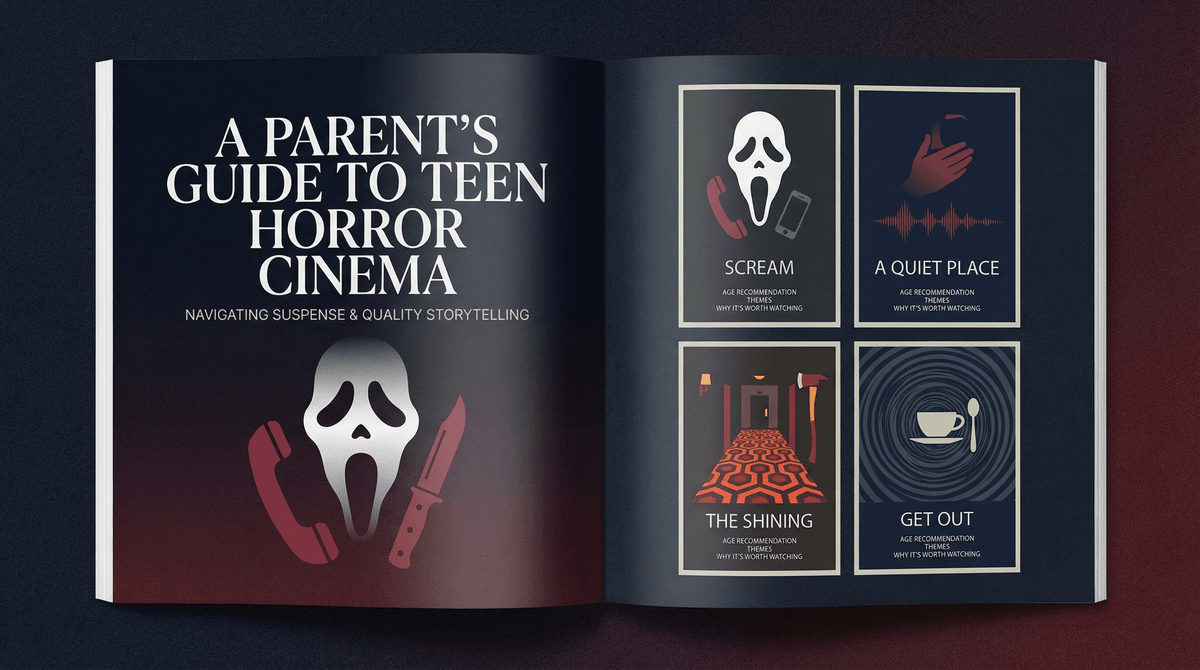
The Best Teen Horror Movies of All Time, Ranked
TL;DR: Horror movies can be an incredible gateway to understanding suspense, storytelling, and yes, even emotional processing. But not all scary movies are created equal, and the difference between a PG-13 jump scare fest and an R-rated gore-fest matters. Here are the best teen horror movies that actually hold up, organized by what your family can handle.
These are the movies that introduce teens to horror without traumatizing them. They're about suspense, atmosphere, and storytelling—not torture porn.
This 2018 film is basically a masterclass in tension. A family must stay silent to avoid monsters that hunt by sound. What makes it perfect for teens? It's genuinely scary without being gratuitous, and the family dynamics are actually compelling. The violence exists but isn't the point. Plus, it's a great conversation starter about communication and sacrifice.
What to know: A few intense jump scares and one particularly brutal scene involving childbirth. If your teen can handle Stranger Things, they can handle this.
Groundhog Day meets slasher film. A college student relives the day of her murder over and over until she can figure out who's killing her. It's clever, funny, and surprisingly empowering. The kills are mostly off-screen, and the focus is on the mystery and character growth.
What to know: Some language, drinking at college parties, and a few bloody moments, but nothing that crosses into truly disturbing territory.
The 2002 remake that launched a thousand "don't watch the cursed videotape" jokes. This is atmospheric horror done right—creepy imagery, a ticking clock, and genuine dread. No gore, just pure psychological terror.
What to know: Some truly unsettling images (that girl crawling out of the TV lives rent-free in everyone's head forever). The PG-13 rating is accurate, but sensitive kids might struggle with the sustained creepiness.
These are the films that shaped modern horror. They're rated R for good reasons, but they're also legitimately great movies that happen to be scary.
The 1996 film that simultaneously honored and deconstructed every slasher trope. It's self-aware, smart, and genuinely suspenseful. Yes, there's blood and stabbing, but the movie is more interested in playing with your expectations than just shocking you.
What to know: Strong language, graphic violence, and some sexual content. But if you're going to introduce your teen to slasher films, this is the one. It's actually about horror movies, which makes it a great entry point for discussing the genre itself.
"I see dead people" became a cultural phenomenon for a reason. This is a ghost story that's more sad than scary, with one of the best twist endings in cinema history. The horror comes from empathy and understanding, not from gore.
What to know: Some disturbing images of dead people and one scene involving a gunshot, but the PG-13 rating is appropriate. This is more psychological thriller than traditional horror.
Jordan Peele's 2017 masterpiece is essential viewing for teens who are ready for horror with something to say. It's scary, sure, but it's also a brilliant commentary on race, privilege, and coded microaggressions. The horror comes from recognizing uncomfortable truths.
What to know: Violence, disturbing images, and themes that require maturity to process. This isn't a "fun" scary movie—it's meant to make you uncomfortable in specific ways. Perfect for older teens (17+) who can engage with the social commentary.
James Wan's 2013 film proved that old-school haunted house movies could still terrify modern audiences. It's based (loosely) on real paranormal investigators Ed and Lorraine Warren, and it's all about building dread through atmosphere and sound design.
What to know: Intense supernatural horror, violence, and disturbing images. No gore, but the sustained tension is real. If your teen loves Stranger Things, this is the next level up.
These are the movies that defined horror for previous generations and still hold up today.
Stanley Kubrick's 1980 adaptation of Stephen King's novel is more psychological breakdown than traditional horror. It's slow, deliberate, and deeply unsettling. The horror comes from watching a man lose his mind in an isolated hotel.
What to know: Some graphic violence, disturbing images, and themes of domestic abuse and alcoholism. This requires maturity—not because it's gory (it's not particularly), but because the psychological horror is intense.
Halloween (1978)
John Carpenter's original film created the template for every slasher movie that followed. It's surprisingly restrained compared to what came after—the horror comes from Michael Myers' relentless, emotionless pursuit, not from elaborate kills.
What to know: Violence and some brief nudity. The R rating is earned, but by modern standards, it's relatively tame. This is film history that happens to be scary.
This 2014 indie film has a premise that sounds ridiculous (a sexually transmitted curse where a supernatural entity slowly walks toward you until it kills you) but is executed with such style and dread that it works beautifully. It's a metaphor for anxiety, trauma, and the loss of innocence.
What to know: Sexual content, violence, and disturbing images. The metaphor is pretty explicit, which makes it a great film for older teens (17+) who can engage with subtext.
Horror movies aren't just about scares—they're about processing fear in a controlled environment. When teens watch horror movies, they're learning to manage anxiety, predict outcomes, and understand narrative tension. It's actually a pretty healthy way to explore dark emotions.
That said, not all horror is created equal. There's a massive difference between suspenseful, atmospheric horror (A Quiet Place, The Sixth Sense) and torture porn designed purely to shock (Saw, Hostel). The films on this list prioritize storytelling over gratuitous violence.
Age ratings matter, but so does your kid. A mature 14-year-old might handle Scream just fine, while a sensitive 16-year-old might struggle with The Shining. You know your teen better than any rating system.
Watch together when possible. Horror movies are more fun (and less scary) when experienced as a shared activity. Plus, it gives you a chance to talk about what you're seeing and process any disturbing content together.
Ages 13-14: Stick with PG-13 options like A Quiet Place, Happy Death Day, and The Ring. These provide genuine scares without crossing into territory that requires significant emotional maturity.
Ages 15-16: You can start introducing R-rated classics like Scream, The Sixth Sense, and The Conjuring. These films have violence and language but aren't gratuitous.
Ages 17+: Older teens who are interested can handle more complex, thematically heavy films like Get Out, It Follows, and The Shining. These require emotional maturity to process the subtext.
The Saw franchise: Pure torture porn with no redeeming storytelling value. Just people being brutally killed in elaborate traps for 90 minutes.
Most '80s slashers: Halloween and A Nightmare on Elm Street are worth it, but Friday the 13th and its endless sequels are just repetitive kill sequences with no substance.
Modern remakes of classic horror: With rare exceptions, they're cash grabs that add gore but remove the atmosphere that made the originals work.
Horror movies get a bad rap, but the best ones are actually sophisticated pieces of filmmaking that teach teens about suspense, storytelling, and emotional processing. The key is matching the content to your teen's maturity level and being willing to watch together.
Start with the PG-13 gateway scares, graduate to the R-rated classics that earn their rating through craft rather than shock value, and skip the torture porn entirely. And if your teen gets scared? That's kind of the point—learning to manage fear in a controlled environment is a valuable life skill.
Want to explore more age-appropriate content? Check out our guides on thriller movies for teens and how to talk to kids about scary content.