

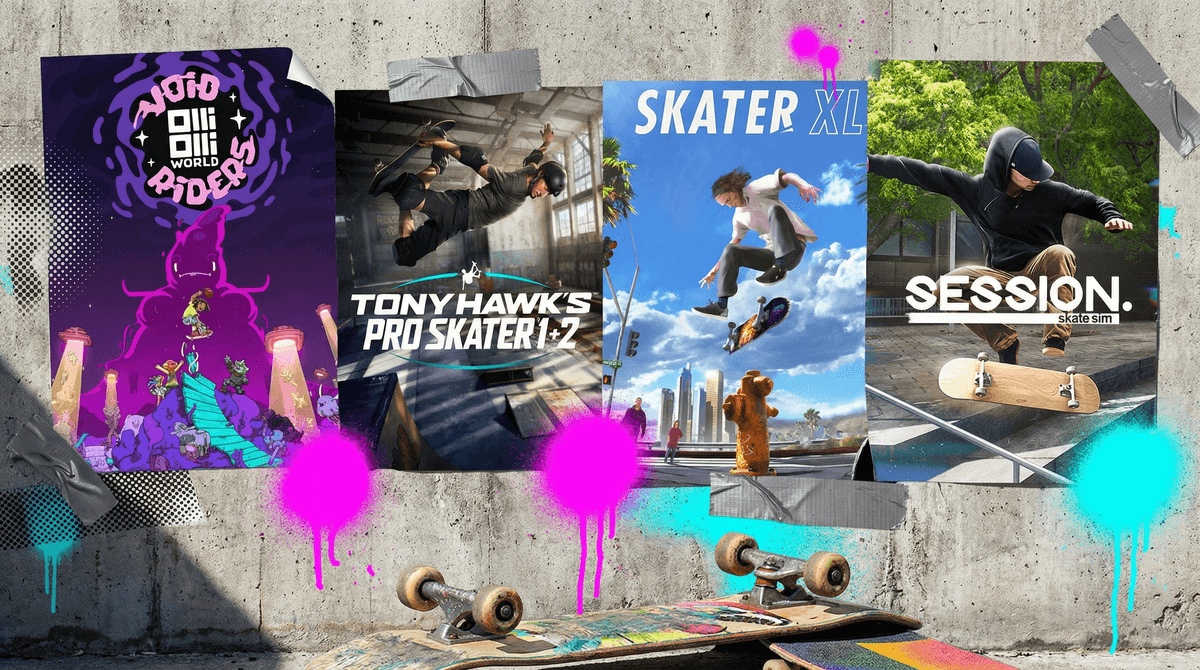
Skateboard games are exactly what they sound like—video games where you ride a virtual skateboard, pull off tricks, and generally defy the laws of physics in ways that would land most of us in the ER. But here's the thing: they're having a genuine renaissance right now. After years of Tony Hawk nostalgia and not much else, we're seeing a wave of new skateboarding games that range from arcade-style fun to surprisingly realistic simulations.
The genre has evolved way beyond mashing buttons to kickflip. Modern skateboard games can teach actual trick names, board mechanics, and even a bit about skateboarding culture and history. Some are chill and meditative, others are competitive and fast-paced. And yes, some still let you grind on a helicopter.
They're the perfect gateway to extreme sports without the actual extreme danger. Your kid can learn what an ollie, a 50-50 grind, and a McTwist are without you hovering at the skatepark with a first aid kit.
The skill progression feels real. Unlike many games where you're immediately overpowered, skateboard games make you earn your tricks. There's something deeply satisfying about finally landing that combo you've been trying for twenty minutes. It's the same dopamine hit as actual skateboarding, minus the scraped knees.
The music is genuinely good. Skateboard games have historically had killer soundtracks—punk, hip-hop, indie rock—and that tradition continues. You might actually enjoy listening to your kid play these.
They're often single-player or couch co-op. In a world where every game seems to require a headset and online friends, many skateboard games are refreshingly solo or local multiplayer experiences. No voice chat drama, no randos being toxic.
Tony Hawk's Pro Skater 1+2 (Ages 8+)
Tony Hawk's Pro Skater 1+2 is the remaster that actually lives up to the hype. If you played the originals in the late '90s/early 2000s, this is pure nostalgia—but polished, beautiful, and genuinely fun for kids who weren't even born when "Superman" by Goldfinger was the anthem of a generation.
The good: Arcade-style gameplay that's easy to pick up, incredible soundtrack, satisfying progression system, and it runs on basically every platform. The two-minute time limit per run keeps sessions digestible.
What parents should know: It's rated E10+ and honestly that feels right. There's no violence, minimal cartoon mischief. The biggest concern is probably the time sink—those "just one more run" moments are real.
Cost: Around $40, frequently on sale. No microtransactions, which is refreshing.
Skate (2024 release, Ages 10+)
EA's Skate reboot (stylized as "skate.") is the realistic simulation option. Unlike Tony Hawk's button-mashing combos, Skate uses the analog sticks to mimic actual board movements. It's harder to learn but incredibly rewarding once it clicks.
The good: Free-to-play, gorgeous graphics, massive open world to explore, and a surprisingly wholesome community focused on sharing clips and spots.
What parents should know: It's online-focused with user-generated content and social features. You'll want to set up appropriate privacy settings and probably disable voice chat for younger players. The game has a learning curve that might frustrate kids under 10.
Cost: Free, but expect cosmetic microtransactions for clothes and board designs. They're not predatory, but they exist.
Skater XL (Ages 10+)
Skater XL is the indie darling that hardcore skaters love. It's even more realistic than Skate, with a physics system that makes every trick feel earned. Think of it as the Dark Souls of skateboarding games—difficult, unforgiving, but deeply satisfying.
The good: Mod support on PC means endless custom maps and boards. The controls are intuitive once you understand them. It's meditative and chill rather than competitive.
What parents should know: The base game is bare-bones. No real campaign, no progression system, just you and the physics engine. Some kids will find this boring; others will spend hours perfecting a single line. It's rated E for Everyone but the lack of structure means it's better for self-motivated older kids.
Cost: $40, with occasional DLC map packs around $10.
OlliOlli World (Ages 6+)
OlliOlli World is the family-friendly option that doesn't sacrifice depth. It's a 2D side-scrolling skateboard game with gorgeous hand-drawn art, a goofy story about finding "Gnarvana," and gameplay that's accessible for young kids but challenging enough for adults.
The good: Rated E for Everyone and truly lives up to it. Bright, colorful, non-violent, and genuinely funny. The campaign has a clear progression, and the controls are simple enough for a 6-year-old but deep enough to keep a 12-year-old engaged.
What parents should know: This is probably the best entry point for younger kids. It's completely offline, no microtransactions, no online features. Just pure gameplay. The difficulty ramps up in later levels but never feels unfair.
Cost: $30, often on sale for $15-20.
Session: Skate Sim (Ages 10+)
Session: Skate Sim is the ultra-realistic option for kids who are genuinely interested in skateboarding as a craft. Each stick controls a foot, and you have to think about weight distribution, timing, and physics in ways that mirror actual skating.
The good: If your kid is into real skateboarding, this is the closest digital approximation. The learning curve is steep but the satisfaction is unmatched. Great for patient, detail-oriented kids.
What parents should know: This is not a pick-up-and-play game. Expect frustration. Expect your kid to spend 30 minutes trying to land a single kickflip. If they don't have the patience for that, skip this one.
Cost: $40, no microtransactions.
Ages 6-8: Start with OlliOlli World. It's forgiving, colorful, and won't overwhelm them with complexity.
Ages 8-10: Tony Hawk's Pro Skater 1+2 is the sweet spot. Accessible enough to feel successful, deep enough to stay interesting.
Ages 10+: If they're into realism and have patience, try Skate or Skater XL. If they just want arcade fun, stick with Tony Hawk.
Ages 13+: Any of these work, but Session might finally click with teens who appreciate the craft.
These games can actually teach real skills. Kids who play skateboard games often develop an interest in real skateboarding. They'll know trick names, understand board parts, and have a basic grasp of physics and momentum. Some parents report their kids became more interested in going to actual skateparks after playing these games.
The time commitment varies wildly. Tony Hawk and OlliOlli have clear stopping points—finish a level, complete a challenge. The realistic sims (Skate, Session, Skater XL) are more open-ended and can lead to those "just five more minutes" that turn into an hour.
Watch for the online features in Skate. It's the only one on this list with significant online components. User-generated content means you'll want to monitor what they're accessing and who they're interacting with.
The soundtracks are a feature, not a bug. These games expose kids to music they wouldn't otherwise hear. Tony Hawk introduced an entire generation to punk and hip-hop. If you're concerned about explicit lyrics, most games let you customize or mute the soundtrack.
Skateboard games are having a moment, and honestly? It's deserved. They offer skill progression, creativity, and a surprisingly positive gaming experience without the toxicity of many online competitive games.
If you only pick one: For most families, Tony Hawk's Pro Skater 1+2 is the winner. It's accessible, fun, reasonably priced, and has zero online drama.
If your kid is genuinely into skating: Try Skate (it's free!) or Session for the real deal.
If you want something for a younger kid: OlliOlli World is the clear choice. It's wholesome, beautiful, and genuinely fun for the whole family.
The worst-case scenario? Your kid spends a few hours learning about kickflips and grinds instead of watching YouTube shorts. There are worse ways to spend screen time.