

TL;DR: The Best PS4 Games for Kids
The PS4 might be last-gen, but it's still in millions of homes—and honestly? It has one of the best libraries of kid-friendly games ever assembled. Here are the standouts:
Best for Ages 6-9: Astro Bot Rescue Mission, Sackboy: A Big Adventure
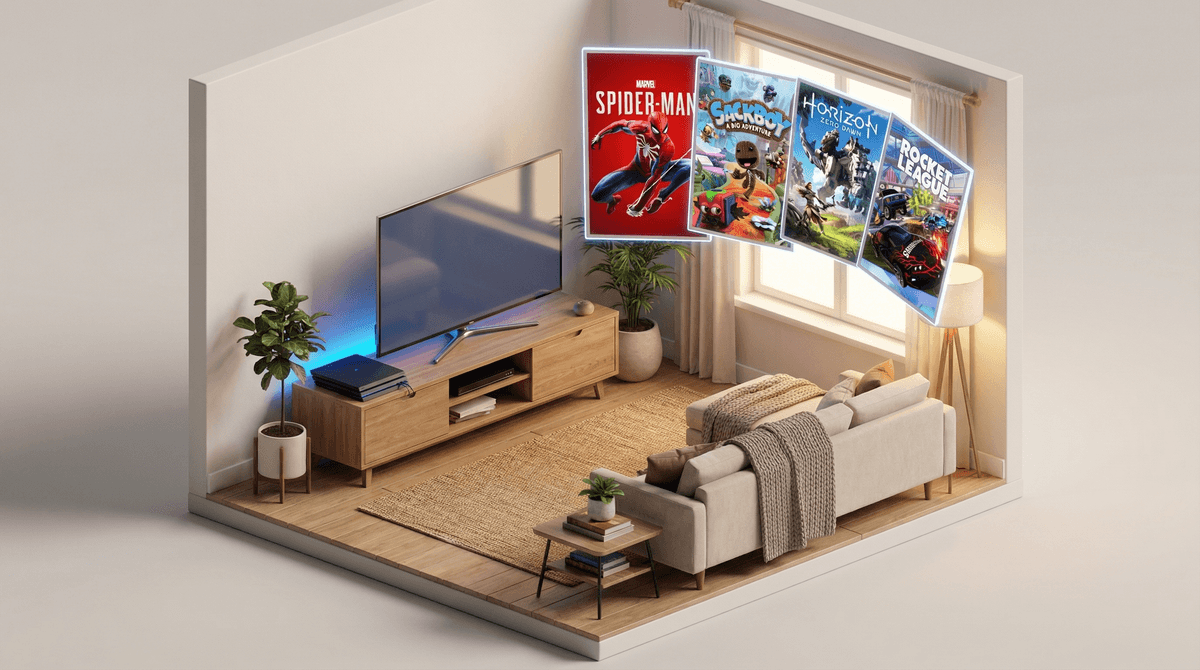
Best for Ages 10-12: Spider-Man, Rocket League, FIFA
Best for Teens: The Last of Us Remastered, Horizon Zero Dawn
Best for Families: Overcooked! 2, Minecraft
The PS4 came out in 2013, which means your kid might be playing on a console that's older than they are. But age doesn't matter when the games are this good. While everyone's talking about PS5s and whether your family should upgrade, the PS4 library is deep, affordable (hello, used game stores), and packed with titles that actually deliver on that "quality screen time" promise we're all chasing.
Let's break down the best options by what your family actually needs—not just what's trending on YouTube.
This is the game that makes you wish you'd bought a PlayStation VR headset. But even without VR, Astro's Playroom (which comes free on PS5, but there's also Astro Bot Rescue Mission for PS4 VR) is a love letter to gaming that kids can actually play. It's colorful, creative, and has that Mario-level polish without the Nintendo price tag.
Why it works: No reading required, intuitive controls, zero violence. Just a cute robot rescuing friends.
The LittleBigPlanet series grew up and had a baby, and that baby is Sackboy. This is a 3D platformer that feels like playing through a craft store—everything looks handmade, textured, and delightful. Up to four players can play together, which means sibling cooperation (or chaos, let's be real).
Parent tip: This game has a surprising amount of depth. Younger kids can button-mash through levels, while older siblings or parents can hunt for collectibles and secrets. It scales beautifully.
The 2016 PS4 version is essentially a Pixar movie you can play. It's gorgeous, funny, and has that perfect balance of action and humor that works for kids and adults. Yes, there are weapons and combat, but it's all cartoony—think Looney Tunes, not Call of Duty.
Content note: Mild cartoon violence (enemies explode into bolts, not blood). Some potty humor. Nothing that'll require a family meeting.
This is THE game that makes kids feel like superheroes. Swinging through New York City is genuinely thrilling, and the story is surprisingly emotional without being too heavy. It's also a masterclass in game design—the difficulty ramps up naturally, and kids develop actual problem-solving skills as they progress.
Why parents love it: The main character is Peter Parker, an adult who's trying to balance helping people with paying rent and maintaining relationships. It's superhero stuff, but grounded. Also, you can't kill civilians or cause real destruction—the game actively prevents it.
Content considerations: There's combat (punching, web-slinging bad guys), but it's all comic-book style. The story deals with some mature themes (loss, responsibility), but nothing graphic. Most 10-year-olds can handle it, especially if they've seen the MCU movies.
Soccer with cars. That's it. That's the pitch. But here's why it matters: this game teaches kids about physics, timing, and teamwork without them realizing they're learning anything. Plus, it's free-to-play now, which means no upfront cost.
The catch: It's online multiplayer, which means you'll want to set up parental controls and probably disable voice chat. The community can be... intense. But the gameplay itself? Chef's kiss.
If your kid is into sports, these games are basically interactive highlight reels. They're also surprisingly educational—kids learn team rosters, player stats, and game strategies without trying.
The microtransaction talk: Both games have "Ultimate Team" modes that are essentially loot-box casinos. You can disable in-game purchases in your PS4 settings, and honestly? You should. The regular career and quick-play modes are where the real fun is anyway. Here's how to talk to kids about microtransactions if this is new territory for your family.
A remake of the late-90s classics, and it's perfect for this age group. The music is great (even if your kid has no idea who Goldfinger is), and the gameplay loop of "just one more run" is addictive in the best way. Plus, it's a rare game that multiple generations can bond over.
A post-apocalyptic world where robot dinosaurs roam and a young woman named Aloy tries to uncover the truth about her past. It sounds wild, but it's actually a thoughtful exploration of environmentalism, technology, and what it means to be human.
Why it's worth your teen's time: The protagonist is a strong, complex female character who solves problems with intelligence and skill. The world-building is incredible, and the story raises genuine philosophical questions about AI and humanity's future.
Content note: Combat can be intense (fighting giant robot creatures), and there are some heavy themes about death and civilization collapse. But it's all in service of a meaningful story, not just shock value.
This is the game that proves video games can be art. It's a zombie apocalypse story, but it's really about the relationship between Joel and Ellie—a surrogate father-daughter bond formed in the worst circumstances imaginable.
Real talk: This game is rated M for a reason. There's violence, strong language, and emotionally intense scenes. It's not for everyone, and it's definitely not for younger kids. But for mature teens (think 15+), it's a shared cultural experience that their friends are probably talking about. It's also a chance to have conversations about morality, survival, and what we owe each other.
Parent move: Play it first, or play it together. This is one where your involvement actually enhances the experience.
Another father-child story, but this time with Norse mythology and a lot more axe-throwing. Kratos is trying to be a better dad than he was a god, and watching that struggle unfold is surprisingly moving.
Content considerations: Combat is more brutal than Spider-Man but less graphic than some M-rated games. The father-son relationship is the heart of the story, and it's actually a great jumping-off point for conversations about masculinity, anger, and growth.
Chaotic cooking simulation that turns your family into a restaurant crew trying to serve orders before time runs out. It's hilarious, stressful, and somehow brings people together even when you're yelling about who forgot the tomatoes.
Why it's perfect: Everyone has a role, the stakes are low (it's just virtual food), and you'll laugh even when you fail. Plus, it teaches actual teamwork and communication skills.
You know what Minecraft is. Your kid definitely knows what Minecraft is. The PS4 version is great because it's not tied to a tablet or phone, which means better controls and a bigger screen for building those elaborate worlds.
The Minecraft question: Is it educational or just digital Legos? The answer is yes. It teaches spatial reasoning, resource management, and creative problem-solving. But also, sometimes kids just want to build a giant toilet. That's fine too.
Like Overcooked but you're moving furniture instead of cooking. It's absurd, physics-based fun that works for ages 8 and up. Great for families who want co-op gaming without the pressure of "getting good."
Ages 6-9: Stick with E-rated games (Everyone). Look for titles with minimal reading requirements and clear objectives. Games like Sackboy and Astro Bot are perfect because they're intuitive and forgiving.
Ages 10-12: E10+ games open up the library significantly. Spider-Man and Rocket League are the sweet spot here—challenging enough to hold their attention, but not overwhelming.
Ages 13+: This is where you'll need to actually look at individual game content, not just ratings. Some T-rated games are fine for 13-year-olds; some M-rated games might be appropriate for mature 15-year-olds. Context matters more than the ESRB label.
The rating system isn't perfect: The Last of Us and Grand Theft Auto are both rated M, but they're wildly different in terms of content and intent. Trust your kid's maturity level and your family's values more than a letter on a box.
The PS4 is basically a streaming box too: Netflix, Disney+, YouTube—it's all there. Which means your "one hour of gaming" rule might need to account for what your kid is actually doing on the console.
Used games are your friend: PS4 games are cheap now. You can find most of these titles for $10-20 used. GameStop, eBay, Facebook Marketplace—take advantage of the last-gen discount.
PlayStation Plus costs money: If your kid wants to play online multiplayer (Rocket League, FIFA, etc.), you'll need a PS Plus subscription ($60/year). But it also comes with free monthly games, which is actually a solid deal.
Download times are real: If you're buying digital, factor in download time. A 50GB game on mediocre internet can take hours. Physical discs still have their place.
The PlayStation Store has parental controls: You can set spending limits, restrict purchases, and manage what content your kid can access. Set these up before handing over the controller.
Fortnite: It's free, it's everywhere, and it's designed to keep kids playing forever. The game itself isn't bad, but the battle pass system and constant FOMO are exhausting. If your kid is already playing, fine—but if they're not, you're not missing out by skipping it.
Call of Duty: Even the less violent ones are just... a lot. The online community is toxic, the gameplay is designed for twitch reflexes, and there are better ways to spend screen time. If your teen is really into shooters, Apex Legends is a slightly better option (still not great, but better).
Anything with "Ultimate Team" as the main mode: These are sports games that have been turned into gambling simulators. Stick with career modes and exhibition matches.
The PS4 has an embarrassment of riches when it comes to kid-friendly games. You've got options for every age, every interest, and every family value system. The key is matching the game to your kid's maturity level and your family's screen time philosophy.
Start here:
- Under 10? Sackboy or Ratchet & Clank
- 10-12? Spider-Man or Rocket League
- 13+? Horizon Zero Dawn
- Family game night? Overcooked! 2
And remember: the "best" game is the one your kid will actually play and enjoy, not the one with the highest Metacritic score. Sometimes that's FIFA for the hundredth time. Sometimes it's building a pixel art statue in Minecraft. Both are fine.
The PS4 era proved that games can be beautiful, meaningful, and yes—even educational. Take advantage of it while the prices are low and the library is massive.
Next steps: Pick one game from this list, set up those parental controls, and actually play with your kid for the first hour. You might be surprised by how much fun you have—and how much you learn about what they're experiencing in these digital worlds.