

The Best K-Dramas for 12-Year-Olds on Netflix
Korean dramas have officially entered the tween mainstream, and honestly? They're often a better choice than half the teen content Netflix auto-recommends. Here are the top picks that nail the sweet spot of compelling storytelling without the content landmines:
Top Tier:
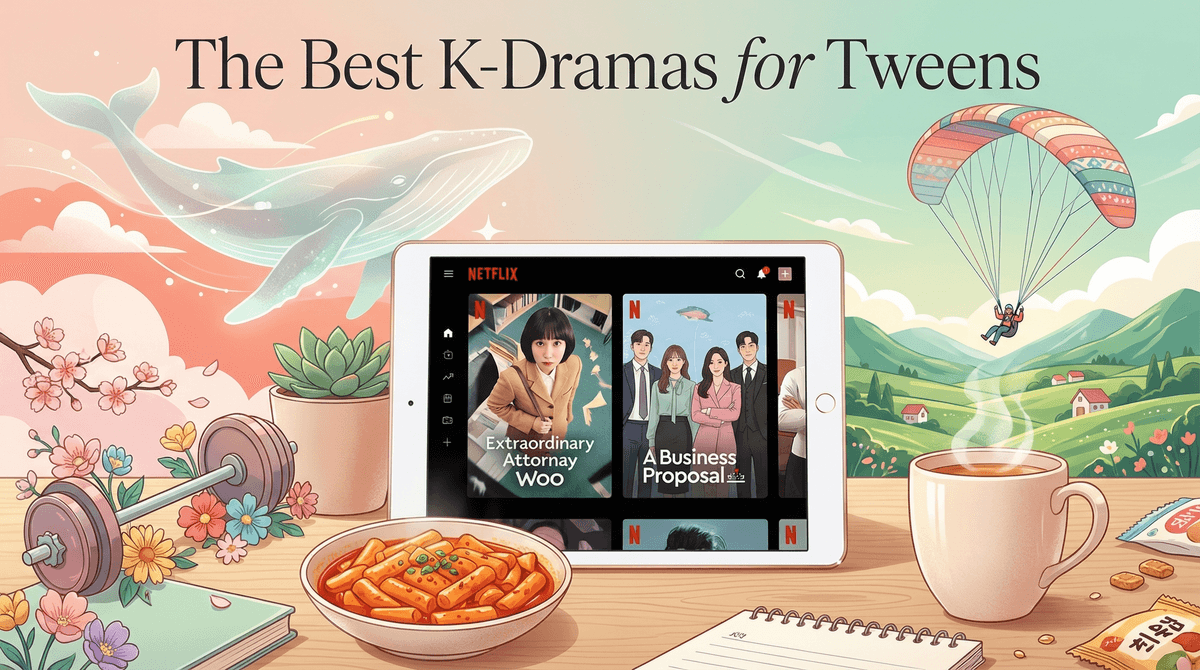
- Extraordinary Attorney Woo - Autistic lawyer solves cases with heart
- A Business Proposal - Rom-com that's actually funny
- Crash Landing on You - North/South Korea romance (with caveats)
Also Great:
- Hometown Cha-Cha-Cha - Small town healing vibes
- Weightlifting Fairy Kim Bok-joo - Sports romance done right
If your 12-year-old is suddenly obsessed with Korean dramas, you're not alone. K-dramas offer something that's increasingly rare in Western teen content: emotional depth without gratuitous content. The storytelling is earnest, the production quality is cinematic, and the romance tends to be slow-burn and swoon-worthy rather than overtly sexual.
Plus, they're finite. Most K-dramas are 16-20 episodes, one season, done. No cliffhangers designed to hook kids into years of content. It's refreshing.
That said, not all K-dramas are created equal for the tween set. Many deal with adult themes, workplace politics, or include content that's fine for older teens but not quite right for 12-year-olds. Here's what actually works.
Ages: 11+
This is the gold standard for tween-appropriate K-dramas. Attorney Woo Young-woo is a brilliant autistic lawyer who sees the world differently—and the show treats her perspective with genuine respect and nuance. Each episode features a new legal case (think courtroom drama meets heartfelt character study), and the overarching story follows Woo's professional growth and budding romance.
Why it works for 12-year-olds:
- The autistic representation is thoughtful and non-stereotypical
- Romance is incredibly sweet and age-appropriate
- Cases often involve moral dilemmas that spark great conversations
- Whale facts! (You'll understand when you watch)
Parent heads-up: A few cases deal with mature themes (domestic violence, workplace harassment) but always handled sensitively and age-appropriately. One episode involves a young adult with a pornography addiction—it's treated seriously and not graphically, but you might want to preview episode 7.
Ages: 12+
This is pure romantic comedy gold. Ha-ri goes on a blind date pretending to be her friend (to scare off the guy), only to discover he's actually the CEO of the company where she works. Hijinks ensue. It's got big rom-com energy—think early 2000s Hollywood but with better fashion and more food porn.
Why it works:
- Genuinely funny without relying on cringe humor
- The "fake dating" trope is handled playfully
- Strong female friendship at the center
- Zero graphic content
The catch: There's some drinking culture (common in K-dramas) and corporate politics that might fly over younger viewers' heads, but nothing problematic. A few kisses, all very PG.
Ages: 12-13+
This one's a cultural phenomenon: a South Korean heiress accidentally paraglides into North Korea and falls for a military officer who protects her. It's part romance, part fish-out-of-water comedy, part geopolitical drama.
Why it's compelling:
- Fascinating (if somewhat romanticized) glimpse into North Korean life
- Found family dynamics with the soldier's platoon
- Sweeping romance that's more emotional than physical
- Surprisingly funny despite heavy subject matter
Important context: This show deals with real geopolitical tension, military presence, and the human cost of the Korean divide. There are scenes of violence (shootings, though not graphic), and the show depicts North Korean defectors and the risks they face. It's an opportunity for conversations about the Korean War and its ongoing impact , but it's not light viewing.
Some parents find the romanticization of a North Korean soldier problematic given the regime's human rights record. Valid concern. Use your judgment.
Ages: 12+
A Seoul dentist moves to a seaside village and clashes with the town's beloved jack-of-all-trades. This is the "cozy K-drama" pick—it's warm, healing, and focuses on community and personal growth.
Why it's great for tweens:
- Emphasizes finding yourself over external success
- Intergenerational friendships and mentorship
- Romance is mature but appropriate
- Beautiful cinematography (seriously, the seaside shots are stunning)
Heads-up: One character deals with trauma-related mental health issues (handled with care), and there's discussion of grief and loss. Also some social drinking scenes, typical for the genre.
Ages: 11+
Set at a sports university, this follows Kim Bok-joo, a weightlifter navigating first love, athletic pressure, and body image. It's a coming-of-age story that feels genuinely teen-centered rather than adult-nostalgia-for-teens.
Why tweens connect with it:
- Addresses body image and athletic pressure authentically
- First love is awkward and sweet
- Strong focus on friendship and found family
- Characters are actually age-appropriate (college-aged playing college-aged)
What's great: This show actively pushes back against toxic beauty standards and celebrates athletic bodies. Bok-joo's confidence journey is genuinely empowering.
Minor note: Some discussion of weight and dieting (in the context of sports), handled thoughtfully but worth being aware of if your kid is sensitive to those topics.
Even in the most wholesome K-dramas, there are some cultural elements that show up regularly:
Drinking culture: Social drinking is normalized in Korean workplace and friend culture. It's rarely shown as problematic unless it's specifically a plot point. Not a dealbreaker, but something to be aware of.
Age gaps: Some K-drama romances have age gaps that would raise eyebrows in Western media. Most on this list don't, but it's common in the genre.
Gender roles: While many modern K-dramas feature strong female leads, traditional gender dynamics still appear. Good conversation fodder.
Intense emotions: K-dramas don't do subtle. Characters cry, yearn, and emote at levels that can feel over-the-top to Western viewers. It's part of the charm, but some kids find it "cringe."
Some popular K-dramas are not appropriate for 12-year-olds, despite what Netflix's age rating might suggest:
- Squid Game - Obviously. Graphic violence, adult themes. Not for tweens.
- The Glory - Revenge drama with intense bullying and violence
- Sweet Home - Horror/thriller with graphic content
- Nevertheless - College romance with mature sexual content
- Itaewon Class - Great show, but deals with heavy themes better suited for older teens
K-dramas are genuinely fun to watch as a family, and they open up great conversations:
Subtitle strategy: Most K-dramas require subtitles (though some have decent dubs). This actually increases engagement—kids can't scroll while watching. If your kid isn't used to subtitles, start with something comedy-forward like A Business Proposal.
Cultural context: Use these shows as springboards for learning about Korean culture, history, and current events. What's different? What's similar? Why do characters bow? What's the deal with removing shoes indoors?
Pacing conversations: K-dramas move slower than typical American teen content. The first episode or two might feel slow—stick with it. The payoff is worth it.
Episode length: Most episodes are 60-75 minutes. That's a commitment. Consider watching 2-3 episodes per week rather than binging.
K-dramas offer something increasingly rare: emotionally intelligent storytelling that doesn't rely on shock value or graphic content. For 12-year-olds ready for more sophisticated narratives but not ready for typical teen drama content, they're an excellent middle ground.
Start with Extraordinary Attorney Woo if you want something substantive, or A Business Proposal if you want pure fun. Watch a few episodes together, gauge your kid's interest and maturity level, and go from there.
And hey, you might find yourself genuinely invested in whether Woo Young-woo wins her case or Ha-ri's fake dating scheme gets exposed. K-dramas are a rabbit hole, but it's a pretty wholesome one as far as rabbit holes go.
Want more international content recommendations? Check out our guides on anime for tweens or international shows on Netflix.