

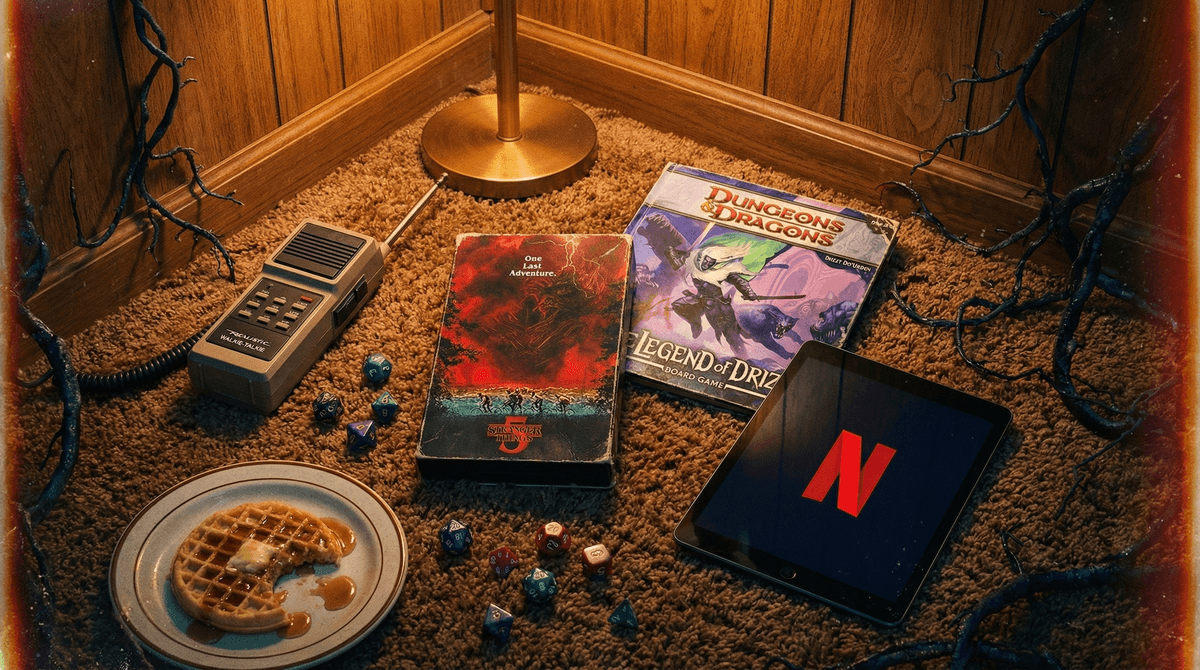
Stranger Things is the Netflix sci-fi horror series that became a cultural juggernaut when it dropped in 2016. Set in the 1980s, it follows a group of kids in small-town Indiana as they encounter supernatural forces, government conspiracies, and a parallel dimension called the Upside Down. Think E.T. meets The Goonies meets Alien, with a synth-heavy soundtrack that makes millennials weepy with nostalgia.
The show centers on Mike, Dustin, Lucas, and Will—a friend group of nerdy middle schoolers who play Dungeons & Dragons and ride bikes everywhere. When Will disappears into the Upside Down, his friends team up with Eleven, a girl with telekinetic powers who escaped from a sinister government lab. Over five seasons (the final one drops in 2025), the stakes escalate from small-town mystery to world-ending catastrophe.
Here's the thing: 92% of families in our community use streaming TV, and 40% have kids actively watching Netflix. Stranger Things is everywhere—the memes, the Halloween costumes, the references at lunch tables. Your kid has probably heard about it even if they haven't seen it.
The appeal is pretty straightforward: kids are the heroes. Adults are mostly clueless, dangerous, or dead. The young characters solve problems, face genuine danger, and save the world—repeatedly. It's empowering in a way that resonates deeply with the 10-14 crowd who are desperate to be taken seriously.
The friendships feel authentic. The kids bicker, make up, protect each other fiercely, and navigate crushes with maximum awkwardness. There's genuine emotional depth here that goes beyond typical monster-of-the-week shows.
And let's be honest—it's genuinely scary and exciting. The Demogorgon, the Mind Flayer, Vecna—these aren't cartoon villains. The tension is real, the stakes feel high, and kids love that adrenaline rush of being appropriately terrified while safely on the couch.
Plus, the 80s nostalgia creates this weird appeal for kids who've never experienced that era. The walkie-talkies, the arcade games, the lack of smartphones—it's almost fantasy to them, a world where kids had more freedom and less surveillance.
The horror elements are legit. This isn't Goosebumps. There are jump scares, body horror, people dying in graphic ways, and genuinely disturbing imagery. The show earned its TV-14 rating honestly. Vecna's kills in Season 4 involve bones snapping and eyes exploding—it's nightmare fuel for sensitive kids (and honestly, some adults).
The language gets rough. Expect regular profanity, including F-bombs starting in later seasons. The teens curse like, well, teens.
Mature themes escalate. Early seasons deal with government experimentation on children and PTSD. Later seasons add romantic relationships (including some sexual content), underage drinking, and increasingly intense violence. Season 3 features a torture scene that's genuinely hard to watch.
The runtime is serious. With average screen time in our community at 4.2 hours on weekdays and 5 hours on weekends, binging Stranger Things can easily eat up a significant chunk of that. Episodes run 45-75 minutes, and seasons have 8-9 episodes. It's a commitment.
Ages 8-10: Probably too intense for most kids this age. The horror elements will likely cause nightmares, and the emotional complexity around trauma, loss, and government conspiracy might be overwhelming. If your 9-year-old is begging because "everyone has seen it," maybe explore why they feel left out rather than just hitting play.
Ages 11-13: This is the target demographic, but it really depends on your individual kid. Some mature 11-year-olds can handle it with parental co-viewing. Others will be genuinely traumatized. Consider: How do they handle scary content? Do they seek it out or avoid it? Can they distinguish fiction from reality? Have they dealt with themes of death and loss before?
Ages 14+: Most teens can handle the content, though you might still want to watch together for conversation opportunities. The show actually offers great discussion points about friendship, loyalty, trauma, standing up to authority, and facing your fears.
Co-view the first episode or two before deciding if it's right for your kid. You'll know pretty quickly if it's too much. The first season is notably less intense than later ones, so don't assume Season 1 approval means Season 4 is fine.
Talk about the scary parts. Acknowledge that it's supposed to be frightening—that's the point. But also discuss how special effects work, how actors are just people doing their jobs, and how directors create suspense. Demystifying the production can reduce anxiety.
Use it as a conversation starter. The show deals with bullying, fitting in, first crushes, family dysfunction, and standing by your friends when things get hard. These are valuable topics that your kid is likely navigating in their own life.
Set boundaries around binging. It's designed to be addictive. Establish clear limits about episodes per sitting and don't let it dominate your family's screen time. One episode per night is reasonable; five episodes in a row on a school night is not.
Consider starting with Season 1 only. It's more self-contained, less graphically violent, and you can reassess before continuing. Some families stop there and everyone's fine with it.
Stranger Things is well-made, culturally significant, and genuinely engaging television. It's also legitimately scary with mature content that isn't appropriate for all kids, regardless of what they claim about their friends watching it.
The question isn't "Is Stranger Things good or bad?" It's "Is Stranger Things right for my kid at this point in their development?" Only you can answer that, and it's okay if your answer is "not yet" or even "not in my house."
If you're considering it: Watch the first two episodes yourself tonight. You'll know within 90 minutes if this is something you're comfortable with your kid seeing.
If your kid is already watching: Check in about what they're seeing and feeling. Ask which parts are scary, which characters they relate to, what they'd do in similar situations.
If you're saying no: Offer alternatives that capture similar themes without the intensity. The Goonies, Super 8, or even Gravity Falls offer that kid-heroes-on-an-adventure vibe with less nightmare fuel.
And remember: with 40% of families in our community having kids who watch Netflix regularly, you're not alone in navigating these decisions. Trust your gut, know your kid, and don't let FOMO drive your family's media choices.