

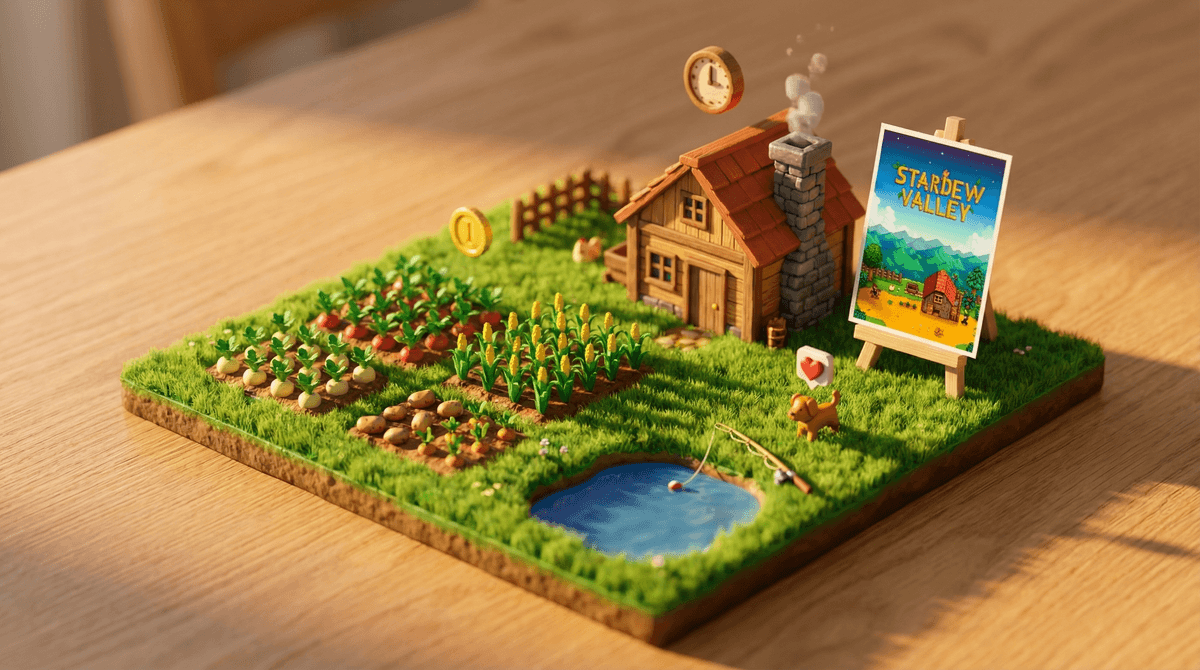
Stardew Valley is a farming simulation game where players inherit their grandfather's old farm plot and build it from scratch. You plant crops, raise animals, explore mines, fish, befriend villagers, and slowly transform a weedy mess into a thriving homestead. Think of it as a digital dollhouse meets farm life meets RPG—but without the violence, microtransactions, or battle passes that dominate most popular games.
Created by one developer (Eric Barone, who goes by ConcernedApe) over four years, it launched in 2016 and has quietly become one of the most beloved games across all age groups. It's available on basically everything: PC, Switch, PlayStation, Xbox, even mobile. And here's the kicker—it costs around $15 with zero in-app purchases. You buy it once, you own it forever.
The appeal is pretty straightforward: you get to be in charge. No one's telling you what to do or when to do it. Want to spend all day fishing? Go for it. Want to ignore your crops and just decorate your house? That's fine too. The game has goals and progression, but it's not pushy about it.
There's also something deeply satisfying about the cause-and-effect loop. Plant seeds, water them, watch them grow, harvest them, sell them, buy more seeds. It's predictable in a way that real life isn't, and for kids dealing with school stress or social drama, that can be genuinely therapeutic.
Plus, the pixel art style is charming without being babyish, and the characters you meet in town have actual personalities and storylines. Kids get invested in befriending the shy artist or helping the war veteran work through his PTSD (yes, really—this game doesn't shy away from real themes, but handles them gently).
This might actually be good for them. I know we're all exhausted from screen time battles, but Stardew Valley is teaching skills that matter: resource management, planning ahead, delayed gratification, even basic economics. Your kid is learning that if they blow all their money on decorations in spring, they won't have enough for summer seeds. That's a better financial lesson than most adults got.
The game also rewards patience and experimentation. There's no "right" way to play, no leaderboards, no pressure to keep up with friends. According to our community data, about 55% of families report their kids gaming regularly, with an average of 4.2 hours of total screen time per day. If your kid's going to game, this is genuinely one of the better options in terms of content and cognitive engagement.
It's rated E10+ (Everyone 10 and up) by the ESRB, and that feels about right. There's mild combat in the mines (bonking slimes and bats with a sword), and some of the villager storylines touch on adult themes like alcoholism and depression—but it's all handled with care and nuance. Younger kids (7-9) can definitely play with some guidance, especially if they're comfortable with reading (there's a lot of text).
The social element is optional but rich. There's a multiplayer mode where up to 4 players can farm together, which can be great for siblings or friends. But there's zero online interaction with strangers—no chat, no user-generated content concerns. If you're looking for alternatives to Minecraft that still offer creativity and building but with less chaos, this is a solid pick.
Ages 7-9: They'll need help with reading and understanding some of the game systems. Playing together can be a nice bonding activity—you can take turns making decisions about the farm. The mining/combat sections might be slightly stressful for sensitive kids, but you can mostly avoid them.
Ages 10-12: This is the sweet spot. They can handle the reading, appreciate the strategy, and start to understand the deeper themes. Many kids this age get genuinely obsessed—making spreadsheets to plan their crop rotations, drawing their farm layouts, that kind of thing.
Ages 13+: Teens often discover Stardew as a cozy escape from more intense games. It's become part of the "cozy gaming" movement, and there's a whole community of players who use it for stress relief and mindfulness. If your teen is dealing with anxiety, this might be a healthier outlet than doomscrolling TikTok.
In a gaming landscape dominated by Roblox (which can be great but also chaotic), Fortnite (battle royale stress), and mobile games designed to extract money, Stardew Valley is refreshingly wholesome. It's not perfect—kids can still zone out for hours—but the hours spent here feel more like reading a good book than watching random YouTube videos.
It teaches planning, consequences, and patience. It has heart and depth. And most importantly, it respects the player's time and wallet.
If you're going to say yes to a game, this is a pretty easy yes.
Try it yourself first. Seriously, spend 30 minutes with it. You'll immediately understand the appeal, and you might get hooked yourself (fair warning: many parents report losing entire weekends to this game).
Set expectations around time. The game doesn't have natural stopping points—each in-game day is about 15 minutes, and "just one more day" is a real trap. Talk about playing in chunks of 2-3 in-game days (30-45 minutes) with built-in breaks.
Consider playing together. The co-op mode is genuinely fun, and it's a chance to model decision-making and resource management in real-time. Plus, you get to hear their thought process, which is always illuminating.
Want to dig deeper into whether this fits your family's gaming philosophy? Chat with our digital wellness assistant about your specific situation.