

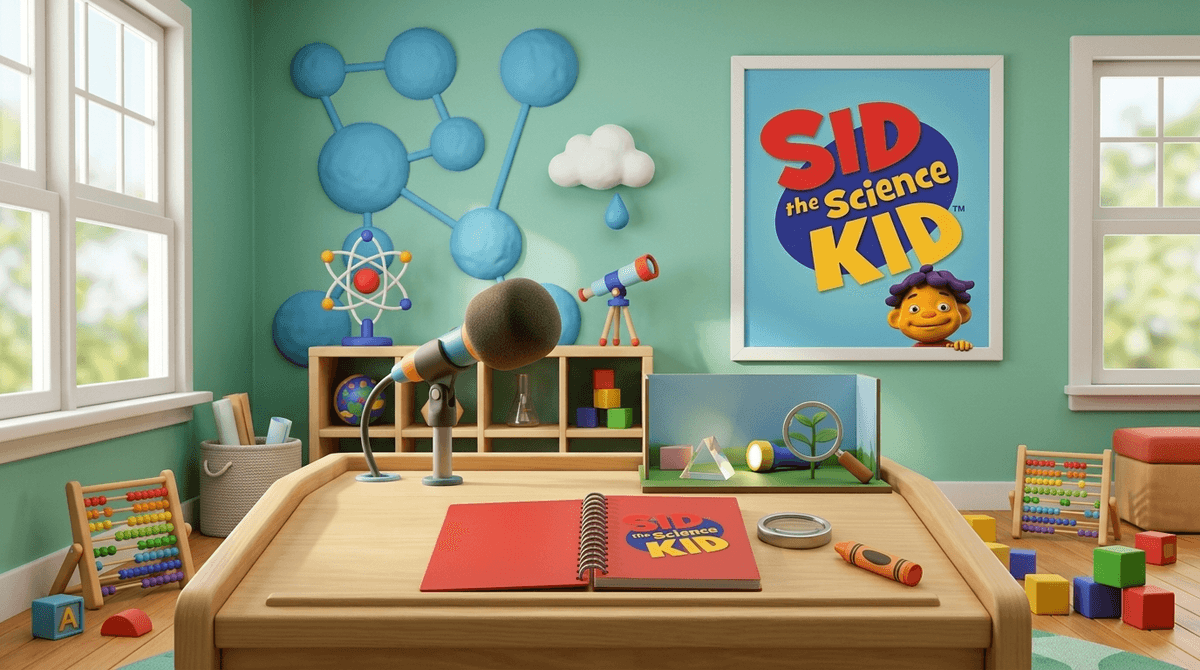
TL;DR: Sid the Science Kid is the ultimate antidote to the "brain rot" era of preschool content. It’s a Jim Henson Company classic that teaches the scientific method through catchy songs and relatable "Why?" questions. With a 2025 reboot officially in the works, it’s the perfect time to introduce your 3-to-6-year-old to Sid, May, Gerald, and Gabriela.
If you’re currently living through the "Why?" phase—you know, the one where your toddler asks why the sky is blue, why bananas get mushy, and why they can’t have chocolate for breakfast all in the span of thirty seconds—then you need a strategy. You could try to explain the molecular breakdown of fruit enzymes, or you could let Sid the Science Kid do the heavy lifting for you.
Originally aired on PBS Kids, this show has been a staple for intentional parents for years because it doesn't just give kids facts; it teaches them how to think like scientists. And honestly, in a world of Skibidi Toilet and mindless unboxing videos, a show that encourages observation and hypothesis-testing feels like a breath of fresh air.
Produced by The Jim Henson Company, Sid uses a unique "Digital Puppetry" style. If the characters look a little more "alive" and fluid than your standard 3D animation, that’s because they are. Real puppeteers are behind the scenes moving these digital models in real-time. It gives the show a warm, theatrical feel that modern AI-generated content just can't replicate.
Each episode follows Sid, a preschooler with a plastic microphone and a massive curiosity, as he heads to school to investigate a "Big Question." Along with his friends May, Gerald, and Gabriela, and their legendary teacher Susie, they spend the day observing, experimenting, and recording their findings in "science journals."
Learn more about the best educational shows for preschoolers
The Music is Actually Good
Let’s be real: most preschool show music is a form of psychological warfare. But Teacher Susie’s songs? They’re legit. They have a soulful, jazzy vibe that makes learning about "The Five Senses" or "Simple Machines" surprisingly tolerable for the adults in the room.
The "I'm a Scientist" Empowerment
Sid treats science like a superpower that every kid already possesses. It’s not about lab coats and beakers; it’s about looking at a melting popsicle and asking why that’s happening. It turns the mundane parts of a kid’s day into an adventure.
The 2025 Reboot
The big news for 2026 is that The Jim Henson Company has officially tapped new leadership to oversee a full Sid the Science Kid reboot. While the original series is still gold, the reboot is expected to tackle modern scientific concepts—think basic coding, climate awareness, and maybe even a kid-friendly look at how AI works. It’s a great time to get your kids into the "classic" episodes so they’re ready for the new drop.
Absolutely not. We talk a lot at Screenwise about the difference between passive consumption (zoning out to bright colors) and active engagement. Sid the Science Kid is the definition of active engagement.
It follows a predictable, "looping" structure that helps preschoolers retain information:
- The Question: Sid wonders about something at home.
- The Survey: He asks his friends what they think (predicting).
- The Lab: They do a hands-on experiment (observing).
- The Wrap-up: They review what they learned (concluding).
This is the Scientific Method in its purest, most digestible form. If your kid starts carrying around a notebook to draw "observations" of the backyard, you’ve won at digital parenting for the day.
- Target Age: 3 to 6 years old.
- Older Kids: By age 7 or 8, the "preschool" vibe of the classroom might feel a bit "babyish" for them. If they’ve outgrown Sid but still love science, try moving them toward Emily's Wonder Lab or StoryBots.
- Siblings: This is a rare show that a 3-year-old and a 5-year-old can watch together without the older one getting bored or the younger one getting overwhelmed.
The Theme Song Warning
You will have the theme song stuck in your head. "I've got a microphone and I'm starting a show!" will become the soundtrack to your drive to the grocery store. Just accept it. It’s a small price to pay for your child learning the difference between a solid and a liquid.
Diversity and Inclusion
One of the best parts of Sid is the diversity of the cast. Sid’s family is multi-ethnic, and the classroom reflects a realistic, inclusive environment. It’s handled naturally—not as a "lesson," but just as the way the world is.
Encouraging "Science Journals"
The show heavily features the kids drawing in their journals. This is a great "off-screen" activity to pair with the show. If you want to be the "cool, intentional parent," get them a cheap composition book and some crayons and tell them it's their Sid the Science Kid journal.
If your kids have binged every episode of Sid and you need something new that hits the same educational notes, check these out:
- Dinosaur Train: Also from The Jim Henson Company, this one blends paleontology with life sciences. It’s basically "Sid with Dinosaurs."
- Ada Twist, Scientist: A fantastic Netflix show based on the popular books. It’s great for slightly older preschoolers who love gadgets and engineering.
- The Cat in the Hat Knows a Lot About That!: Excellent for nature and biology-focused science.
- Wow in the World: If you want to cut the screen entirely, this is the gold standard for kids' science podcasts.
Sid the Science Kid is a "Yes" show. It’s the kind of content you can feel good about putting on while you’re trying to make dinner or finally fold that mountain of laundry. It respects your child's intelligence, encourages them to engage with the physical world, and prepares them for the STEM-heavy curriculum they’ll see in elementary school.
With the 2025 reboot on the horizon, now is the perfect time to let Sid help you navigate the "Why?" years.