

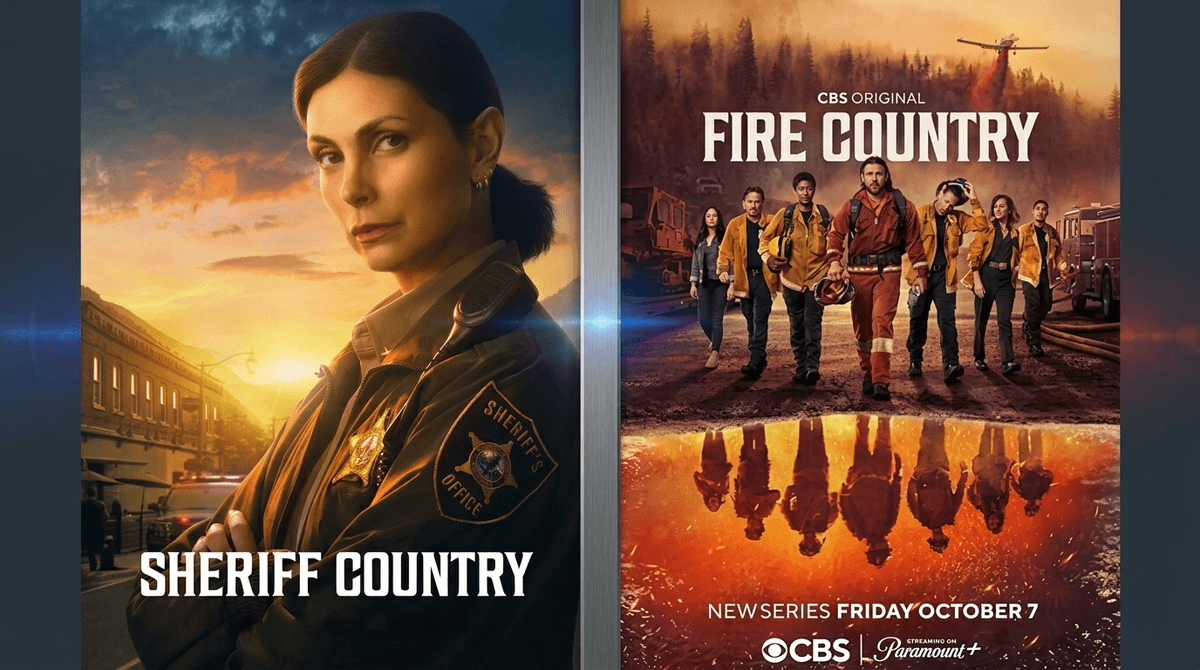
TL;DR: Sheriff Country is the high-stakes spinoff of Fire Country that trades fire hoses for badges. Rated TV-14, it’s a standard police procedural with a heavy side of "family baggage." Expect intense discussions about drug addiction, crooked cops, and complicated sisterhood. It’s great for older teens who loved the original, but the drug themes are more central here than in Edgewater’s fire station.
If your teen is already deep into the Fire Country universe, they’ve probably been counting down the days until Morena Baccarin’s Mickey Fox got her own badge and her own show. Now that we’re well into the first season, it’s clear that Sheriff Country isn't just a carbon copy of its predecessor. While the parent show is about redemption through fire, this one is about the messy, often gray lines of law enforcement in a small town where everyone knows your business—and your father’s criminal record.
Sheriff Country follows Mickey Fox, a Deputy Sheriff in Edgewater who also happens to be the stepsister of Sharon Leone (played by Diane Farr in the original series). Mickey is tough, no-nonsense, and carries the weight of a family history that isn't exactly "law-abiding."
The show leans heavily into the "procedural" format—think The Rookie or Blue Bloods—where there’s a crime of the week, but the real meat is the overarching seasonal drama involving Mickey’s estranged father and his history with the drug trade.
If your teen is into "comfort TV" that still feels high-stakes, this is it. It hits that sweet spot of:
- The "Found Family" vs. "Real Family" trope: Teens love a good "I’m nothing like my parents" storyline.
- Small Town Drama: There’s something addictive about the "everyone is connected" vibe of Edgewater.
- Crossover Potential: Knowing that characters from Fire Country pop in keeps the fandom engaged across both shows.

The Drug Themes (The Big One)
Unlike some procedurals where drugs are just a "case of the week," narcotics are baked into the DNA of Sheriff Country. Mickey’s father is a central figure who has a history with drug trafficking and addiction. This means the show frequently depicts the fallout of the drug trade—not just the arrests, but the emotional wreckage it leaves on families. It’s handled with more nuance than a D.A.R.E. commercial, but it’s frequent.
Violence and Intensity
It’s a CBS procedural, so expect "network TV violence." There are shootouts, tense standoffs, and the occasional grisly crime scene. However, it rarely veers into the "prestige TV" gore you’d find on HBO or even some Netflix crime shows. The intensity is usually more about the emotional stakes than the physical ones.
Family Conflict
The "sister" dynamic between Mickey and Sharon is a highlight, but it’s fraught with old wounds and secrets. If your teen is sensitive to themes of parental abandonment or family betrayal, some of the subplots might hit a little close to home.
You don't need to give a lecture, but Sheriff Country provides some pretty easy "ins" for conversations that aren't totally cringe.
- The "Good Cop / Bad Cop" Reality: The show spends a lot of time on Mickey trying to be a "good cop" while dealing with the legacy of her father. Ask your teen: “Do you think it’s possible for Mickey to truly distance herself from her dad’s reputation in a town that small?”
- The Ethics of Loyalty: Mickey often has to choose between her duty to the badge and her loyalty to her family. That’s a great jumping-off point for talking about what they’d do if a friend did something wrong.
- The Portrayal of Addiction: Since the drug themes are so prevalent, it’s a natural time to check in on their understanding of how addiction affects families, rather than just the "crime" aspect of it.
Check out our guide on talking to teens about drug themes in media
If they’ve finished the current episodes and are looking for more "competence porn" (shows where people are just really good at their high-stress jobs), check these out:
- A bit more lighthearted and "blue sky" than Sheriff Country, but features great ensemble dynamics and a similar focus on the ethics of policing.
- If they like the high-octane emergencies of Fire Country but want the broader scope of first responders, this is the gold standard for over-the-top drama.
- Wait, a sports show? Hear me out. It deals with similar themes of navigating two different worlds, family secrets, and the pressure of expectations, just on a football field instead of a police cruiser.
- If the "small town secrets" and "troubled dad" aspects are what they love most, this Netflix hit is the teen-centric version of that vibe (though with significantly more "Pogue" energy).
Sheriff Country is a solid, well-acted procedural that fits perfectly into the "watch with your teen" category. It’s not "brain rot," and it’s not trying to be edgy just for the sake of it.
The TV-14 rating is earned through its honest (and sometimes heavy) look at how crime and drugs affect a community. If your teen is 14 or older, they can likely handle the content, especially if you’ve already cleared them for the original Fire Country.
Just be prepared for them to start using words like "jurisdiction" and "probable cause" incorrectly for a few weeks.
- Watch the pilot together. It’s the best way to gauge if the drug themes are a bit too heavy for your specific kid.
- Check their "Recommended" list. If they like this, see if their algorithm is pushing them toward more intense true crime docs, which can be a much darker rabbit hole.
- Compare notes. If you’re a fan of Blue Bloods or Law & Order, talk about how the "old school" shows compare to this new era of "Country" procedurals.