

Look, representation matters. And for kids with special needs—whether that's ADHD, autism, physical disabilities, learning differences, or chronic health conditions—seeing themselves reflected in the world around them isn't just nice to have. It's essential.
A role model for a kid with special needs isn't just someone who "overcame" their disability (ugh, that narrative). It's someone who shows them what's possible, who validates their experiences, who makes them feel less alone, and who demonstrates that their way of moving through the world is legitimate and valuable.
The good news? We're living in a moment where disability representation in media is finally getting better. Not perfect—far from it—but better. And between streaming content, YouTube creators, athletes, authors, and public figures, there are more options than ever before.
Kids with special needs often grow up feeling like they're the only ones. They're the kid who needs accommodations. The one who learns differently. The one whose body works differently. And when they never see anyone like themselves succeeding, thriving, or just existing in media? That isolation deepens.
Role models provide:
- Validation - "I'm not broken, I'm just different"
- Possibility - "People like me can do amazing things"
- Community - "I'm not the only one"
- Language - Words to describe their experiences
- Pride - Their identity as something to embrace, not hide
And honestly? It matters for neurotypical kids too. When your kid without disabilities sees characters and real people with disabilities just living their lives, it normalizes difference and builds empathy in a way no lecture ever could.
Shows & Movies:
Heartbreak High (Netflix, ages 14+) features Quinni, an autistic teen whose storyline isn't about "fixing" her autism—it's about navigating relationships, school, and life while being authentically herself. It's genuinely good representation.
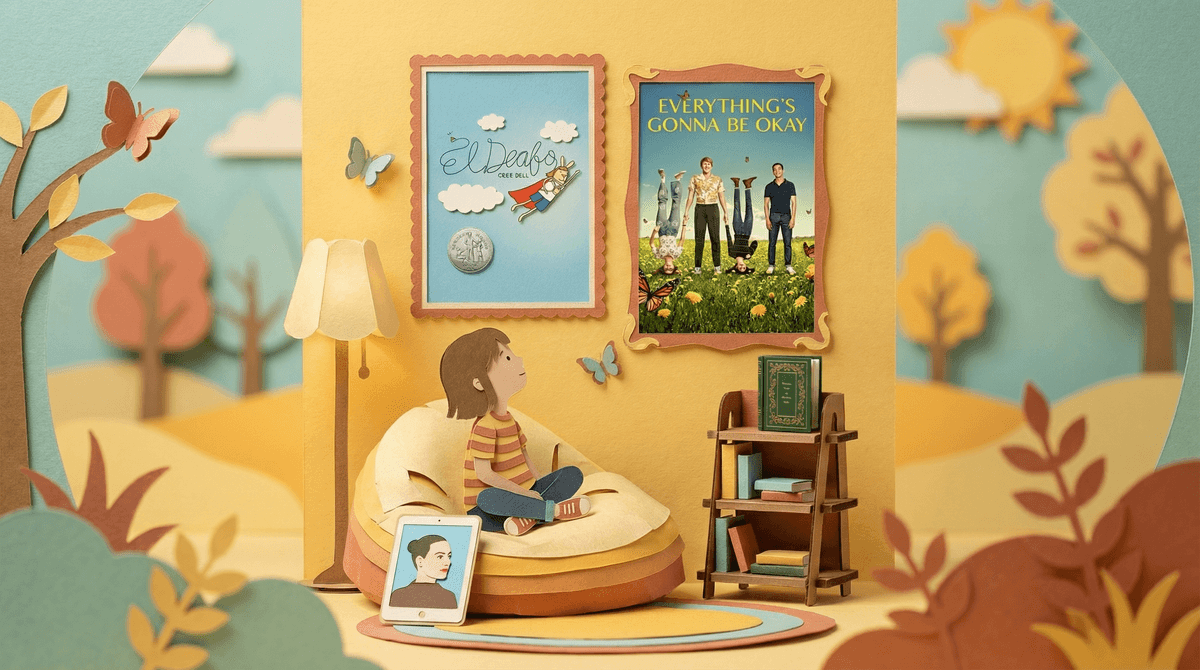
Everything's Gonna Be Okay (Hulu, ages 14+) centers two autistic teenage sisters, played by actually autistic actors, dealing with real life after their father's death. It's funny, messy, and honest.
For younger kids, Bluey has an episode ("Army") that beautifully depicts a character with ADHD without making it a Very Special Episode. Daniel Tiger's Neighborhood includes Chrissie, who uses a wheelchair, as a regular character whose disability is just part of who she is.
A Quiet Place (ages 13+) features a deaf protagonist played by a deaf actress, and her deafness becomes a strength, not a limitation. That's powerful.
Books:
Middle grade fiction has been crushing it lately. El Deafo by Cece Bell is a graphic novel memoir about growing up deaf that's funny and real. Wonder by R.J. Palacio deals with facial differences. Fish in a Tree tackles dyslexia.
For teens, The Fault in Our Stars (chronic illness), Turtles All the Way Down (OCD), and Six of Crows (physical disability) all feature protagonists whose differences are integral to their stories but don't define them entirely.
YouTube & Social Media:
This is where it gets really good, because you're seeing actual disabled people living their lives, not Hollywood's interpretation.
- Chris Ulmer (@ChrisUlmer) creates content celebrating neurodivergent kids
- Jessica Kellgren-Fozard shares life with chronic illness and deafness
- Molly Burke is a blind YouTuber and motivational speaker
- Paige Layle talks openly about being autistic
- Zach Anner is a comedian with cerebral palsy who's genuinely hilarious
The beauty of YouTube is that your kid can find someone whose experience closely mirrors their own, which is something TV rarely provides.
Athletes: Simone Biles (ADHD), Michael Phelps (ADHD), Tatyana McFadden (spina bifida), Jessica Long (double amputee)—all open about their disabilities and all absolutely dominant in their sports.
Creators & Entrepreneurs: Temple Grandin revolutionized animal science and is openly autistic. Greta Thunberg has Asperger's and has changed the climate conversation. These aren't people who succeeded "despite" their disabilities—their different ways of thinking contributed to their success.
Actors & Musicians: Selena Gomez (lupus), Billie Eilish (Tourette's), Millie Bobby Brown (partially deaf), Daniel Radcliffe (dyspraxia)—all thriving in their careers while being open about their conditions.
Ages 3-7: Focus on books and shows where characters with disabilities are just part of the cast. Don't make it A Thing. Let them absorb that bodies and brains come in all types.
Ages 8-12: This is when kids start noticing differences more acutely. Introduce biographies, YouTube channels, and books where protagonists share their specific condition. Let them see people like them succeeding.
Ages 13+: Teens can handle more complex narratives about disability, ableism, and advocacy. Encourage them to follow disabled creators on social media, read memoirs, and engage with content created by disabled people, not just about them.
Avoid inspiration porn. You know those viral videos of disabled kids doing normal things while everyone cries? Yeah, that's not helpful. Look for representation where disabled people are full, complex humans—not objects of inspiration for able-bodied people.
Prioritize #OwnVoices content. Whenever possible, choose books written by disabled authors, shows with disabled actors playing disabled characters, and YouTube channels run by disabled creators. The difference in authenticity is massive.
Let your kid lead. Some kids with special needs want to consume tons of content about people like them. Others don't want it to be A Thing. Both are fine. Follow their cues.
Talk about it. When you're watching a show with disability representation, ask questions: "What did you think about how they showed that?" "Does that feel accurate to your experience?" "What would you want people to know?"
Finding role models for kids with special needs isn't about finding perfect people who've "overcome" their disabilities (seriously, can we retire that phrase?). It's about showing your kid that people with brains and bodies like theirs exist, thrive, create, love, mess up, and live full lives.
The representation is getting better, but you might have to dig a little. Start with what resonates with your kid's specific experience, branch out from there, and remember: the goal isn't inspiration, it's recognition. "Oh, there are people like me. Cool."
Not sure where to start? Find recommendations specific to your child's age and needs . Want to explore more inclusive media options? Check out our guide to disability representation in kids' shows.
And hey—if you find something great that we didn't mention, we genuinely want to know. This stuff matters.