

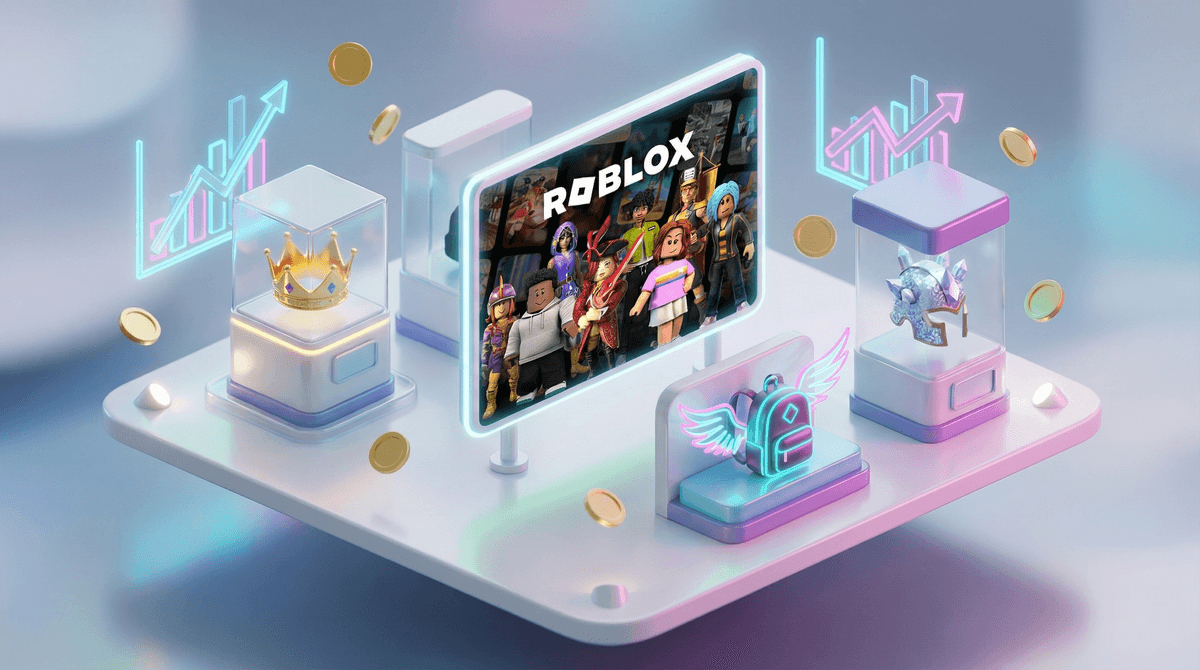
If your kid has ever frantically explained why they need more Robux to buy a "limited" hat that's about to go "off-sale," welcome to Roblox's virtual economy—a surprisingly sophisticated marketplace where digital scarcity meets real money.
Roblox isn't just a game platform anymore. It's become a full-blown economy with its own currency (Robux), stock market-style trading, and items that can appreciate in value faster than your 401k. Limited items are special virtual goods—usually accessories, gear, or clothing—that Roblox releases in finite quantities. Once they're gone, they're gone. Well, sort of.
Screenwise Parents
See allThere are two types: Limited items (fixed quantity) and Limited U items (available for a limited time). After the initial sale, these items can only be obtained through the Roblox marketplace where players trade them with each other. And here's where it gets interesting: some of these virtual hats and accessories now sell for hundreds of thousands of Robux—which translates to actual thousands of dollars.
According to our Screenwise community data, about 60% of Roblox-playing families report their kids are actively engaging with Roblox's servers and social features, which often includes exposure to trading culture. Only 25% report no Roblox usage at all, which means if you're navigating this, you're definitely not alone.
The appeal is pretty straightforward: it's the thrill of collecting, investing, and status signaling all rolled into one. Kids love the idea that they can "flip" items for profit, just like they've seen with sneaker culture, Pokémon cards, or NFTs (yes, they know about NFTs).
There's also genuine FOMO (fear of missing out) baked into the system. When an item is labeled "going limited soon," it creates urgency. When their friends have rare items that show status in-game, it creates social pressure. And when kids see YouTube videos of traders making millions of Robux, it creates aspiration.
Some kids are legitimately learning about supply and demand, market timing, and patience. Others are just getting introduced to gambling-adjacent behaviors at age 10. It really depends on how it's being approached.
Here's the thing parents need to understand: Robux is real money . You buy it with dollars, and while Roblox makes it difficult, you can convert it back to dollars if you're in their Developer Exchange program.
A "cheap" limited item might cost 1,000 Robux (about $10). Mid-tier items run 10,000-50,000 Robux ($100-500). The rarest items? We're talking hundreds of thousands of Robux. The Dominus Empyreus, one of the most coveted items, has sold for over 13 million Robux—that's roughly $45,000 in real-world value.
Most kids aren't operating at that level, obviously. But they are spending real money (your money) on virtual items with the hope that those items will increase in value. Sometimes they do. Often they don't. And unlike stocks, there's no SEC regulation here.
Ages 8-10: At this age, kids shouldn't be trading limited items independently. The marketplace is too complex, and the potential for getting scammed or making poor decisions is high. If they're interested in collecting, set a strict Robux budget for regular items only. Use it as a teaching moment about saving and spending, but keep them out of the trading economy.
Ages 11-13: This is when some kids can start understanding basic economics. If your middle schooler is interested in trading, consider it an opportunity to teach real financial literacy. Set up rules: they can only trade with money they've earned (chores, allowance), they need to research values before any trade, and they must discuss major purchases with you first. Some parents even create spreadsheets with their kids to track "investments."
Ages 14+: Teens can handle more independence here, but guardrails still matter. They should understand that virtual items can lose value instantly if Roblox changes policies or the item gets re-released. They should know about common scams (fake trading websites, social engineering, "trust trades"). And they should have a budget that doesn't interfere with real-world savings goals.
- Secretive behavior around purchases or trades
- Obsessive checking of item values or the marketplace
- Emotional distress when items lose value or trades go wrong
- Requests for increasingly large amounts of Robux
- Talk of "get rich quick" schemes or guaranteed profit strategies
- Interaction with strangers promising rare items or special deals
The trading community has its share of scammers targeting kids. Learn more about Roblox safety concerns if you're worried about who your child is interacting with.
First, set up proper parental controls if you haven't already. You can restrict trading entirely, require PIN codes for purchases, and limit who can message your child.
Second, have honest conversations about the difference between investing and gambling. Yes, some items appreciate. But virtual economies are volatile and controlled entirely by one company. Roblox could change the rules tomorrow, and your child's "portfolio" could become worthless.
Third, if your child is genuinely interested in the economic side, lean into the learning opportunity. Help them understand market forces, research skills, and risk management. These are valuable lessons—just don't let them learn them by losing your credit card balance.
Roblox's limited item economy is neither inherently good nor bad—it's a tool that can teach financial literacy or encourage problematic spending habits, depending on how it's approached.
The fact that 60% of families in our community are dealing with this means there's no "weird" or "normal" here—just different approaches. Some families ban trading entirely. Some treat it like a hands-on economics class. Most land somewhere in the middle.
Next Steps:
- Check your child's account settings and purchase history
- Have a conversation about their interest in limited items (are they collecting, trading, or just wanting to fit in?)
- Set clear boundaries around spending and trading
- Consider whether this is a teaching opportunity or a headache you'd rather avoid entirely
Both answers are valid. You know your kid and your family's values. The key is making an informed, intentional choice rather than just letting the Roblox economy happen to you.