

From Frustration to Fluency: Can Apps Actually Help a Reluctant Reader?
Look, I get it. Your kid can navigate YouTube like a pro, knows every Roblox shortcut, and can text faster than you can type—but ask them to read a chapter book and suddenly they've got a headache, need water, have to use the bathroom, and oh wait, the dog needs walking.
The irony isn't lost on any of us: kids are staring at screens all day, but getting them to read on those screens (or off them) feels like pulling teeth. So can reading apps actually help? Or are we just swapping one screen problem for another?
The short answer: it depends on the app, the kid, and how you use it. Some reading apps are genuinely helpful tools that meet struggling readers where they are. Others are basically digital worksheets wrapped in cartoon graphics that make everyone miserable.
First, let's acknowledge that "struggling reader" covers a huge range. Maybe your kid has dyslexia or another learning difference. Maybe they're technically reading fine but just hate it. Maybe they're behind grade level and the gap feels insurmountable. Maybe English isn't their first language.
Reading apps can help because they:
- Remove the social pressure of reading out loud in class or comparing themselves to siblings
- Offer immediate feedback without a parent hovering (which, let's be honest, can make things worse)
- Gamify practice in ways that feel less like homework
- Adjust difficulty automatically so kids aren't stuck on material that's too hard or too easy
- Provide multi-sensory support like audio narration, highlighting, and interactive elements
But here's the thing: apps are tools, not magic. If your kid has a genuine reading disability, an app won't replace proper evaluation and intervention. And if they hate reading because they've only been exposed to boring books about topics they don't care about, no amount of digital badges will fix that.
For Early/Emerging Readers (Ages 4-7)
Homer is genuinely excellent for pre-readers and early readers. It's personalized, research-based, and doesn't feel like drill-and-kill. The progression is thoughtful, and kids actually enjoy it. Worth the subscription if you've got a kid in this age range who needs support.
Teach Your Monster to Read is a UK-based app that's free on computers and cheap on mobile. It teaches phonics through an actual game that's... fun? The monster customization alone keeps kids engaged, and the phonics instruction is solid.
For Struggling Elementary Readers (Ages 6-10)
Reading Eggs looks dated (like, aggressively 2010), but the curriculum is comprehensive and it works. It's particularly good for kids who need systematic phonics instruction. The reward system is motivating without being manipulative.
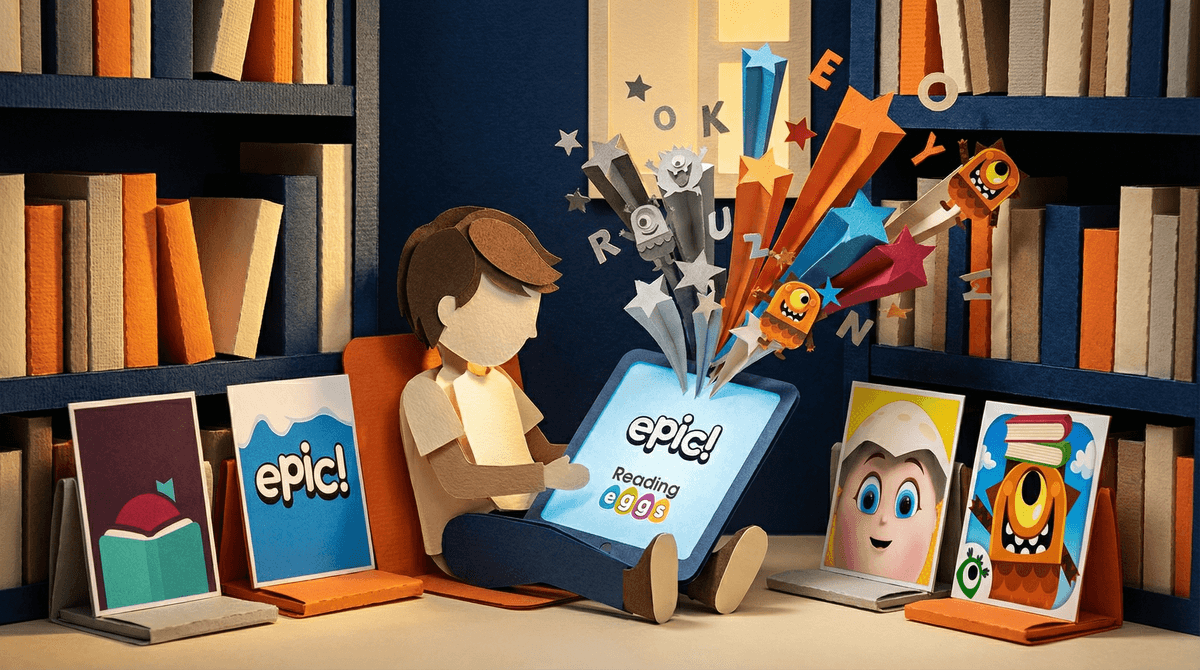
Epic! is basically Netflix for kids' books, and it's fantastic for building reading volume. The key here: let your kid read whatever they want. Dog Man? Fine. Graphic novels? Great. Books about farts? Whatever gets them reading. The "read-to-me" feature is clutch for struggling readers who can follow along while listening.
For Kids with Dyslexia or Learning Differences
Learning Ally provides human-narrated audiobooks specifically for kids with reading disabilities. It's not cheap, but if your kid has an IEP or 504 plan, your school might cover it. The audiobooks let kids access grade-level content while they're still building decoding skills.
Dyslexia Quest is designed by dyslexia specialists and uses game mechanics to build specific skills. It's not trying to be a comprehensive reading program—it's targeted practice that doesn't feel like torture.
For Older Reluctant Readers (Ages 10+)
Newsela offers real news articles at five different reading levels. This is huge for older kids who are tired of "baby books" but can't quite handle grade-level text. They can read about actual interesting topics (sports, gaming, current events) at their level.
Libby connects to your local library and offers free ebooks and audiobooks. The interface is clean, and the selection is huge. Pro tip: let your kid listen to audiobooks while following along with the text. This isn't cheating—it's scaffolding.
Most "reading games" that are just dressed-up quizzes. If the app is primarily about answering comprehension questions, it's not addressing why your kid struggles with reading in the first place.
Apps with predatory monetization. If the app is constantly pushing in-app purchases or making kids watch ads to continue, hard pass. That's not a learning tool; it's a cash grab.
Anything that makes your kid feel bad. Some apps have "streaks" or competitive leaderboards that stress kids out more than motivate them. If your kid is already anxious about reading, this will backfire.
Here's what apps can't do: they can't replace actual books and the experience of getting lost in a story. They can't replace a parent reading aloud (which, by the way, you should keep doing even if your kid can technically read independently—it builds vocabulary and connection ). And they can't replace proper intervention if your kid has a learning disability.
What they can do is:
- Make practice less painful
- Build confidence through small wins
- Provide access to books at the right level
- Offer support features (audio, highlighting, definitions) that help kids read independently
If your kid is struggling with reading, an app might genuinely help—but it's not a silver bullet. The best approach:
-
Get a proper evaluation if you suspect a learning disability. Don't spend months on apps if your kid needs targeted intervention.
-
Try 2-3 apps (most offer free trials) and see what your kid actually uses. The "best" app is the one they'll engage with.
-
Set realistic expectations. 15 minutes a day of engaged practice beats an hour of miserable forced reading.
-
Keep offering physical books in topics your kid cares about. Graphic novels count. So do magazines, comics, and cereal boxes. Reading is reading.
-
Read together sometimes. Take turns, read aloud, listen to audiobooks on road trips. Model that reading is something people do for enjoyment, not just a school requirement.
And maybe most importantly: don't let reading apps become another battleground. If the app is causing fights or tears, step back. The goal is building a reader, not checking a box.
Need help finding books your kid might actually want to read? Find books for reluctant readers tailored to your kid's interests. Sometimes the right book matters more than the right app.