

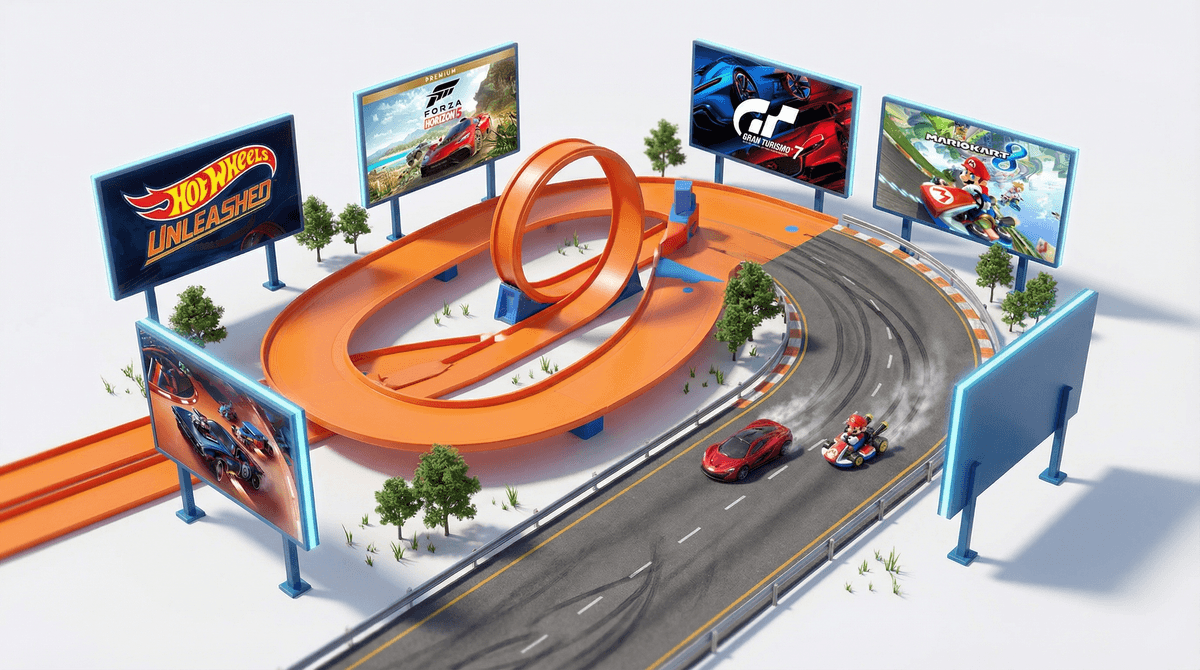
Racing games are exactly what they sound like—video games where players compete to cross the finish line first. But here's the thing: not all racing games are created equal, and the genre has evolved way beyond the Mario Kart sessions you might remember from your own childhood.
Today's racing games range from cartoony, power-up-filled fun like Mario Kart 8 Deluxe to hyper-realistic simulators like Gran Turismo where kids are adjusting tire pressure and learning about aerodynamics. There are arcade-style mobile games, open-world racing adventures, and even racing modes tucked into bigger games like Fortnite and Roblox.
The appeal is universal: speed, competition, and that dopamine hit when you nail a perfect drift around a corner. But as a parent, you're probably wondering: which ones are actually appropriate, and how do I navigate the inevitable requests for "just one more race"?
Racing games hit a sweet spot in kid psychology. They're instantly gratifying—races are short, outcomes are clear, and there's always another chance to improve. Unlike some games where progress takes hours, racing games deliver quick wins (or losses) that keep kids coming back.
The competitive element is huge. Whether they're racing against AI, their siblings on the couch, or strangers online, kids love testing their skills and climbing leaderboards. Many racing games also include customization options—picking cars, designing paint jobs, unlocking new tracks—which taps into that collector mentality that drives so much of kid gaming culture.
And let's be honest: cars are cool. The speed, the sounds, the crashes (especially the crashes)—it's all very exciting for developing brains that crave stimulation.
Ages 4-7: Keep It Simple and Silly
For younger kids, you want games with forgiving mechanics, no online strangers, and visuals that won't give them nightmares. Mario Kart 8 Deluxe is the gold standard here—it has an "auto-accelerate" feature and steering assists that let even preschoolers participate. Hot Wheels Unleashed is another solid choice with toy cars and colorful tracks.
Ages 8-11: Adding Complexity
This age group can handle more strategic gameplay and light online competition. Rocket League (soccer with rocket-powered cars) is wildly popular and relatively tame, though you'll want to monitor the chat features . Forza Horizon 5 offers an open-world racing experience with gorgeous graphics and a surprisingly robust parental controls system.
Ages 12+: Simulation Territory
Older kids might gravitate toward more realistic racing sims like Gran Turismo or F1 2024. These games can actually be educational—kids learn about physics, vehicle mechanics, and even geography through real-world racing circuits. The downside? These games often have steeper learning curves and can be more frustrating.
Here's where racing games can get expensive fast. Many "free" racing games on mobile devices are designed to be frustrating unless you pay for upgrades. Your kid downloads Asphalt 9, races a few times, then suddenly needs $4.99 for a "better car" to stay competitive.
Console and PC racing games typically use a different model—you pay upfront ($30-60) but get the full game. However, many now include "car packs" or "season passes" that add new content for additional money. Forza Horizon 5 does this, though it's not predatory—the base game has tons of content.
Mobile racing games are where you need to be most vigilant. Games like Mario Kart Tour use gacha mechanics (basically gambling for characters and karts) that can rack up charges quickly. Set up purchase controls on devices and have the "you need to ask before buying anything" conversation early and often.
Racing games are generally safer for online play than many other genres. There's less opportunity for toxic behavior when everyone's focused on driving rather than shooting each other. Voice chat is less common, and when it exists, it's usually optional.
That said, online racing isn't risk-free. Text chat can still expose kids to inappropriate language or bullying. Some games have "crash physics" that reward aggressive driving and ramming other players off the track, which can escalate frustration. And leaderboards can create unhealthy comparison spirals for competitive kids.
For younger kids (under 10), stick to local multiplayer where they're racing against siblings or friends in the same room. For older kids, games with robust reporting systems and moderation like Rocket League are better bets than random mobile games with minimal oversight.
Racing games are engineered for one-more-syndrome. Races are short (2-5 minutes), so "just one more" feels reasonable. But one race turns into ten, and suddenly an hour has evaporated.
Some strategies that actually work:
- Set race limits instead of time limits: "You can do five races" is more concrete for kids than "30 minutes"
- Use natural stopping points: "When you finish this championship" or "after this tournament"
- Build in transition time: Give a 10-minute warning so they can finish their current race without rage-quitting
- Leverage multiplayer: If they're playing with a sibling, they'll naturally stop when the other kid needs to do something else
The key is being consistent but flexible. If they're in the middle of a tournament they've been working toward all week, maybe you extend the limit. But if they're just grinding random races, stick to the boundary.
You might wonder if racing games teach bad driving habits. The research is actually mixed. Realistic racing sims can improve hand-eye coordination and spatial awareness, which are useful for real driving. But arcade-style games that reward reckless behavior? Those don't translate to good real-world habits.
The bigger concern is risk perception. Some studies suggest that racing games can make kids underestimate the dangers of speeding or aggressive driving. This is more relevant for teenagers who are actually learning to drive. If you've got a 15-year-old playing racing games, it's worth having conversations about how game physics differ from reality—cars don't respawn in real life.
Racing games can be a great entry point into gaming for kids. They're accessible, fun, and when chosen well, relatively low-risk compared to other genres. The best racing games for kids combine age-appropriate content, fair monetization, and opportunities for family play.
Start with tried-and-true options like Mario Kart for younger kids, graduate to games like Forza Horizon for older ones, and be vigilant about mobile games that use manipulative monetization tactics.
Set clear boundaries around screen time and purchases, use parental controls when available, and when possible, join them for a few races. You might be surprised how much fun it is to get absolutely destroyed by your 9-year-old in Mario Kart—and it gives you insight into what they're actually experiencing.
- Check what they're already playing: Look at their devices and see which racing games they've downloaded
- Review purchase settings: Make sure in-app purchases require approval on all devices
- Try a family race night: Pick up Mario Kart 8 Deluxe or another local multiplayer game and race together
- Set clear expectations: Have the conversation about time limits and asking before downloading new games
Racing games aren't going anywhere, and honestly, there are way worse things your kid could be into. With a bit of guidance and the right game choices, they can be a fun, relatively harmless part of your family's digital life.