

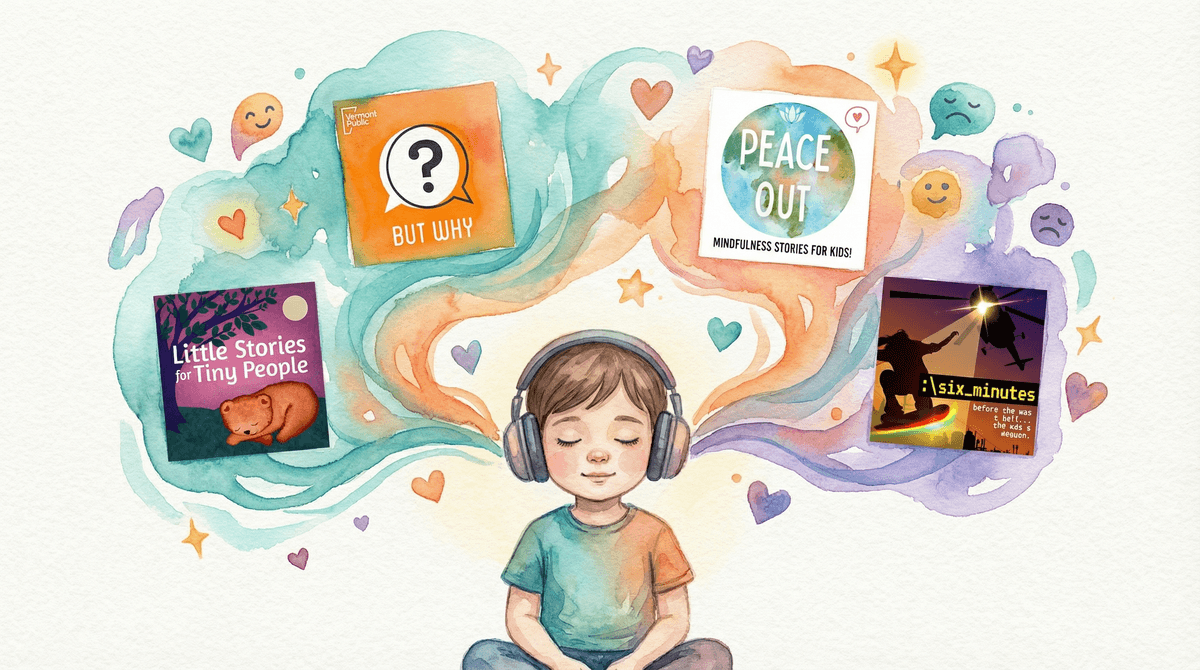
Social-emotional learning podcasts are audio shows designed to help kids develop skills like empathy, self-awareness, emotional regulation, conflict resolution, and relationship building. Think of them as the audio version of those picture books about feelings, except they're engaging enough that your 9-year-old won't roll their eyes.
These aren't your typical educational podcasts drilling math facts or teaching Spanish. SEL podcasts use storytelling, real-life scenarios, guided exercises, and relatable characters to help kids navigate the messy, complicated world of human emotions and social dynamics. And the best part? They work while you're driving to soccer practice, folding laundry, or just trying to get through dinner prep without someone melting down over whose turn it is to pick the show.
Here's the thing: kids today are drowning in content but starving for emotional tools. They can navigate TikTok's algorithm like pros but struggle to name their feelings beyond "fine" or "mad." The research backs this up—kids who develop strong social-emotional skills do better academically, have healthier relationships, and are more resilient when life gets hard.
But here's what makes podcasts uniquely powerful for SEL: they're screen-free but still engaging. You're not adding more eyeball time to their day, but you're also not forcing them to sit through another feelings chart conversation. Podcasts meet kids where they are—in the car, before bed, during that weird wind-down time after school when they're too fried for homework but too wired to chill.
Plus, audio storytelling activates different parts of the brain than visual media. Kids have to imagine the scenarios, picture the characters, and fill in the gaps themselves. It's like emotional weightlifting disguised as entertainment.
Ages 4-7: Building the Foundation
Sesame Street Podcast remains a solid choice for little ones. Short episodes (10-15 minutes) featuring familiar characters tackling feelings like jealousy, disappointment, and excitement. It's gentle, age-appropriate, and doesn't talk down to kids.
Little Stories for Tiny People offers original stories with clear emotional themes. Each episode is under 15 minutes and often includes a simple discussion prompt at the end. Perfect for bedtime routines.
Ages 6-10: The Sweet Spot
Tumble Science Podcast for Kids might seem like a science show (it is), but it's also fantastic for building curiosity, resilience when things don't work out, and excitement about learning from failure. The hosts model great conversational dynamics and genuine enthusiasm.
The Alien Adventures of Finn Caspian is a serialized sci-fi adventure that sneaks in lessons about teamwork, problem-solving, and handling fear. The characters face real emotional challenges alongside the space adventures. Kids get hooked on the story and absorb the SEL content almost by accident.
Peace Out is specifically designed for relaxation and emotional regulation. Short guided meditations and breathing exercises wrapped in imaginative stories. This one's a game-changer for anxious kids or bedtime battles.
Ages 8-12: Getting Real
But Why: A Podcast for Curious Kids from Vermont Public Radio tackles kids' real questions about everything, including tough emotional and social topics. Episodes about fairness, friendship, and dealing with difficult feelings are particularly strong. The format validates kids' questions and models thoughtful discussion.
Brains On! is another science podcast that doubles as SEL gold. The kid co-hosts, the way they handle getting things wrong, and episodes specifically about emotions and the brain make this essential listening. Read this guide to the Brains On! podcast for more on why it's so good.
Story Pirates turns kids' stories into sketch comedy. While not explicitly SEL-focused, it celebrates creativity, validates kids' ideas, and models collaborative storytelling. Plus, hearing their peers' stories helps kids develop perspective-taking skills.
Ages 10+: The Tween Zone
Smash Boom Best teaches debate skills, critical thinking, and how to disagree respectfully. In an era where online arguments are mostly people yelling past each other, this podcast models actual discourse. Kids learn to see multiple perspectives and build arguments without being jerks about it.
Six Minutes is a thriller that's genuinely thrilling. The characters face moral dilemmas, trust issues, and complex emotional situations. It's great for discussing choices, consequences, and how people respond to pressure.
The magic isn't just in the listening—it's in what happens after. Here's what actually works:
Start with casual check-ins. After an episode, ask "What did you think?" Not "What was the lesson?" Just open the door. Most kids will surprise you with what they picked up on.
Use them as conversation starters, not lectures. If a podcast episode deals with friendship conflict, you can later reference it naturally: "Remember that episode where the character had to choose between two friends? Kind of like what happened at recess today, huh?"
Let them listen without you sometimes. Not every episode needs to be a teachable moment. Sometimes kids need to process things on their own timeline.
Make it routine. Podcasts work best when they're woven into existing routines—car rides, morning breakfast, before bed. Consistency matters more than intensity.
Follow their interests. If your kid loves science, start with Tumble or Brains On!. If they're into stories, try Story Pirates. The SEL learning sticks better when they're actually engaged.
Not all "educational" podcasts are created equal. Some red flags:
Overly preachy content. If it sounds like a after-school special from the 90s, kids will tune out. Good SEL podcasts entertain first, teach second.
Age mismatches. A podcast for 6-year-olds will bore your 10-year-old, and content for tweens might overwhelm your second grader. Check age ratings and reviews before committing.
Ads that undermine the message. Some podcasts have aggressive advertising for junk food or manipulative games. Preview a few episodes first, especially for younger kids.
SEL podcasts aren't going to solve all your parenting challenges or turn your kid into an emotionally intelligent Buddha overnight. But they're a low-stakes, high-reward tool that actually fits into real life. They're the rare thing that's both good for kids AND something they might actually choose on their own.
The best part? You're building skills that matter way more than knowing their times tables. Emotional regulation, empathy, conflict resolution—these are the skills that determine whether your kid can navigate middle school drama, handle college roommate conflicts, and eventually become a coworker people don't want to murder.
Start with one podcast that matches your kid's age and interests. Try it for a week during your regular car rides or wind-down time. See what sticks. You're not adding another thing to your parenting to-do list—you're just swapping out some of the random YouTube videos or mindless music for something that might actually help your kid figure out this whole "being human" thing.
Try these starter episodes:
- Ages 4-7: Sesame Street Podcast episode on disappointment
- Ages 6-10: Peace Out for bedtime anxiety
- Ages 8-12: But Why episode about fairness
- Ages 10+: Smash Boom Best on any topic your kid cares about
Need more audio options? Explore our full podcast guide for educational shows, story podcasts, and screen-free entertainment.
Want to compare with audiobooks? Check out this guide on audiobooks vs. podcasts to see which format works better for your family.