

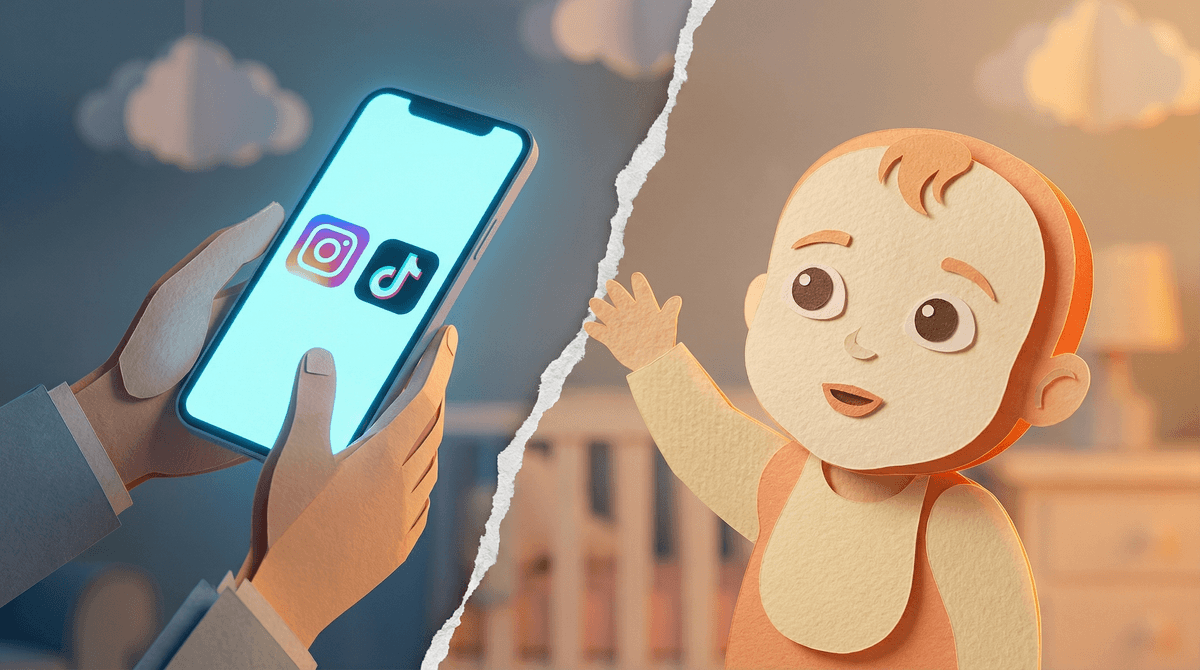
Let's just get real for a second: you're holding your baby, they're doing that adorable thing where they grab your finger, and your phone buzzes. You glance down. Just for a second. Then another buzz. You unlock it. "Just checking this one thing..."
Welcome to technoference — the research term for when technology interferes with human interaction. And if you're feeling a little called out right now, you're not alone. The average parent picks up their phone 60-80 times per day, and a lot of those pickups happen while caring for babies and toddlers.
Here's what makes this complicated: we're not talking about "screen time" for babies (that's a whole other conversation). We're talking about your screen time and how it affects their development. The research on this is actually pretty clear, and some of it is... uncomfortable.
Babies learn about the world through serve and return interactions. Baby coos, you respond. Baby points, you look and name the thing. Baby smiles, you smile back. This back-and-forth isn't just cute — it's literally building their brain architecture, teaching them about communication, emotional regulation, and trust.
When a phone interrupts these moments, here's what happens:
The Still Face Effect, Phone Edition
There's a famous psychology experiment called "Still Face" where a parent suddenly goes blank and unresponsive. Babies get distressed fast — within seconds. They try to re-engage, then get upset, then eventually withdraw. Sound dramatic? Well, when you're scrolling Instagram while nursing, you're basically doing a micro-version of this. Your face isn't fully responsive. Your attention is split. And babies notice.
A 2015 study found that parental phone use during parent-child interactions predicted more child behavior problems later on. Another study from 2020 showed that even having a phone visible on the table during playtime reduced the quality of parent-child interaction.
Attachment and Attunement
Secure attachment develops when babies consistently experience their caregivers as responsive and attuned. When we're frequently distracted by devices, we miss cues. We respond slower. We're less emotionally present. Over time, this can affect how babies learn to regulate their emotions and trust that their needs will be met.
Is checking your phone once going to ruin your kid? Obviously not. But the cumulative effect of constant partial attention is what researchers are concerned about.
Before we go further: if you're now spiraling about every time you've looked at your phone near your baby, take a breath.
Parenting an infant is relentlessly demanding. You're sleep-deprived. You're touched-out. You're sometimes desperately bored during the 47th round of peek-a-boo. Your phone is your connection to adult conversation, news, entertainment, and honestly, sanity.
The goal here isn't perfection. It's awareness and intention. Understanding the research doesn't mean never using your phone — it means making conscious choices about when and how you use it.
Let's get specific about what studies have found:
-
Meal and play times are critical. These are prime serve-and-return moments. Phone use during these times has the strongest correlation with developmental impacts.
-
The amount matters, but so does the context. Quickly checking a text is different from scrolling TikTok for 20 minutes while your baby plays alone.
-
It's not just about you. Babies as young as 6 months show signs of distress when caregivers are on phones. By 12-18 months, some toddlers start acting out to get attention back.
-
Parental stress is real. Some research shows that phone use can actually help stressed parents regulate their emotions. So it's not black and white.
-
The "always on" problem. It's not just phone use — it's phone presence. Having it constantly nearby creates an urge to check that's hard to resist.
0-6 months:
This is peak bonding time. Eye contact during feeding, responsive cooing, face-to-face play — these are building blocks. Try to make feeding times (especially) phone-free zones. If you're nursing at 3am and need a podcast to stay awake, that's fine. But consider audio-only rather than scrolling.
6-12 months:
Babies are more interactive now. They're starting to point, babble with intention, and engage in back-and-forth play. This is when they really notice when you're distracted. Floor play time and meals should be as phone-free as possible.
12-24 months:
Toddlers are learning language at a rapid pace. They need you narrating the world, responding to their attempts at words, reading their cues. They're also starting to model your behavior — if you're always on your phone, they're learning that's what adults do.
Create Phone-Free Zones
Not phone-free times (too hard), but zones. The high chair area during meals. The play mat. The changing table. Keep your phone literally out of reach during these activities.
Use "Phone Parking"
Designate a spot in each room where your phone lives when you're not actively using it. Kitchen counter, bedroom dresser, entryway table. Out of sight actually does help with out of mind.
Narrate Your Phone Use
When kids get older (18+ months), start narrating: "Mommy's going to check her phone to see if Grandma texted back." This teaches them that phone use is purposeful, not just constant default behavior. (This is more for toddlers, but it's a good habit to start building.)
Batch Your Checking
Instead of responding to every buzz, set specific times to catch up on messages. During nap time, after bedtime, while your partner takes over. This is hard but gets easier with practice.
Find Alternative Soothing
If you're using your phone to cope with the monotony or stress of infant care, that's valid. But also consider: podcasts or audiobooks (so you can maintain eye contact), calling a friend on speakerphone while you play with baby, or just accepting that sometimes baby play is boring and that's okay.
Model What You Want to See
Even babies are watching and learning. The habits you build now will be the habits they see as normal. Learn more about modeling healthy tech habits .
.
Your phone isn't evil. You're not a bad parent for using it around your baby. But the research is clear that frequent, distracted phone use during key interaction moments can impact infant development and attachment.
The good news? Small changes make a difference. You don't need to go full digital minimalist. You just need to be more intentional about when you're present and when you're plugged in.
Babies need your full attention for shorter bursts than you might think. Even 10-15 minutes of fully engaged floor time, a phone-free meal, or an undistracted bedtime routine can matter more than hours of distracted co-presence.
And here's the thing nobody talks about: when you do put your phone down and really engage, it often feels better. Not always — sometimes you're exhausted and touched-out and counting the minutes until nap time. But often, being fully present is actually more enjoyable than being half-present and half-scrolling.
Pick one small change this week:
- Make one daily activity phone-free (breakfast, bath time, first feeding of the day)
- Move your phone out of reach during floor play
- Turn off non-essential notifications
- Try one nap time without immediately reaching for your phone
You don't have to overhaul your whole life. Just start noticing. That awareness alone is powerful.
And if you want to dig deeper into how to think about your own screen habits as a parent, explore healthy tech boundaries for parents.
You've got this. Imperfectly, like everything else in parenting.