

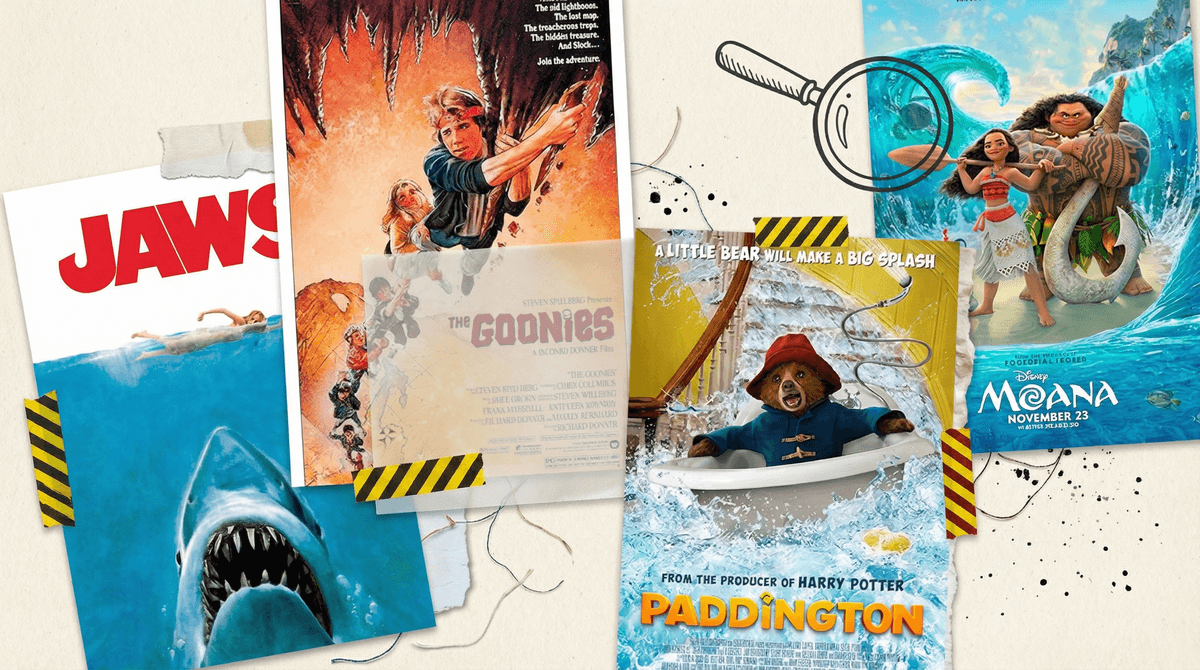
PG means "Parental Guidance Suggested," and the guidance is doing almost all of the work. It is the widest rating in the system: Paddington is PG and Jaws is PG. One scores WISE 86, the other 42.
So a PG badge narrows things down far less than it looks like it does. Here is what the rating promises, where it drifts, and how to read it in about thirty seconds.
The Motion Picture Association has used PG since 1972, sitting between G and PG-13. The official wording is "Some material may not be suitable for children. Parents urged to give parental guidance."
That is a genuinely wide band, and the catalog shows it. Paddington (86) and Encanto (91) sit at one end. Jaws (42) and Gremlins (38) sit at the other, and both were rated PG in an era before PG-13 existed to catch them.
A rating is a content classification, not a recommendation. It tells you roughly what is on screen. It tells you nothing about whether the film is any good, whether it will hold a 7-year-old, or whether the scary part lands in minute four or minute forty.
PG allows, in practice:
- Mild language, of the "damn" and "hell" variety, and usually not many instances
- Violence without graphic detail, which covers slapstick, cartoon peril, and most action sequences
- Scary or suspenseful sequences, including characters in real danger
- Thematic weight such as death, divorce, illness, or bullying
- Brief mild sexual references, generally a kiss or an innuendo pitched over kids' heads
What the board does not measure is intensity, pacing, or emotional load. Up (87) opens with four minutes that have made more parents cry than most PG-13 dramas, and none of it changes the rating. Inside Out (92) is a film about depression that earns its PG on technical grounds and still needs a conversation afterwards.
This is the gap WISE scores are built to fill, and it is also why the descriptor line underneath the rating is worth more than the letters.
PG-13 did not exist until 1984, and it was created because Gremlins and Indiana Jones and the Temple of Doom both came out rated PG and parents objected. Everything before that date was sorted into a system with a hole in the middle.
So older PG films carry content that would not pass today. Gremlins (38) has on-screen creature deaths played for laughs. The Goonies (62) has a body in a freezer and steady profanity from 12-year-olds. Jaws (42) is a horror film. All three are PG. All three are worth watching eventually, and none of them is a Tuesday-night pick for a 6-year-old.
If a film predates 1984 and is rated PG, read it as somewhere in today's PG to PG-13 band and check before you commit.
The most useful question is what has scared them before.
Some 6-year-olds watch Spider-Man: Into the Spider-Verse (87) without blinking. Others are undone by the dentist scene in Finding Nemo (88), which is rated G.
A few specific sensitivities predict trouble far better than the rating does:
- Loud, sustained sound. A kid who covers their ears in a cinema will struggle with most of the third act of an action PG.
- Parent-child separation. Finding Nemo and Coco (90) both run on it, and it lands harder than any monster.
- Realistic danger. Animated peril is filed as make-believe by most kids. Live-action peril often is not.
- Death of a parent, which drives a striking share of the family canon and is the single most common cause of a bad night.
If none of those are live for your kid, most PG works from about five. If two or more are, treat PG as a preview-first rating until seven or eight.
Scores are ours. Age ranges are where the film lands rather than where the rating board starts.
Ages 5 to 8. Paddington (86) and Paddington 2 (94), which is the better film and close to a perfect one. Moana (88). Encanto (91). Luca (86) is the calmest of the modern Pixars and the safest first cinema trip.
Ages 8 to 11. Zootopia (89) carries a real argument about prejudice inside a buddy-cop plot. Coco (90). Inside Out (92) and Inside Out 2 (92), the second of which is about anxiety and is the more useful watch for this age. The Wild Robot (87). The Incredibles (82).
Ages 10 and up. Spider-Man: Into the Spider-Verse (87). How to Train Your Dragon (81). The Princess Bride (82), which survives every generation. Turning Red (83) is about puberty and is better watched a year early than a year late. E.T. (78) still works, though the government-agent sequences are tenser than people remember.
Preview first, whatever the age. The Goonies (62), Jumanji (52), Gremlins (38), Jaws (42).
Every rated film carries a descriptor, and it is far more specific than the letters. "Rated PG for mild action and rude humor" and "Rated PG for thematic elements and brief scary images" describe two very different evenings. The second one means somebody dies or something frightening happens on screen.
Streaming platforms then add their own content tags, which are better again. Netflix, Disney+, and Prime all list flags such as fear, language, violence, or substance use on the title card. Those tags are generated per title rather than assigned by a board, and they are the fastest signal available before you press play.
Two more things worth a minute:
- The runtime tells you about stamina. Anything over 100 minutes is a different proposition for a 5-year-old than a 95-minute film.
- Animated or live-action matters more than most parents expect. The same events land much harder in live action for kids under about eight.
For the full ladder from G through R, our breakdown of the whole rating system covers what each letter allows. When the question turns into PG-13, what PG-13 permits is the next one to read, and Moana is a reasonable last stop before that jump.
Q: What does PG mean in movie ratings?
PG stands for Parental Guidance Suggested. The Motion Picture Association uses it for films that may contain mild language, non-graphic violence, brief scary sequences, and heavier themes such as death or divorce. It is a content classification rather than an age limit, so nobody is stopped from buying a ticket, and it carries no judgment about quality.
Q: What age is a PG movie appropriate for?
Most PG films suit ages five and up, and many suit younger kids with a parent in the room. Temperament matters more than the number: sensitivity to loud sound, to parent-child separation, or to realistic danger predicts a bad experience far better than birthday does. For a sensitive child, treat PG as preview-first until around seven.
Q: What is the difference between PG and PG-13?
PG-13 means Parents Strongly Cautioned and permits more: sustained violence, one non-sexual use of the harshest profanity, brief nudity, and drug references. PG-13 was created in 1984 after films like Gremlins were released as PG and parents objected. The practical gap is intensity and duration rather than any single element.
Q: Why are old PG movies scarier than new ones?
Because PG-13 did not exist before 1984, so anything too strong for G had nowhere else to go. Jaws, Gremlins, and Indiana Jones and the Temple of Doom were all PG. A pre-1984 PG is closer to today's PG-13, and it is worth checking specifics rather than trusting the letters.
Q: Does a PG rating mean a movie is good for kids?
No. The rating counts sex, violence, and language, and stops there. Paddington 2 and Gremlins carry the same PG. It does not measure whether a film is well made, whether it holds attention, or whether it leaves a child with anything. PG films in our catalog range from 94 down to the high 30s, which is why we score them separately.
Q: Where can I check what is in a PG movie before watching?
Start with the descriptor line under the rating, which names the specific content. Then check the platform's own content tags, which are more granular. Parent reviews on Common Sense Media and the WISE score and watch-outs on this site both flag the particular scene that tends to cause trouble, which is usually the thing you want to know.
Read the descriptor line, not the letters. Ten seconds, and it is the single highest-value habit here.
Check one specific thing against your kid rather than against their age: whether the film runs on a child being separated from a parent. That predicts more bad nights than violence does.
And set a tap-out rule so anybody can leave without a negotiation. If the one you picked stalls, Paddington 2 is the highest-scoring PG film in our catalog and a reliable reset. Nobody gets a prize for finishing a film that is not working, and knowing the exit exists makes kids far more willing to try something new.